Tragic Romance Movies
Love at its most beautiful is often love at its most heartbreaking, and tragic romance movies capture this bittersweet truth with devastating emotional power. These films chronicle doomed relationships torn apart by death, fate, war, societal prejudice, and impossible circumstances—love stories that burn with unforgettable intensity precisely because they're destined to end in loss. From golden age Hollywood classics to contemporary masterpieces, the greatest tragic romance films span decades of cinema history, united by their ability to break hearts while celebrating love's transcendent power. Whether exploring forbidden desires across cultural boundaries, wartime separations that shatter young lovers, or relationships slowly suffocating under the weight of duty and circumstance, these emotionally devastating movies prove that some of cinema's most profound statements about love emerge from its absence. Prepare to experience romance at its most achingly beautiful through twenty-one essential films where passion meets tragedy, connections are severed too soon, and love stories conclude not with happily-ever-after but with the haunting recognition of what might have been—proving that the loves we lose often leave the deepest marks on our souls.

Tony Leung and Maggie Cheung deliver achingly restrained performances as Mr. Chow and Mrs. Chan, Hong Kong neighbors in 1962 who discover their spouses are having an affair with each other. Wong Kar-wai's masterpiece unfolds less as conventional narrative than as a series of exquisitely composed moments—glances held a beat too long, conversations heavy with unspoken longing, patterns of behavior that become rituals of connection. Christopher Doyle's cinematography transforms cramped apartments and narrow corridors into spaces of almost suffocating intimacy, while the repeated use of Nat King Cole's music creates a dreamlike sense of time folding into itself. What makes the film extraordinary is its understanding that the most profound emotions often remain unspoken, expressed instead through gesture, proximity, and absence. Cheung's collection of ornate dresses becomes a visual representation of her character's emotional states, while Leung conveys entire worlds through subtle shifts in expression. Wong creates a film about longing that never consumes itself, about two people who might be perfect for each other but exist in the wrong circumstances. It's a meditation on restraint, regret, and the parallel lives we imagine but never quite live.

This epic historical drama stands as one of world cinema's towering achievements, tracing fifty years of Chinese history through the intertwined lives of two Peking Opera performers. Director Chen Kaige crafts a sweeping masterpiece where personal destiny and political upheaval collide with devastating consequences. Leslie Cheung gives a career-defining performance as Cheng Dieyi, an opera star who becomes lost in his female stage roles, while Zhang Fengyi plays his lifelong partner Duan Xiaolou, whose marriage to Gong Li's courtesan Juxian creates a complex emotional triangle. The film moves from the opera training schools of the 1920s through the Japanese occupation, the Communist revolution, and the Cultural Revolution, using the ancient art form as a lens to examine identity, obsession, and survival. Visually stunning and emotionally overwhelming, this is cinema that operates on a grand scale while never losing sight of the intimate human costs of history's brutal march forward.

Heath Ledger and Jake Gyllenhaal deliver achingly vulnerable performances as Ennis Del Mar and Jack Twist, two young ranch hands whose 1963 summer working together on Wyoming's Brokeback Mountain ignites a passionate relationship that spans decades of stolen moments and painful separation. Ang Lee's adaptation of Annie Proulx's short story is a devastating meditation on love constrained by societal prejudice and internalized shame. The Wyoming landscape, captured beautifully by cinematographer Rodrigo Prieto, becomes both sanctuary and symbol of the impossible freedom these men seek. Michelle Williams and Anne Hathaway bring depth to the wives caught in this tragedy. Lee handles the romance with sensitivity and restraint, making the brief moments of connection all the more powerful against years of longing and compromise. Ledger's performance is particularly remarkable—his Ennis is a man of few words whose every gesture reveals oceans of suppressed emotion. The film transcends its specific story to become a universal portrait of love denied, making it an essential and heartbreaking masterpiece.

Andrew Scott delivers a haunting performance as Adam, a lonely screenwriter living in a nearly empty London high-rise who begins a tentative relationship with his mysterious neighbor Harry (Paul Mescal) while simultaneously encountering his deceased parents (Claire Foy and Jamie Bell) as they were in the 1980s. Director Andrew Haigh crafts an achingly beautiful meditation on grief, identity, and queer intimacy that feels both deeply personal and universally resonant. The film moves between Adam's present-day romance and surreal visits to his childhood home with a dreamlike fluidity that never feels gimmicky. Scott's vulnerable, lived-in performance anchors the emotional complexity, while the script explores how we carry our past selves and lost loved ones with us. It's a devastating, tender, and ultimately transcendent piece of filmmaking that lingers long after the credits roll.

A false accusation made by a young girl tears apart lives and love on the eve of World War II, setting in motion consequences that reverberate across decades. Joe Wright's adaptation of Ian McEwan's novel is absolutely magnificent, a sweeping romance anchored by career-best performances from James McAvoy and Keira Knightley as Robbie and Cecilia, lovers separated by class, pride, and a devastating lie. Young Saoirse Ronan is remarkable as Briony, whose childish mistake haunts everyone involved. Wright's direction is both intimate and epic, featuring the justly celebrated Dunkirk tracking shot that stands as one of cinema's great technical achievements. Dario Marianelli's Oscar-winning score, built around a typewriter motif, perfectly underscores the themes of storytelling and guilt. The film is ravishing to look at, emotionally devastating, and completely absorbing from start to finish.

After his wife humiliates him by leaving for another man, Polish hairdresser Karol returns to Warsaw penniless and determined to rebuild his life and fortune in the newly capitalist post-Communist Poland. Krzysztof Kieślowski's second entry in his Three Colors trilogy is quite different from Blue—where that film was contemplative and mournful, this one is darkly comedic and satirical, though no less masterful. Zbigniew Zamachowski gives a remarkable performance as Karol, a man whose obsession with equality (the theme represented by white in the French flag) becomes twisted into a quest for revenge through achieving financial parity with his ex-wife. Kieślowski and cinematographer Edward Klosinski create a visual palette that moves from the cold whites of Paris to the grey-whites of Warsaw, reflecting Karol's emotional journey. The film explores how capitalism and communism both fail to deliver true equality, and how personal dignity cannot be measured in currency. Julie Delpy is memorably icy as Dominique, making the final act's twist land with devastating impact. It's brilliant, unsettling, and deeply human.

Intimate and formally audacious, Joanna Hogg's continuation of her semi-autobiographical artist's coming-of-age story finds film student Julie processing grief while attempting to make a movie about her own recent trauma. Honor Swinton Byrne returns with even greater assurance as the young filmmaker, now grappling with the aftermath of her toxic relationship while discovering her voice as an artist. Hogg structures the film as a meditation on memory, art-making, and self-discovery, incorporating behind-the-scenes footage, shifting aspect ratios, and genre experimentation that mirrors Julie's own creative process. The meta-textual layers never feel precious or overly intellectual; instead, they illuminate how we transform pain into art. Tilda Swinton appears in an expanded role as Julie's mother, bringing warmth and wisdom to scenes that might otherwise feel too cerebral. The film resonates powerfully as both a portrait of creative awakening and a testament to the healing possibilities of artistic expression, marking Hogg as one of contemporary cinema's most distinctive voices.

Roberto Benigni directs and stars in this deeply moving film about an Italian Jewish father who uses imagination and humor to shield his young son from the horrors of a concentration camp. The film's tonal shift from whimsical comedy to Holocaust drama is audacious, yet Benigni somehow makes it work through sheer force of love and creativity. The first half establishes Guido as an irrepressible romantic winning over his beloved Dora with elaborate schemes, building the relationship that makes the later sacrifice so powerful. Once confined to the camp, Guido convinces his son Giosué that their imprisonment is an elaborate game, maintaining the illusion through increasingly desperate measures. Nicoletta Braschi as Dora and Giorgio Cantarini as Giosué provide emotional anchors, while Benigni's performance finds the impossible balance between comedy and tragedy. The film celebrates human resilience and parental love without diminishing the evil it depicts, creating something genuinely uplifting from history's darkest chapter.

Bradley Cooper's Jackson Maine is a rock star spiraling into addiction when he discovers Ally, a struggling artist played by Lady Gaga in her stunning film debut. Cooper, who also directs, crafts an intimate portrait of two artists at crossroads—one fading, one rising—as their love story unfolds against the brutal realities of fame. The chemistry between the leads is electric, and Gaga proves she's as compelling an actor as she is a performer. The musical sequences feel raw and authentic, particularly the goosebump-inducing "Shallow," which becomes the emotional anchor of their relationship. Cooper's direction is confident and unflinching, never shying away from the darker corners of addiction and celebrity. This fourth iteration of the classic tale feels fresh and earned, a genuinely moving exploration of love, talent, and self-destruction.

Hilary Swank's portrayal of Brandon Teena stands as one of the most powerful performances of the 1990s in this deeply affecting biographical drama. Swank completely disappears into the role of the transgender man navigating life and love in rural Nebraska, bringing remarkable vulnerability and strength to every scene. Director Kimberly Peirce's unflinching approach to Brandon's story never exploits its tragic elements, instead focusing on his courage and humanity. Chloë Sevigny delivers equally compelling work as Lana, Brandon's girlfriend who becomes his closest ally. The film examines identity, acceptance, and the violence that can arise from intolerance with both sensitivity and raw honesty. It's a challenging watch that remains essential viewing, anchored by Swank's Oscar-winning transformation.

Neil Jordan crafted this thriller about an IRA volunteer who forms an unexpected connection with the girlfriend of a British soldier he held captive, leading to revelations that challenged audiences worldwide. Stephen Rea's understated performance as Fergus anchors the film's emotional journey, while Miranda Richardson brings volatile energy as a fellow operative. Jordan keeps the plot's famous twist under wraps for modern viewers discovering it fresh, but even knowing it, the film's exploration of identity, loyalty, and transformation remains powerful. Forest Whitaker makes his limited screen time count, and Jaye Davidson's breakthrough performance earned deserved awards recognition. The film balances political thriller elements with genuine human drama, and Jordan's direction maintains tension while never losing sight of the characters' emotional reality.

This devastating romantic drama follows two lost souls who forge an unexpected connection in their darkest hours. Director Mike Figgis crafts an unflinching portrait of addiction and despair as Nicolas Cage's suicidal alcoholic screenwriter travels to Las Vegas to drink himself to death, where he meets Elisabeth Shue's compassionate prostitute. Cage won an Oscar for his raw, committed performance that never sentimentalizes or glamorizes his character's self-destruction, while Shue matches him with equal vulnerability and strength. Figgis shoots with an intimate, almost documentary style that puts us uncomfortably close to the characters' pain while finding genuine tenderness in their relationship. The film refuses to offer easy redemption or false hope, instead presenting a moving meditation on acceptance, dignity, and the human need for connection even at the end. It's difficult viewing but emotionally honest and beautifully acted.

Epic, romantic, and visually spectacular, James Cameron's disaster film remains a powerful piece of entertainment that balances intimate human drama with breathtaking spectacle. Leonardo DiCaprio and Kate Winslet star as Jack and Rose, star-crossed lovers from different social classes who meet aboard the ill-fated maiden voyage of the RMS Titanic. Their romance provides the emotional anchor for the historical tragedy, with both actors bringing genuine chemistry and vulnerability to roles that could have felt clichéd in lesser hands. Cameron meticulously recreates the ship's opulence and ultimate destruction, building tension even though we know how the story ends. The sinking sequences remain technically impressive and genuinely harrowing. While the film's length and occasionally melodramatic moments might test some viewers, the craftsmanship and emotional core make this a worthwhile journey that earns its reputation as one of the most successful films of all time.

Caught between his passion for a mysterious patient and the nurse who tends to him, Count Almásy's story unfolds through flashbacks in Anthony Minghella's sweeping adaptation of Michael Ondaatje's novel. Ralph Fiennes brings haunted intensity to the burned, dying cartographer being cared for by Juliette Binoche's Hana in an abandoned Italian monastery at the end of World War II. As the narrative moves between past and present, we discover his doomed affair with Kristin Scott Thomas's Katherine Clifton, a love that ultimately reshapes multiple lives across the North African desert. The film earned nine Academy Awards, including Best Picture and Best Director, for good reason—Minghella orchestrates the complex narrative with assurance while cinematographer John Seale captures both the desert's terrible beauty and war's devastating intimacy. The ensemble cast, including Willem Dafoe and Colin Firth, enriches every scene. The English Patient demands your time and attention, but rewards both with genuine emotional power.

A couple's relationship unfolds in alternating timelines—one following their passionate early courtship, the other documenting their painful dissolution years later—in this emotionally devastating examination of love's evolution. Director Derek Cianfrance and his cinematographer use distinct visual styles for each timeline, creating immediate emotional context before a word is spoken. Ryan Gosling and Michelle Williams deliver raw, fearless performances that feel uncomfortably intimate, capturing both the intoxicating possibility of new love and the suffocating disappointment when it curdles. The film refuses easy answers about why relationships fail, instead presenting two people who genuinely loved each other but couldn't sustain that connection through life's realities. The non-linear structure isn't a gimmick—it allows viewers to hold both versions of this relationship simultaneously, understanding both the promise and the loss. It's beautifully made and heartbreakingly honest, a film that respects the complexity of human relationships without sentimentality.

Director Zhang Yimou delivers a deeply moving exploration of memory, trauma, and enduring love set against the backdrop of China's Cultural Revolution. Gong Li and Chen Daoming reunite with their "Raise the Red Lantern" director for this more intimate story about a couple torn apart by political persecution and reunited years later when the wife no longer recognizes her husband. Zhang trades his usual visual opulence for a more restrained aesthetic that serves the emotional devastation at the story's center. Both leads deliver career-best work, particularly Gong Li as a woman trapped in a moment of time, and Chen Daoming as a man who must woo his own wife as a stranger. The film's examination of how authoritarian politics destroy personal lives is both specific to its setting and universally heartbreaking. This is patient, mature filmmaking that earns every tear it provokes.
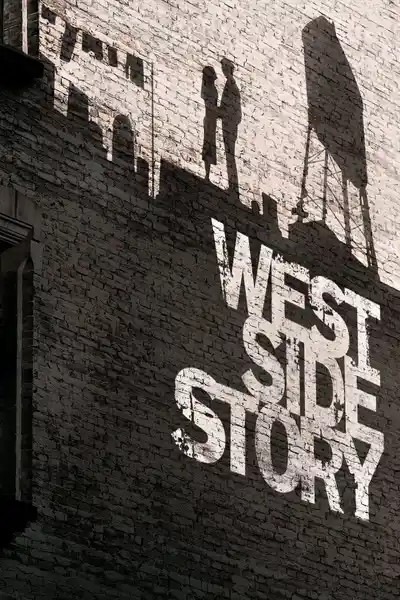
Rachel Zegler as Maria brings fresh passion and a stunning voice to Steven Spielberg's vibrant reimagining of the classic musical, proving that this tale of forbidden love still resonates powerfully. Spielberg, directing his first musical, approaches the material with reverence while making bold choices that enhance both the social commentary and emotional stakes of the Romeo and Juliet-inspired story of rival gangs in 1950s New York. Ansel Elgort matches Zegler's intensity as Tony, while the supporting cast—including Ariana DeBose in an Oscar-winning performance as Anita—brings remarkable energy to the iconic songs and newly choreographed dance numbers by Justin Peck. Tony Kushner's screenplay sharpens the cultural specificity and adds dimension to characters who sometimes felt like archetypes. The film honors the original while feeling vital and immediate, a remarkable achievement that justifies its existence beyond mere nostalgia.

Casey Affleck plays a man who dies suddenly and returns as a sheet-draped ghost, silently observing as his grieving partner (Rooney Mara) continues life without him in this mesmerizing meditation on time, loss, and impermanence from writer-director David Lowery. What sounds like gimmicky premise becomes genuinely profound through Lowery's patient, contemplative direction and the performances' emotional authenticity. The film unfolds with deliberate pacing that asks viewers to sit with discomfort and grief, watching as the ghost remains trapped while decades and eventually centuries pass around him. The famous pie-eating scene demonstrates Lowery's confidence in letting moments breathe and allowing silence to convey emotion more powerfully than dialogue. Daniel Hart's haunting score and Andrew Droz Palermo's cinematography create a visual and aural experience that feels both intimate and cosmic. This is quietly devastating filmmaking that trusts its audience, offering a singular exploration of how we leave traces in the world and what remains after we're gone.

This biographical drama chronicles the tumultuous life and career of legendary country music singer Johnny Cash, from his impoverished Arkansas childhood through his rise to fame and his struggles with addiction. Joaquin Phoenix delivers a transformative performance as Cash, capturing both his magnetic stage presence and his inner demons, while Reese Witherspoon is equally compelling as June Carter, the woman who eventually became his salvation and second wife. Director James Mangold wisely focuses on the relationship between Johnny and June rather than attempting a comprehensive life story, and both lead actors performed their own vocals to stunning effect. The film doesn't shy away from Cash's darker moments—his drug abuse, failed first marriage, and self-destructive behavior—but balances them with his artistic brilliance and capacity for redemption. It's an authentic, emotionally resonant portrait that captures what made Cash such an enduring American icon.

In pre-revolutionary France, aristocratic libertines engage in elaborate games of seduction and betrayal with devastating consequences. Glenn Close plays the Marquise de Merteuil, who conspires with her former lover Vicomte de Valmont (John Malkovich) to corrupt an innocent young woman and seduce a virtuous married woman. Director Stephen Frears transforms Choderlos de Laclos's epistolary novel into a visually sumptuous period drama that crackles with wit and menace. The performances are exceptional across the board, with Close and Malkovich delivering deliciously venomous dialogue while Michelle Pfeiffer brings genuine pathos to her role as their unwitting target. Christopher Hampton's adapted screenplay preserves the novel's cutting observations about power, desire, and social hypocrisy while making the material feel urgent and psychologically complex. The costumes and production design are impeccable, but never overshadow the emotional cruelty at the story's heart. This is sophisticated adult filmmaking that treats its audience with intelligence.

This stylish melodrama from Pedro Almodóvar weaves together passion, betrayal, and cinema itself in a characteristically intricate narrative. Lluís Homar plays Harry Caine, a blind screenwriter haunted by his past as filmmaker Mateo Blanco, whose affair with his leading lady Lena (Penélope Cruz) ended in tragedy orchestrated by her jealous financier husband. Almodóvar constructs the story as a film-within-a-film, using his trademark bold colors and emotional intensity to explore how we reconstruct memory and identity. Cruz is luminous in dual roles, while Blanca Portillo brings complexity as Harry's devoted assistant harboring secrets of her own. The director operates at the height of his powers here, crafting a noir-tinged puzzle that reflects on filmmaking, obsession, and the stories we tell ourselves to survive loss.