Movies on Peacock
Peacock has quietly assembled one of streaming's most impressive movie libraries, offering subscribers access to acclaimed masterpieces spanning decades of cinema history. Whether you're searching for the best movies on Peacock to watch this weekend or looking to discover hidden gems you might have missed, this streaming service delivers an eclectic mix that rivals any platform. Our expertly curated selection of 21 films showcases the highest-rated movies available on Peacock right now, from psychological thrillers that'll bend your mind to beloved animated adventures that defined a generation. You'll find Oscar-winning dramas, cult comedies that have achieved legendary status, and fantasy epics that captivated millions worldwide. The Peacock streaming library proves you don't need to scroll endlessly through mediocre content—these carefully selected films represent the cream of the crop, updated regularly to ensure you're always watching quality cinema. From groundbreaking horror classics that revolutionized the genre to sophisticated crime capers from Hollywood's golden age, these top movies on Peacock demonstrate why the platform deserves a permanent spot in your streaming rotation.

King Arthur and his Knights of the Round Table embark on a quest to find the Holy Grail in this brilliantly absurd medieval comedy that remains one of the funniest films ever made. The Monty Python troupe—Graham Chapman, John Cleese, Terry Gilliam, Eric Idle, Terry Jones, and Michael Palin—created a masterclass in comedic timing and surreal humor, with directors Gilliam and Jones crafting a wonderfully low-budget adventure that turns limitations into inspired gags (those coconut horses!). From the French Taunter's insults to the Bridge of Death's impossible questions, every scene delivers quotable moments and unexpected hilarity. The film fearlessly satirizes Arthurian legend, medieval history, and narrative conventions themselves, culminating in one of cinema's most audacious endings. It's an absolutely essential comedy that proves intelligence and silliness make perfect companions.

Starting from the end and working backward, this Los Angeles-set psychological thriller revolutionizes narrative structure while telling an intensely gripping mystery. Christopher Nolan directs Guy Pearce as Leonard Shelby, a man with short-term memory loss hunting for his wife's killer using only Polaroid photographs and tattooed notes on his body. The film's reverse chronology puts viewers in Leonard's fragmented mental state—we discover information just as he loses it, creating unbearable tension and paranoia. Carrie-Anne Moss and Joe Pantoliano deliver perfectly ambiguous performances as people who may or may not be helping Leonard in his quest. The ingenious structure isn't just a gimmick; it's fundamental to understanding the nature of memory, identity, and truth. This is filmmaking that demands your complete attention and delivers an intellectually satisfying payoff that will have you immediately wanting to watch it again.

Richard Kelly announces himself as a visionary filmmaker with this mind-bending psychological thriller that has captivated and puzzled audiences for over two decades. Jake Gyllenhaal gives a mesmerizing early-career performance as Donnie, a troubled teenager who begins experiencing bizarre visions of a sinister six-foot rabbit named Frank who warns him that the world will end in 28 days. Kelly weaves together teenage angst, time travel paradoxes, and suburban malaise into a haunting narrative that rewards deep analysis and repeated viewings. The supporting cast—including Jena Malone, Drew Barrymore, and Mary McDonnell—grounds the surreal elements in believable relationships. The 1980s setting is perfectly captured through both production design and an evocative soundtrack featuring Tears for Fears and Echo and the Bunnymen. The film's ambiguity has sparked endless debates about its true meaning, but that's part of its enduring appeal. Kelly crafts something genuinely original here—a dark, unsettling, and ultimately moving exploration of sacrifice and destiny.

When a curmudgeonly classics teacher gets stuck babysitting a troubled student over Christmas break at a New England prep school in 1970, magic happens. Alexander Payne delivers one of his finest films with this beautifully observed character study that balances sharp humor with genuine pathos. Paul Giamatti is absolutely magnificent as Paul Hunham, the acerbic instructor whose lonely exterior slowly cracks to reveal unexpected depths of humanity. Dominic Sessa impresses in his debut as the equally isolated student Angus, while Da'Vine Joy Randolph brings soulful warmth as the school's grieving cook. The trio's unlikely bond feels earned rather than manipulated, and Payne's script crackles with wit while never losing sight of the characters' pain. Shot with a grainy 70s aesthetic that feels authentic rather than gimmicky, this is filmmaking that trusts in performance, dialogue, and emotional honesty.

Daniel Radcliffe's Harry Potter faces his ultimate confrontation with Voldemort in this spectacular finale that delivers everything fans could hope for. Director David Yates brings J.K. Rowling's epic conclusion to life with breathtaking visual effects and emotional resonance that honors seven films' worth of buildup. The Battle of Hogwarts is an absolute marvel of cinematic craftsmanship, with wand duels, protective enchantments, and dragon-riding that'll leave you breathless. Radcliffe, Emma Watson, and Rupert Grint give deeply felt performances as their characters make impossible sacrifices, while Alan Rickman's Severus Snape gets a revelatory flashback sequence that recontextualizes everything. This isn't just a satisfying ending—it's a triumphant celebration of friendship, courage, and the magic that captivated a generation. The finale soars.

In the fairy tale realm of Far Far Away, director Andrew Adamson and Vicky Jenson turn traditional storybook conventions completely upside down with this anarchic animated comedy. Mike Myers voices the titular ogre, a grumpy swamp-dweller who reluctantly teams with a motormouthed donkey (Eddie Murphy in peak form) to rescue a princess (Cameron Diaz) from a dragon-guarded tower. What could have been a straightforward fairy tale instead becomes a hilarious deconstruction of Disney tropes, packed with pop culture references, irreverent humor, and genuine heart. The animation remains impressive, but it's the subversive script and chemistry between Myers and Murphy that make this truly special. By celebrating the unconventional and poking fun at familiar fantasy formulas, Shrek created something genuinely fresh that spawned an entire franchise while maintaining its own distinct, lovably crude personality.

This fantasy adventure marks a turning point for the series, both in terms of visual sophistication and emotional maturity. Director Alfonso Cuarón brings his artistic sensibility to Hogwarts, creating a moodier, more stylized aesthetic that reflects Harry's adolescence and the darkening wizarding world. Daniel Radcliffe, Emma Watson, and Rupert Grint deliver their strongest performances yet as the trio faces time travel, dementors, and questions about Harry's past. Gary Oldman is magnetic as the escaped prisoner Sirius Black, while David Thewlis brings warmth and sadness to Remus Lupin. Cuarón trusts the audience's familiarity with the world, skipping exposition in favor of character and atmosphere. The time-turner sequence is brilliantly executed, and the revelation of Sirius's true story provides genuine emotional payoff. Michael Gambon takes over as Dumbledore, bringing different energy to the role. The film's willingness to let darkness creep in without losing wonder makes it a high point of the franchise.

Paul Giamatti stars as Miles Raymond, a depressed wine enthusiast and unpublished novelist who takes his about-to-be-married friend Jack (Thomas Haden Church) on a week-long road trip through California's wine country. Director Alexander Payne crafts an absolutely magnificent character study that's equal parts hilarious and heartbreaking, finding profound truths in seemingly small moments. Virginia Madsen delivers a luminous performance as Maya, a waitress who shares Miles' passion for wine and becomes a potential romantic salvation. The film's genius lies in how it uses wine as a metaphor for life itself—some people peak early, others need time to develop their complexity. Giamney's performance is raw and utterly real, capturing middle-aged disappointment without ever begging for sympathy. The script crackles with wit while never losing sight of its characters' very human vulnerabilities, making this one of the most rewarding dramedies you'll encounter.

This drama from director Gus Van Sant tells the story of Will Hunting, a troubled janitor at MIT who happens to be a self-taught mathematical genius discovered by a professor who sees his potential. Matt Damon delivers a breakout performance as Will, capturing both his brilliant mind and the emotional walls he's built from a traumatic past, while Robin Williams earned an Oscar for his compassionate portrayal of Sean Maguire, the therapist who finally reaches him. Damon and Ben Affleck's screenplay (which won them an Academy Award) balances intellectual sparring with genuine emotional vulnerability, particularly in the sessions between Will and Sean. Stellan Skarsgård and Minnie Driver round out the excellent cast. The film explores themes of class, trauma, and the courage it takes to be vulnerable with others, all grounded in authentic Boston working-class culture. This is deeply moving cinema.

When a rebellious foster kid and his grumpy foster uncle become accidentally famous fugitives in the New Zealand bush, you get one of the most delightful adventure comedies in recent memory. Taika Waititi's Hunt for the Wilderpeople pairs newcomer Julian Dennison with the incomparable Sam Neill for a buddy film that's equal parts hilarious and heartfelt. What begins as a misunderstanding with child services transforms into a nationwide manhunt, with our mismatched duo learning to depend on each other while evading authorities and surviving the wilderness. Waititi's signature humor—quirky without being precious, warm without being sentimental—infuses every scene. The New Zealand landscape becomes a character itself, gorgeous and unforgiving. It's a film about finding family in unexpected places, wrapped in an endlessly entertaining package that will leave you grinning from start to finish.

Gabriel LaBelle delivers a remarkable breakthrough performance as Sammy Fabelman, Steven Spielberg's thinly veiled younger self discovering the power and pain of filmmaking while his family slowly fractures. Spielberg directs with unusual intimacy and vulnerability, transforming his own childhood into a deeply personal examination of how art both captures and shapes our understanding of life. Michelle Williams and Paul Dano play Sammy's parents with heartbreaking complexity, embodying the conflict between artistic passion and domestic stability that defines the family's trajectory. The film avoids typical biopic pitfalls by focusing on specific, beautifully rendered moments—a train crash recreated with toys, a camping trip captured on 8mm film—that illuminate how young Sammy learns to see truth through a lens. This is Spielberg's most emotionally direct work in decades, a master filmmaker reflecting on the experiences that made him.

In the scorching Texas heat of 1974, Tobe Hooper crafted what remains one of horror cinema's most visceral and unshakeable nightmares. Despite its notorious reputation, the film contains surprisingly little on-screen gore—Hooper's genius lies in creating an atmosphere of relentless dread and disorientation that gets under your skin and stays there. The story of five friends who stumble upon a family of cannibals is shot with a documentary-like immediacy that makes everything feel disturbingly real. Marilyn Burns delivers a performance of pure, primal terror as Sally, while Gunnar Hansen's Leatherface became an instant horror icon. The film's grainy 16mm photography, oppressive sound design, and willingness to push beyond conventional boundaries created something genuinely transgressive. Raw, uncompromising, and still genuinely disturbing nearly fifty years later, this is essential viewing for understanding the horror genre's evolution.

Paul Greengrass reconstructs the events of September 11, 2001, aboard United Airlines Flight 93 with documentary-like precision and profound respect for those who died. Working primarily with non-professional actors to maintain authenticity, Greengrass creates an almost unbearably tense experience that places viewers inside the cabin as passengers gradually realize their flight has been hijacked and begin piecing together the broader terrorist attack. The film's power lies in its restraint—there are no Hollywood heroes, just ordinary people making impossible decisions in real time with incomplete information. Greengrass's signature handheld camerawork creates visceral immediacy while never feeling exploitative, and his decision to show the confusion and humanity on all sides, including air traffic controllers and military personnel, creates a comprehensive picture of that chaotic morning. This is deeply difficult viewing that honors its subjects by refusing to simplify or sentimentalize their experience, resulting in a film that's both a memorial and a powerful work of cinema.

The devastating spiral of four people chasing their dreams through drug addiction forms the emotional core of Darren Aronofsky's harrowing drama, based on Hubert Selby Jr.'s novel. Aronofsky employs every cinematic technique at his disposal—split screens, hip-hop montages, macro photography of dilating pupils—to immerse viewers in both the euphoric highs and soul-crushing lows of substance abuse. Jared Leto, Jennifer Connelly, and Marlon Wayans portray young addicts in Brooklyn whose heroin use gradually consumes their lives, but it's Ellen Burstyn who delivers the film's most heartbreaking performance as a lonely widow addicted to diet pills and television, desperate to fit into a red dress. The film doesn't lecture or moralize; instead, it shows with unflinching honesty how addiction destroys not just individuals but everyone connected to them. Clint Mansell's score, featuring the now-iconic "Lux Aeterna," amplifies the tragedy to operatic heights. This is a difficult watch that stays with you, serving as both artistic achievement and cautionary tale about the cost of seeking escape through substances.

Irreverent, brilliant, and absolutely hilarious, Monty Python's religious satire follows Brian Cohen, an ordinary man born in the manger next door to Jesus who gets mistaken for the Messiah. The Python troupe—Graham Chapman, John Cleese, Terry Gilliam, Eric Idle, Terry Jones, and Michael Palin—fire on all cylinders, creating a sharp commentary on blind faith, political movements, and mob mentality while delivering some of the most quotable comedy ever filmed. The genius lies in how the film never mocks faith itself but rather the human tendency toward dogmatism and the absurdities of religious and political fervor. Every scene feels purposeful, from the philosophical debates with revolutionary groups to the iconic finale that somehow transforms crucifixion into an uplifting musical number. Jones directs with confidence, balancing Python's anarchic humor with surprisingly sophisticated storytelling. Decades later, it remains fearless, intelligent comedy that trusts its audience to think while they laugh.

Cillian Murphy delivers a career-defining performance as J. Robert Oppenheimer in Christopher Nolan's breathtaking biographical epic. The film traces the theoretical physicist's journey from academic brilliance to leading the Manhattan Project, culminating in the creation of the atomic bomb and the moral reckoning that followed. Nolan orchestrates a masterclass in tension and scope, weaving together multiple timelines with precision while exploring the weight of scientific responsibility. Emily Blunt and Robert Downey Jr. provide stunning support in this three-hour meditation on ambition, consequence, and the terrifying power of human innovation. The IMAX cinematography captures both intimate moments and explosive scale with equal artistry. This is filmmaking at its most ambitious and rewarding—a profound achievement that demands to be experienced.

Harry's fourth year at Hogwarts takes a deadly turn when he's mysteriously entered into the dangerous Triwizard Tournament despite being underage. Director Mike Newell brings a darker edge to the franchise as Daniel Radcliffe's Harry faces dragons, underwater dangers, and a haunting maze while trying to uncover who put his name in the Goblet of Fire. The stakes feel genuinely higher here, with character deaths that signal the series' shift toward more mature territory. The tournament sequences are thrilling, and the film balances spectacle with the awkward teenage dynamics of school dances and first crushes. Ralph Fiennes makes a chilling entrance as Voldemort in the climactic graveyard scene, setting the stage for the darker chapters to come.
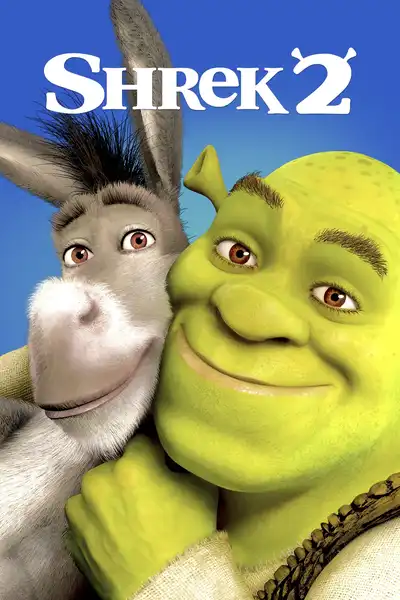
Following their fairytale wedding, Shrek and Fiona return from their honeymoon to discover an invitation to visit her parents in the kingdom of Far Far Away—except they're expecting their daughter to have married Prince Charming, not an ogre. Directors Andrew Adamson, Kelly Asbury, and Conrad Vernon expand the first film's fractured-fairytale concept into a full-blown Hollywood satire, with Far Far Away standing in for Beverly Hills, complete with a Farbucks on every corner. Mike Myers and Eddie Murphy reprise their roles with easy chemistry, but Antonio Banderas steals the show as Puss in Boots, a swashbuckling mercenary cat with oversized eyes and Spanish accent who becomes an unlikely ally. The film layers jokes for different ages, from pop-culture references adults will catch to physical comedy kids love, while maintaining the first film's message about accepting yourself. Jennifer Saunders voices the scene-stealing Fairy Godmother, whose villain song ranks among animation's most entertaining. It's a rare sequel that matches its predecessor's charm while carving its own identity.

The 23rd century becomes the launchpad for J.J. Abrams' exhilarating reinvention of the beloved sci-fi franchise, breathing fresh energy into Gene Roddenberry's vision while honoring its legacy. Chris Pine steps into the iconic role of young James T. Kirk, capturing the swagger and recklessness that will eventually mature into legendary leadership, while Zachary Quinto brings fascinating depth to Spock's internal conflict between logic and emotion. The film cleverly uses time travel to create an alternate timeline, allowing Abrams to tell origin stories without being bound by fifty years of canon. The ensemble cast—including Karl Urban's pitch-perfect Dr. McCoy and Simon Pegg's scene-stealing Scotty—generates immediate chemistry that makes this crew feel like old friends. Michael Giacchino's soaring score and spectacular visual effects deliver blockbuster thrills, but the film succeeds because it understands that Star Trek's heart lies in exploration, optimism, and the bonds between its characters.

Wry, melancholic, and quietly powerful, this film from writer-director Ben Sharrock offers a fresh perspective on the refugee experience through the eyes of Omar, a Syrian musician stranded on a remote Scottish island while awaiting asylum processing. Amir El-Masry gives a beautifully restrained performance as Omar, who lives in limbo with other refugees, attending cultural awareness classes that veer into absurdist comedy while dreaming of reuniting with his family. Sharrock balances gentle humor with genuine pathos, never exploiting his characters' situations for easy sentiment. The stark beauty of the Scottish landscape mirrors Omar's isolation, yet the film finds warmth in unexpected friendships and small acts of kindness. The screenplay smartly uses Omar's musical talent—he's hiding his prized oud—as a metaphor for identity preservation in displacement. This is compassionate, intelligent filmmaking that treats a difficult subject with both humanity and artistic grace, earning its emotional moments through patient character development rather than manipulation.

A young medical student's transformative journey across South America becomes the foundation for understanding one of the 20th century's most influential figures in Walter Salles's beautifully crafted biographical drama. Before becoming the revolutionary icon known as Che Guevara, Ernesto Guevara de la Serna (Gael García Bernal) sets off on a motorcycle trip with his friend Alberto Granado, initially seeking adventure but discovering the continent's harsh social realities. Salles captures both the breathtaking landscapes and the grinding poverty they encounter, while Bernal delivers a nuanced performance that shows Ernesto's political awakening without heavy-handed messaging. The film works as both a compelling road movie and an intimate character study, showing how direct exposure to inequality and injustice shaped Guevara's worldview. It's a thoughtful, visually stunning exploration of idealism and the experiences that forge revolutionary spirits, earning its place among the finest biographical films of recent decades.