Top Movies on Clarovideo
Looking for exceptional cinema to stream tonight? Clarovideo offers an impressive collection of the best movies ever made, and we've assembled the ultimate guide to help you navigate its catalog. Whether you're a cinephile seeking timeless masterpieces or a casual viewer hunting for your next great watch, this carefully curated selection of 21 top-rated films on Clarovideo delivers unforgettable viewing experiences across every era of filmmaking. From groundbreaking classics that defined their genres to modern critically-acclaimed hits pushing cinematic boundaries, these movies represent the pinnacle of storytelling, direction, and performance. Our list spans decades of cinema history, showcasing everything from pulse-pounding thrillers and thought-provoking dramas to innovative animated features and powerful social commentaries. Each film has earned its place through exceptional quality, cultural impact, and enduring relevance, ensuring that whatever you choose from these Clarovideo offerings will be time well spent. We regularly update our selections to reflect the streaming platform's current availability, so you can confidently dive into these outstanding movies knowing they're ready to watch right now on Clarovideo.

Monumental in scope and shattering in impact, Steven Spielberg's Holocaust drama stands as one of cinema's most important and emotionally devastating achievements. Liam Neeson portrays Oskar Schindler, the German industrialist who initially exploited Jewish labor for profit before risking everything to save over a thousand lives. The film's black-and-white cinematography by Janusz Kamiński gives it a documentary-like authenticity while creating images of haunting beauty amidst unspeakable horror. Ralph Fiennes is terrifyingly human as Amon Göth, the sadistic commandant whose casual cruelty represents systematic evil. Ben Kingsley brings dignity and quiet strength to Itzhak Stern, Schindler's accountant and moral compass. Spielberg handles the material with appropriate gravity, never exploiting the tragedy while ensuring we bear witness to both the depths of human cruelty and the heights of moral courage. The final scene remains one of film's most powerful moments.

Alfred Hitchcock constructs perhaps the perfect thriller with this masterclass in suspense, confined almost entirely to a single apartment where a wheelchair-bound photographer becomes convinced he's witnessed a murder. James Stewart gives one of his finest performances as L.B. Jefferies, whose broken leg and rear-window view transform him into a voyeur observing his neighbors' private lives—until one wife's disappearance turns his hobby into dangerous detective work. Grace Kelly is luminous as his socialite girlfriend Lisa, who risks everything to prove his theory, while Thelma Ritter provides comic relief as the skeptical nurse. What makes this extraordinary is how Hitchcock uses the confined setting to explore themes of spectatorship, privacy, and obsession, making us complicit in Jeff's voyeurism while crafting moment after moment of unbearable tension. Every neighbor's window tells a story, creating a cross-section of human experience that's both entertaining and unsettling. The film's technical precision and psychological depth make it endlessly rewatchable.

Anthony Perkins as Norman Bates delivers one of cinema's most unforgettable performances in Alfred Hitchcock's masterpiece of suspense. When Marion Crane checks into the isolated Bates Motel after stealing money from her employer, she encounters the shy, awkward motel manager and his domineering mother. What follows is a brilliantly crafted psychological thriller that revolutionized the horror genre and changed audience expectations forever. Hitchcock's direction is impeccable, with Bernard Herrmann's iconic score amplifying every moment of dread. Janet Leigh's role, though brief, leaves an indelible mark, while Perkins creates a character study that remains chilling decades later. The film's bold narrative structure and shocking twists still feel daring today, proving that true mastery transcends time.

James Stewart plays retired detective Scottie Ferguson, a man crippled by acrophobia who becomes dangerously obsessed with the mysterious woman he's hired to follow. Director Alfred Hitchcock crafted what many consider his deepest and most personal film, a hypnotic study of obsession, identity, and the male gaze that grows more complex with each viewing. Kim Novak delivers a brilliantly layered dual performance, while Stewart reveals darker depths than his usual everyman persona typically allowed. Bernard Herrmann's score ranks among cinema's greatest, and the San Francisco locations—particularly the Mission San Juan Bautista—become charged with dreamlike significance. The famous dolly-zoom "vertigo effect" remains genuinely disorienting decades later. This is Hitchcock at his most psychologically complex and visually innovative, creating a film that functions as both gripping thriller and profound meditation on desire, loss, and the impossibility of recapturing the past.

When a rogue U.S. general orders a nuclear attack on the Soviet Union that cannot be recalled, politicians, military leaders, and scientists scramble to prevent mutually assured destruction—and Stanley Kubrick turns this nightmare scenario into the most brilliantly savage comedy ever made. Peter Sellers delivers three distinct performances as the British officer trying to stop the madness, the U.S. president desperately negotiating with his Soviet counterpart, and the ex-Nazi scientist whose Nazi salute won't stop, while George C. Scott's warmongering General Tuck Turgidson steals scenes with manic energy. Kubrick and screenwriter Terry Southern find horrifying absurdity in Cold War logic, where the Doomsday Device exists as deterrent but remains secret, and where protocols designed for safety become mechanisms of apocalypse. The War Room cinematography by Gilbert Taylor remains iconic, all harsh shadows and long tables where men debate annihilation. Somehow both hilarious and terrifying, the film's satire feels disturbingly relevant decades later.

Intense doesn't begin to describe Whiplash, a psychological thriller disguised as a music school drama that will leave you physically exhausted. Miles Teller stars as Andrew Neiman, an ambitious young jazz drummer at a prestigious conservatory who attracts the attention of Terence Fletcher (J.K. Simmons), an abusive conductor whose teaching methods cross every ethical line imaginable. Director Damien Chazelle crafts the practice room scenes with the tension of a horror film, using sharp editing and dynamic camera work to make drumming feel visceral and urgent. Simmons delivers an absolutely volcanic performance that somehow makes Fletcher both monstrous and occasionally, disturbingly compelling in his arguments about greatness and mediocrity. The film raises provocative questions about artistic excellence and the costs we're willing to pay for it, building to a finale that's as thrilling as any action sequence. Justin Hurwitz's jazz score propels the whole experience.

On the hottest day of summer in Brooklyn's Bedford-Stuyvesant neighborhood, racial tensions that have been simmering for decades finally reach a boiling point. Spike Lee's masterpiece follows Mookie (Lee), a pizza delivery man navigating between Sal's Famous Pizzeria where he works and the predominantly Black community where he lives, as a dispute over the restaurant's "Wall of Fame" escalates into violence. Lee's direction is bold and urgent, using vibrant colors, direct-to-camera monologues, and Public Enemy's "Fight the Power" to create a film that's simultaneously a time capsule of 1989 and heartbreakingly relevant today. The ensemble cast—including Danny Aiello, Ossie Davis, Ruby Dee, John Turturro, and Rosie Perez—creates a fully realized community where even minor characters feel essential. Lee refuses to provide easy answers about racism, violence, and justice, instead presenting the moral complexity of a tragedy where everyone's perspective feels understandable yet the outcome remains devastating. It's a film that demands discussion and refuses to let viewers remain comfortable, essential American cinema that grows more powerful with each passing year.

Bursting with visual innovation and emotional depth, this animated sequel expands the multiverse concept into something genuinely thrilling and artistically groundbreaking. Directors Joaquim Dos Santos, Kemp Powers, and Justin K. Thompson push animation into bold new territory, with each universe showcasing distinct artistic styles that range from punk rock collage to Renaissance painting. Shameik Moore returns as Miles Morales, navigating the complexities of being Spider-Man while an ensemble of spider-heroes—including Hailee Steinfeld's Gwen Stacy and Oscar Isaac's Miguel O'Hara—complicate his journey in fascinating ways. The storytelling matches the visual ambition, diving deep into themes of destiny, choice, and what it truly means to be a hero. The action sequences are absolutely jaw-dropping, choreographed with such creativity that every frame could be a poster. It's a triumph that proves superhero films can be genuine art while delivering spectacular entertainment.

Bob Persichetti, Peter Ramsey, and Rodney Rothman co-direct this groundbreaking animated film that reinvents superhero storytelling through revolutionary visual style and heartfelt character work. When Brooklyn teenager Miles Morales gets bitten by a radioactive spider, he discovers he's not the only Spider-person in the multiverse, as multiple wall-crawlers from different dimensions converge to stop Kingpin's reality-threatening collider. Shameik Moore voices Miles with perfect awkwardness and growing confidence, while Jake Johnson's older, burnt-out Peter Parker provides mentorship and comic relief. The animation style—combining hand-drawn techniques with CGI to create a living comic book—is unlike anything else, with bold colors, Ben-Day dots, and text effects that shouldn't work but create something transcendent. The emotional core about living up to expectations and finding your own path resonates across generations. Every Spider-person gets meaningful development, and the action sequences are kinetic works of art. This isn't just a great superhero film; it's a landmark achievement in animation.

Spike Lee transforms the former Talking Heads frontman's Broadway show into something that transcends the typical concert film, creating a joyous celebration of music, community, and our shared humanity. Byrne performs songs from his solo career and Talking Heads classics with a diverse ensemble of musicians and dancers, all moving barefoot across a stage designed to feel both intimate and universal. Lee's direction finds inventive camera angles and editing rhythms that enhance rather than distract from the performances, while Byrne's presentation strips away the barriers between performer and audience. The show's underlying themes about connection and civic participation feel especially urgent, delivered through performances that are simultaneously cerebral and deeply emotional. From the opening notes of "Here" to the finale, there's an infectious energy that builds throughout, making this feel less like a filmed performance and more like a communal experience. It's pure, concentrated joy—a reminder of what art can accomplish when it brings people together.

Mid-1970s New York City provides the perfect grimy, neon-soaked backdrop for this haunting character study that remains as powerful today as ever. Robert De Niro delivers an absolutely mesmerizing performance as Travis Bickle, an insomniac Vietnam veteran driving a taxi through Manhattan's seediest streets while his grip on reality deteriorates. Director Martin Scorsese captures the city's decay and danger with unforgettable imagery, from steam rising through manhole covers to rain-slicked streets reflecting garish signs. Jodie Foster is remarkable as a teenage prostitute Travis becomes fixated on saving, while the legendary Bernard Herrmann score pulses with mounting dread. This isn't easy viewing—it's challenging, disturbing, and brilliant in ways that burrow into your psyche. The film's exploration of isolation, violence, and delusion feels disturbingly relevant decades later. Essential cinema.

In a not-too-distant version of our world where memories can be surgically erased, a heartbroken man undergoes a procedure to forget his ex-girlfriend, only to realize mid-erasure that he wants to keep her in his mind. Michel Gondry directs Charlie Kaufman's ingenious screenplay with visual creativity that perfectly captures how memory works—fragmented, emotional, and constantly shifting. Jim Carrey delivers one of his finest dramatic performances as Joel, while Kate Winslet is luminous as the impulsive Clementine, making their unconventional love story feel achingly real. The film's structure mirrors its themes brilliantly, moving backwards through their relationship as memories dissolve around them. Mark Ruffalo, Kirsten Dunst, and Tom Wilkinson provide strong support in the present-day storyline. This is a profound meditation on love, loss, and whether the pain of heartbreak is worth the joy that preceded it.

Barry Jenkins crafts an absolutely stunning meditation on identity, masculinity, and human connection that follows Chiron through three defining chapters of his life growing up Black and gay in Miami. This is filmmaking at its most intimate and poetic—Jenkins and cinematographer James Laxton create images of breathtaking beauty while never losing sight of the raw emotional truth at the story's core. The three actors portraying Chiron at different ages (Alex Hibbert, Ashton Sanders, and Trevante Rhodes) create a seamless, heartbreaking portrayal of a man learning to exist in his own skin. Mahershala Ali and Naomie Harris deliver powerhouse performances as the drug dealer who becomes an unlikely father figure and Chiron's struggling mother. Every frame pulses with empathy and understanding, making this one of the most essential films about the American experience in recent memory.

This sci-fi adventure comedy is pure lightning in a bottle—endlessly rewatchable and bursting with imagination and heart. Robert Zemeckis directs Michael J. Fox as Marty McFly, a teenager accidentally sent back to 1955 in a time machine built by his eccentric scientist friend Doc Brown (Christopher Lloyd in a career-defining role). When Marty inadvertently disrupts his parents' first meeting, he must ensure they fall in love or risk erasing himself from existence. The screenplay is a masterclass in setup and payoff, with seemingly throwaway details becoming crucial plot points. Fox brings incredible charm and comic timing while grounding the fantastical premise in genuine emotion. The chemistry between the leads, Alan Silvestri's iconic score, and the film's perfect balance of humor, adventure, and surprising emotional depth make this an absolute triumph that has rightfully earned its place as one of the most beloved films ever made.

The claustrophobic battle between duty and survival aboard a German U-boat during World War II forms the backbone of Wolfgang Petersen's absolutely gripping submarine epic. This masterpiece follows the crew of U-96 as they navigate the lethal cat-and-mouse game of naval warfare, facing depth charges, equipment failures, and the psychological toll of confinement beneath the waves. Jürgen Prochnow is commanding as the war-weary captain, leading an ensemble cast that brings vivid life to every crew member packed into the vessel's impossibly tight quarters. Petersen's direction is nothing short of masterful, using the submarine's cramped spaces to create almost unbearable tension while never losing sight of the human beings caught in this mechanical nightmare. The technical craftsmanship is extraordinary—every creak of the hull, every alarm, every drip of water contributes to the suffocating atmosphere. This is war cinema at its most powerful, neither glorifying nor simplifying, but instead showing the terror, tedium, and camaraderie of men trapped in floating steel coffins. An absolute triumph that remains unmatched in its genre.

At its heart, this is a film about dreamers who dare to pursue their passions despite the odds. Damien Chazelle's modern musical follows Ryan Gosling's jazz pianist Sebastian and Emma Stone's aspiring actress Mia as they fall in love in Los Angeles while chasing their artistic ambitions. The vibrant musical numbers burst with color and energy, the chemistry between Gosling and Stone is electric, and Justin Hurwitz's score is absolutely enchanting. Chazelle pays homage to classic Hollywood musicals while creating something that feels entirely fresh and contemporary. Stone delivers a career-best performance that captures both vulnerability and determination. It's a gorgeous love letter to dreamers everywhere, reminding us why we fall in love with movies in the first place.

When Lee Chandler must return to his Massachusetts hometown to care for his teenage nephew after his brother's death, he's forced to confront the devastating tragedy that drove him away years earlier. Kenneth Lonergan directs this emotionally wrenching drama with remarkable restraint, trusting Casey Affleck's understated performance to convey profound grief and guilt without melodrama. Affleck creates a portrait of a man so broken by loss that he's shut down emotionally, moving through life as a shell of who he once was. Lucas Hedges is equally impressive as the nephew caught between honoring his father's wishes and understanding his uncle's limitations. Michelle Williams appears in brief but devastating flashbacks that gradually reveal the full scope of Lee's trauma. The film's authentic depiction of working-class New England life and the way communities process tragedy makes this an unforgettable exploration of whether redemption is always possible.

In early 2001 Boston, a small team of investigative journalists at The Boston Globe begins digging into allegations of abuse within the Catholic Church, uncovering a systemic cover-up that shakes the city to its core. Director Tom McCarthy crafts an absolutely riveting procedural that honors the painstaking, unglamorous work of real journalism. The ensemble cast—Michael Keaton, Mark Ruffalo, Rachel McAdams, Liev Schreiber, John Slattery, and Stanley Tucci—is flawless, with each actor disappearing completely into their role. What makes this film extraordinary is its restraint; McCarthy never sensationalizes or manipulates, trusting the power of the true story to speak for itself. The film captures both the thrill of investigative breakthroughs and the profound moral weight of exposing such devastating truths. This is essential viewing—a masterclass in storytelling that reminds us why journalism matters.
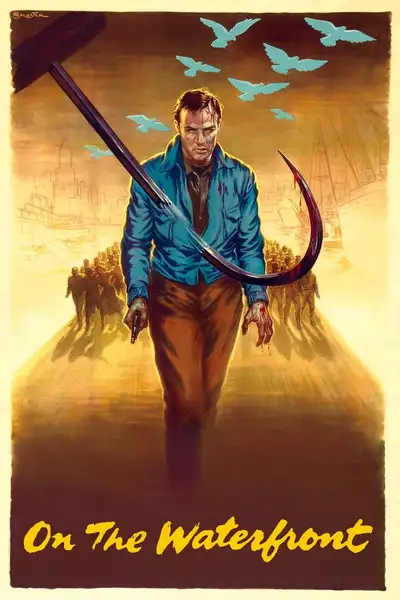
When a decent man must choose between loyalty to his corrupt union brothers and doing what's right, the result is one of American cinema's most powerful moral dramas, directed with raw intensity by Elia Kazan. Marlon Brando gives what many consider his greatest performance as Terry Malloy, a washed-up boxer turned longshoreman who witnessed a murder orchestrated by the mob-connected union bosses who control the waterfront. Brando brings an extraordinary combination of physical grace and emotional vulnerability to the role, making Terry's journey from complicit bystander to courageous witness utterly compelling. Eva Marie Saint is luminous as the woman who inspires his transformation, while Lee J. Cobb is terrifying as the union boss. Budd Schulberg's screenplay crackles with authenticity, drawn from real waterfront corruption, and Kazan's documentary-influenced direction gives the film an urgent, lived-in quality. Leonard Bernstein's score perfectly underscores the drama. This is essential cinema, a film that remains as morally complex and emotionally devastating today as when it first appeared.

Lewis Milestone's adaptation of Erich Maria Remarque's novel remains the definitive anti-war film, a technically stunning and emotionally devastating portrait of young German soldiers ground down by the horror of World War I. The film follows Paul Bäumer (Lew Ayres) and his classmates from idealistic enthusiasm through their brutal education in the trenches, stripping away any romantic notions of warfare with unflinching honesty. Milestone's direction is remarkably sophisticated for 1930, featuring fluid camera movements and battle sequences that convey chaos and carnage with shocking immediacy. The famous final scene achieves a heartbreaking simplicity that speaks volumes about war's senseless waste. Nearly a century later, its message hasn't aged a day—the film's depiction of how nations sacrifice their youth to pointless slaughter remains as powerful and relevant as ever.

When British Colonel Nicholson becomes a prisoner of war and is ordered to have his men build a railway bridge for the Japanese in Burma, he makes a fateful decision to collaborate—not for the enemy, but for pride, discipline, and the demonstration of British superiority. David Lean's epic masterpiece is an unforgettable examination of obsession, duty, and the madness that can emerge when principles overshadow reality. Alec Guinness delivers a towering performance as Nicholson, a man so committed to proving his point that he loses sight of whose side he's actually helping. William Holden and Jack Hawkins lead the mission to destroy what Nicholson has become dangerously proud of, setting up an explosive moral collision. Lean's direction is simply stunning—sweeping yet intimate, patient yet gripping—while Malcolm Arnold's iconic march theme has become permanently embedded in popular culture. This is filmmaking on the grandest scale with profound ideas at its core, a war film that questions the very nature of victory.