Swashbuckler Movies
Few cinematic experiences capture the exhilarating spirit of adventure quite like swashbuckler movies, where dashing heroes wield rapiers with balletic grace and charm their way through impossible odds. These timeless films transport audiences to romantic eras of pirates, musketeers, and noble outlaws who fight tyranny with a combination of acrobatic swordplay, razor-sharp wit, and unshakeable gallantry. Whether you're drawn to the golden age classics that defined the genre or seeking modern swashbuckling adventures that bring fresh energy to sword-fighting spectacle, this curated selection of 21 all-time greats showcases the very best in heroic derring-do. From chandeliers swung upon to ladies swept off their feet, from treasure-laden islands to corrupt aristocracies overthrown, these films embody everything that makes the swashbuckler genre so endlessly entertaining. Prepare to discover charismatic rogues and valiant champions across decades of cinema, each delivering the romantic escapism, thrilling duels, and triumphant justice that have made swashbuckler films beloved by generations of moviegoers seeking tales of honor, adventure, and theatrical swordplay at its finest.

In this film, director Rob Reiner crafts the ultimate fairy tale romance, framing a swashbuckling adventure as a grandfather's bedside story to his skeptical grandson. Cary Elwes and Robin Wright are perfectly cast as Westley and Buttercup, star-crossed lovers separated by presumed death and an unwanted engagement to the villainous Prince Humperdinck. What makes William Goldman's screenplay endure is how it lovingly embraces every storybook convention while gently mocking them—the result is simultaneously sincere and satirical, adventurous and hilarious. Mandy Patinkin's Inigo Montoya seeking revenge for his father's murder has become iconic, while André the Giant brings surprising tenderness to the gentle giant Fezzik. The supporting cast, including Christopher Guest, Wallace Shawn, and Billy Crystal, each get memorable moments in a brisk narrative that never outstays its welcome. Reiner balances sword fights, poisonings, torture, and true love with such confidence that the film works for children and adults alike, rewarding repeated viewings with quotable dialogue and genuine heart.

Director Matthieu Delaporte and Alexandre de La Patellière bring fresh energy to Alexandre Dumas's classic revenge epic with this handsomely mounted French adaptation. Pierre Niney commands the screen as Edmond Dantès, the wrongfully imprisoned sailor who transforms himself into the wealthy and mysterious Count to exact elaborate vengeance on those who betrayed him. The film wisely streamlines the novel's sprawling narrative while retaining its emotional core, making the complex web of revenge plots accessible without dumbing them down. The period details are sumptuous without overwhelming the story, and the pacing keeps the nearly three-hour runtime moving briskly. What elevates this version is its attention to the psychological toll of revenge, allowing Niney to show the cost of Dantès's single-minded quest. The supporting cast brings depth to characters who could easily be one-dimensional, and the action sequences deliver genuine thrills. It's a thoroughly satisfying costume drama that proves this tale of betrayal and retribution still resonates.

When a notorious pirate captain escapes imprisonment and seeks to reclaim his ship from his mutinous former crew, he reluctantly teams up with a humble blacksmith to rescue a governor's daughter from supernatural outlaws. Director Gore Verbinski revitalizes the swashbuckler genre with tremendous energy and style, crafting a thrilling adventure that never takes itself too seriously. Johnny Depp creates an instant icon in Captain Jack Sparrow, bringing unpredictable humor and surprising depth to what could have been a one-note character. Orlando Bloom and Keira Knightley handle the romantic subplot with charm, while Geoffrey Rush clearly relishes playing villainous Captain Barbossa. The supernatural elements add genuine stakes and visual flair without overwhelming the character-driven story. Klaus Badelt's rousing score and the spectacular action sequences—particularly the moonlit sword fight—make this consistently entertaining. Based on a theme park ride, this had no business being this good, yet it delivers swashbuckling fun in abundance.
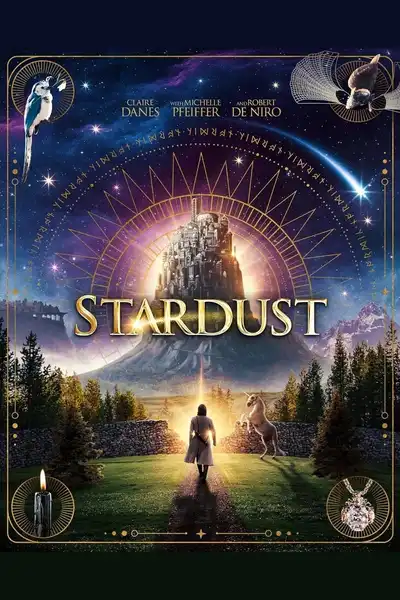
In this enchanting fantasy adventure directed by Matthew Vaughn, a young man named Tristan (Charlie Cox) ventures beyond the wall that separates his English village from the magical kingdom of Stormhold to retrieve a fallen star for the woman he loves. What he finds is Yvaine (Claire Danes), a celestial being in human form who's also being pursued by witches seeking immortality and princes fighting for the throne. The film balances swashbuckling adventure with genuine romance, anchored by the chemistry between Cox and Danes as their relationship evolves from antagonistic to tender. Robert De Niro steals scenes as a flamboyant sky pirate, while Michelle Pfeiffer brings menace as the witch Lamia. Based on Neil Gaiman's novel, the story embraces classic fairy tale structures while adding enough wit and edge to appeal to modern audiences. It's the kind of earnest, inventive fantasy that deserves more recognition than it received upon release.

Jim Caviezel embodies Edmond Dantès, a sailor betrayed by those he trusted and imprisoned for crimes he didn't commit, who escapes to exact elaborate revenge in this rousing adaptation of Alexandre Dumas's classic novel. Director Kevin Reynolds delivers a straightforward, old-fashioned adventure that embraces the source material's romantic spirit without drowning in reverence. Guy Pearce stands out among the cast as Fernand, Dantès's envious friend-turned-betrayer, bringing depth to what could have been a one-dimensional villain. The film compresses the novel's sprawling narrative into something more streamlined, perhaps losing some complexity but gaining in momentum and accessibility. Richard Harris appears briefly but memorably as the imprisoned priest who educates Dantès and reveals the treasure's location. It's a thoroughly entertaining revenge tale that balances action, romance, and moral complexity with the kind of sweep that makes classic adventure stories endure.

At its heart, this adaptation explores friendship, loyalty, and the thin line between heroism and recklessness in 17th-century France. Director Richard Lester brings remarkable energy to Alexandre Dumas's classic tale, featuring Michael York as the eager D'Artagnan alongside Oliver Reed, Richard Chamberlain, and Frank Finatra as the legendary musketeers. What distinguishes this version is its willingness to puncture romantic notions of swashbuckling adventure with muddy realism and comedic deflation—swordfights are exciting but also messy and occasionally absurd. The chemistry among the leads gives weight to the "all for one" camaraderie, while Faye Dunaway brings complexity to Milady de Winter. Lester's direction keeps the pacing brisk without sacrificing character development, and the production design vividly recreates the period without excessive reverence. This version understands that the best adventure stories balance genuine stakes with a sense of fun, resulting in an adaptation that honors its source while establishing its own identity.

When the young D'Artagnan travels to Paris seeking to join the legendary Musketeers, he arrives during a conspiracy that threatens the French throne and tests the aging heroes' loyalty. Director Martin Bourboulon revitalizes Alexandre Dumas' classic with impressive action choreography and strong production values that honor the swashbuckling tradition. François Civil brings earnest energy to D'Artagnan, while Vincent Cassel, Romain Duris, and Pio Marmaï deliver charismatic performances as the titular trio, balancing camaraderie with weariness. Eva Green commands attention as Milady de Winter, providing genuine menace to the political intrigue. Shot as the first of a two-part adaptation, the film takes time to develop its characters and political landscape, resulting in a satisfying costume adventure that respects the source material. The blend of practical stunts and period detail creates an engaging experience for both Dumas devotees and newcomers to the story.

In 17th century France, D'Artagnan and his companions continue their swashbuckling adventures in this spirited sequel that's actually the second half of Richard Lester's ambitious two-film adaptation of Alexandre Dumas's classic novel. The film picks up where "The Three Musketeers" left off, with Michael York's energetic D'Artagnan joined by Oliver Reed, Richard Chamberlain, and Frank Fineberg as they face new intrigues involving Milady de Winter (a deliciously villainous Faye Dunaway) and the machinations of Cardinal Richelieu (Charlton Heston). Lester maintains the perfect balance between action and comedy that made the first film so enjoyable, with expertly choreographed sword fights that feel genuinely dangerous yet entertaining. The production design is lavish without being stuffy, and the ensemble cast clearly relishes the material. While it works best if you've seen its predecessor, this remains a thoroughly entertaining adventure that captures the spirit of classic swashbucklers.

The high seas come alive with pirates, treasure maps, and felt in this delightfully entertaining adaptation that proves the Muppets can tackle classic literature without losing their anarchic charm. Director Brian Henson balances Robert Louis Stevenson's adventure story with the franchise's trademark humor, while Tim Curry delivers a memorably theatrical performance as Long John Silver, matching the Muppets' energy beat for beat. The human cast, including Kevin Bishop as Jim Hawkins, wisely plays it straight, letting Kermit, Miss Piggy, and the gang provide the comedy. The musical numbers are catchy without overstaying their welcome, and the production design creates a surprisingly immersive pirate world despite the obvious puppetry. It's family entertainment that doesn't condescend to younger viewers while keeping adults engaged with clever wordplay and genuine adventure.

Johnny Depp's Captain Jack Sparrow returns for another adventure, this time racing to settle his blood debt with the ghostly Davy Jones while searching for the legendary Dead Man's Chest. Director Gore Verbinski expands the scope considerably from the first film, adding Bill Nighy's motion-captured Jones and his barnacle-encrusted crew to the mix of swashbuckling action and supernatural intrigue. The film delivers elaborate set pieces—including a spectacular three-way sword fight atop a runaway water wheel—and maintains the self-aware humor that made the original fun. Orlando Bloom and Keira Knightley continue their roles, though their romantic subplot sometimes feels overshadowed by the increasingly complex mythology. The film suffers slightly from middle-chapter syndrome, setting up more than it resolves, but the journey is entertaining enough that you won't mind. Depp remains endlessly watchable, even as the film piles on plotlines and characters. It's big, loud, and enjoyable summer entertainment.

John Phillip Law stars as Sinbad in this entertaining Ray Harryhausen adventure that delivers exactly what fans of the legendary animator expect. Director Gordon Hessler guides the sailor and his crew through a quest involving a mysterious golden amulet, a Grand Vizier seeking his lost youth, and the evil magician Koura played with theatrical menace by Tom Baker. The real stars are Harryhausen's stop-motion creatures: a ship's figurehead that springs to life, a one-eyed centaur, a griffin, and the unforgettable six-armed Kali statue that duels multiple sailors in the film's standout sequence. The human performances are serviceable if somewhat wooden, and the pacing occasionally lags between creature encounters, but the practical effects work remains charming and impressive. It's a solid entry in the Sinbad series that showcases Harryhausen's artistry at a time when his painstaking animation techniques were becoming increasingly rare in cinema.

In Edwardian London and the magical realm of Neverland, director P.J. Hogan brings J.M. Barrie's beloved story to life with a version that honors the original play's darker undercurrents while maintaining its sense of wonder. Jeremy Sumpter makes for an appealingly feral Peter Pan, capturing both the character's charm and his unsettling refusal to grow up, while Rachel Hurd-Wood brings depth to Wendy Darling, emphasizing her journey toward maturity. Jason Isaacs pulls double duty as both the proper Mr. Darling and the flamboyant Captain Hook, finding the psychological connection between the two that Barrie intended. The production design is lavish and imaginative, creating a Neverland that feels genuinely magical and slightly dangerous. Hogan doesn't shy away from the story's themes of mortality and the bittersweet nature of childhood's end, making this adaptation resonate with adults while still entertaining younger viewers. The flying sequences are beautifully executed, and the film takes time to develop the emotional stakes beyond simple adventure. It's a faithful adaptation that understands what makes the story endure across generations.

Sean Connery returns to Sherwood Forest as an aging Robin Hood, reuniting with Marian (Audrey Hepburn) after twenty years apart, only to face old enemies and new battles in Richard Lester's elegiac take on the legend. The film subverts expectations by acknowledging time's passage—these aren't spry young outlaws but middle-aged idealists confronting mortality and wondering if their youthful rebellion accomplished anything lasting. Connery and Hepburn share genuine chemistry, their scenes together tender and lived-in rather than merely romantic. Lester, moving away from his earlier Musketeer films' broad comedy, finds a melancholic tone that suits the material, with autumnal cinematography by David Watkin reinforcing the themes of endings. Robert Shaw's Sheriff of Nottingham provides a worthy adversary, while the supporting cast includes strong turns from Nicol Williamson and Richard Harris. The action sequences acknowledge their protagonists' limitations, making the stakes feel real. It's a thoughtful meditation on legacy and love that respects both its characters and its audience.

This old-fashioned adventure yarn set in 1904 Morocco delivers exactly the kind of exotic, politically incorrect entertainment that Hollywood specialized in during the 1970s. John Milius directs Sean Connery as the Raisuli, a Berber chieftain who kidnaps an American woman (Candice Bergen) and her children to embarrass the Sultan and draw international attention to his cause. What follows is less a hostage thriller than a romanticized clash-of-cultures tale, with Connery's roguish charisma making the kidnapper improbably charming and Bergen's character gradually developing respect for her captor. Brian Keith provides strong support as Theodore Roosevelt, who dispatches the Marines to resolve the situation. Jerry Goldsmith's rousing score and Billy Williams's cinematography of Spanish locations standing in for North Africa give the film genuine sweep. While the politics are simplistic and the cultural representations questionable by contemporary standards, Milius orchestrates the action and character dynamics with enough energy to entertain.

This is a film about legacy, honor, and the masks we wear to become heroes. Martin Campbell directs this swashbuckling adventure that revitalized the Zorro legend for a new generation. Antonio Banderas brings charisma and athletic grace to Alejandro Murrieta, a peasant thief trained by the aging original Zorro (Anthony Hopkins) to assume the legendary mantle and fight against a corrupt Spanish governor. Hopkins and Banderas share excellent chemistry, with their mentor-student dynamic providing both humor and emotional weight. Catherine Zeta-Jones dazzles as Elena, who proves more than capable of holding her own in both romance and swordplay. The action sequences showcase genuine stunt work and choreography that feels exciting rather than computer-generated. James Horner's soaring score perfectly complements the film's romantic adventure spirit. While straightforward in its storytelling, the film succeeds through sheer entertainment value and genuine affection for its source material.

In 17th-century France, the sword-and-intrigue saga continues in this darker, more intense second chapter of Martin Bourboulon's ambitious two-part adaptation. Eva Green commands the screen as the ruthless Milady de Winter, whose quest for vengeance drives much of the plot, while Vincent Cassel, Romain Duris, and Pio Marmaï return as the iconic Musketeers caught in a web of political conspiracy. The film picks up momentum from where D'Artagnan left off, diving deeper into betrayal, espionage, and the high stakes surrounding the French throne. Bourboulon's direction emphasizes both spectacular action sequences and quieter character moments, giving the ensemble room to breathe between duels. The production design remains sumptuous, and the pacing is notably tighter than many period epics. While it helps to have seen the first installment, this sequel stands as an entertaining and handsomely mounted swashbuckler that honors Dumas while adding contemporary edge.

Gore Verbinski returns to helm the third installment of the swashbuckling franchise, delivering a sprawling epic that ties together multiple storylines from the previous films. Johnny Depp's Captain Jack Sparrow joins forces with Orlando Bloom's Will Turner and Keira Knightley's Elizabeth Swann for a final confrontation with the East India Trading Company and Davy Jones. The plot gets complicated with shifting alliances and elaborate double-crosses, but the action sequences are inventive and the production values remain impressive. The massive maelstrom battle is particularly memorable. While it doesn't quite capture the fresh energy of the first film and runs a bit long, there's enough swashbuckling fun and visual spectacle to satisfy fans of the series looking for an entertaining adventure.

When Scottish Highland farmer Rob Roy MacGregor (Liam Neeson) borrows money from the Marquis of Montrose to support his clan, the nobleman's sadistic protégé Archibald Cunningham (Tim Roth) steals the funds and frames MacGregor, igniting a vendetta that threatens everything he holds dear. Director Michael Caton-Jones crafts a handsome historical epic that values honor and character over spectacle, letting the stunning Scottish landscapes provide grandeur while keeping the focus on Rob Roy's moral code. Neeson brings grounded nobility to the role—his Rob Roy is a man of principle in a world of politics and betrayal—while Roth delivers a venomous performance as one of cinema's most detestable villains. Jessica Lange provides strength and dimension as Mary, Rob Roy's wife who becomes a victim of Cunningham's cruelty. The climactic sword fight is brutal and earned, a satisfying punctuation to a story about integrity in the face of corruption. It's old-fashioned filmmaking in the best sense.

Pippi Longstocking sails to a tropical island to rescue her sea-captain father from pirates in this Swedish adventure directed by Olle Hellbom, the final theatrical film featuring Inger Nilsson in the iconic role. Based on Astrid Lindgren's beloved character, the movie sends Pippi, Tommy, and Annika to the fictional island of Kurrekurredutt, where Pippi's father rules as king. Nilsson remains a delightful embodiment of the character's impossible strength and anarchic spirit, performing physical comedy and stunts with impressive commitment. The island setting provides colorful backdrops and opportunities for treasure-hunting adventures, though the plot meanders more than the previous films, occasionally feeling stretched at its feature length. The depiction of the tropical setting and indigenous peoples reflects its era's problematic attitudes, which modern viewers should approach with historical context. Still, the film captures Lindgren's essential themes about childhood independence and questioning arbitrary authority. The stunt work and practical effects hold up surprisingly well, and Hellbom's direction maintains the playful tone that made the character endure. For those who grew up with Pippi, this provides a satisfying farewell to Nilsson's definitive interpretation.

When Peter Pan grows up and becomes a corporate lawyer who has forgotten his magical past, Captain Hook kidnaps his children to lure him back to Neverland for a final confrontation. Steven Spielberg directs this imaginative sequel to the classic tale, with Robin Williams bringing both humor and heart to the role of the adult Peter Banning who must rediscover his inner child. Dustin Hoffman chews scenery delightfully as the revenge-obsessed Hook, while Bob Hoskins provides wonderful support as Smee. The production design is lavish and colorful, creating a Neverland that feels both whimsical and slightly dangerous. Julia Roberts appears as Tinkerbell, and the Lost Boys—now a new generation—help Peter remember who he really is. The film balances adventure, comedy, and genuine emotion as it explores themes of family, imagination, and what we lose when we grow up.

Richard Chamberlain brings swashbuckling energy to Edmond Dantès, the wrongfully imprisoned sailor who transforms himself into the wealthy Count of Monte-Cristo to exact elaborate revenge on those who betrayed him. Director David Greene's television adaptation of Alexandre Dumas's classic novel condenses the sprawling narrative into a manageable runtime while retaining the story's essential themes of justice, vengeance, and redemption. The production benefits from European locations that lend authenticity to the 19th-century setting, and Tony Curtis adds memorable support as Dantès's mentor in prison. While the pacing occasionally feels rushed given the source material's complexity, Chamberlain's performance captures both the character's transformation and the moral toll of sustained vengeance. This version may not match the novel's depth, but it delivers the satisfying plot mechanics that have made the Count's story endure across nearly two centuries.