Steampunk Movies
Step into a world where Victorian elegance collides with fantastical machinery, where steam-powered technology fuels impossible adventures, and where brass, copper, and clockwork mechanisms bring alternate histories to life. Steampunk movies transport audiences to neo-Victorian settings filled with airships soaring through smog-filled skies, eccentric inventors tinkering with anachronistic contraptions, and heroes donning iconic brass goggles as they navigate industrial-age dystopias and utopias alike. This beloved subgenre blends period aesthetics with speculative fiction, creating visually stunning films that reimagine the 19th century through a lens of retrofuturistic innovation. From classic cinema's pioneering tales of underwater exploration and time travel to contemporary fantasy adventures featuring elaborate clockwork creatures and steam-driven civilizations, these twenty essential films showcase the genre's evolution across decades of filmmaking. Whether you're drawn to gothic Victorian atmospheres, Jules Verne-inspired adventures, or dark fantasy worlds brimming with mechanical marvels, the best steampunk films offer a unique cinematic experience where historical fiction meets unbridled imagination, all wrapped in the distinctive amber glow of gaslight and the rhythmic hiss of pressurized steam.

Dark, atmospheric, and deeply introspective, this fresh adaptation of Mary Shelley's gothic masterpiece strips away the familiar monster movie trappings to explore the profound loneliness at the story's core. Director Guillermo del Toro brings his signature visual artistry to the tale of Victor Frankenstein's doomed experiment, with Oscar Isaac portraying the obsessed scientist and Jacob Elordi delivering a surprisingly nuanced performance as the Creature. The film emphasizes the tragic relationship between creator and creation, with del Toro crafting sequences that are simultaneously beautiful and unsettling. Mia Goth appears as Elizabeth Lavenza, grounding the story's more fantastical elements in genuine human emotion. Rather than rushing toward horror set pieces, this version allows scenes to breathe, letting the philosophical questions about creation, responsibility, and what defines humanity take center stage. The period detail feels meticulously researched without becoming stuffy, and del Toro's empathy for outsiders transforms this familiar narrative into something that feels genuinely revelatory.

Dark, imaginative, and visually intoxicating, this French fantasy from directors Marc Caro and Jean-Pierre Jeunet creates a singular steampunk dystopia unlike anything else in cinema. The story follows a traveling strongman and a brave young girl searching for her kidnapped brother in a nightmarish port city ruled by a brain-in-a-jar mad scientist who steals children's dreams. Ron Perlman brings surprising tenderness to his role as the gentle giant One, while the film surrounds him with grotesque yet fascinating characters—including a cult of identical cloned brothers. The production design is extraordinarily detailed, crafting a rusted, analog-mechanical world of perpetual gloom punctuated by eerie green lighting. While the plot occasionally gets lost in its own baroque complications, the sheer visual invention and darkly whimsical tone make this essential viewing for fans of imaginative, adult-oriented fantasy cinema.

When young Kevin discovers a band of time-traveling dwarves emerging from his wardrobe with a stolen map showing holes in the fabric of space-time, he's swept into an adventure across history pursued by the Supreme Being and the forces of Evil. Director Terry Gilliam brings his distinctive visual imagination to this family fantasy that's darker and stranger than typical children's fare. The titular bandits, played by David Rappaport, Kenny Baker, and others, make opportunistic thieves rather than noble heroes, giving the story unexpected edge. Gilliam populates various time periods with memorable cameos—Sean Connery as Agamemnon, John Cleese and Katherine Helmond as lovers constantly interrupted by history, and Ralph Richardson as the Supreme Being. The film balances Monty Python-esque humor with genuine wonder and surprisingly thoughtful themes about creation, imagination, and materialism. The practical effects and production design create a handmade quality that enhances rather than diminishes the fantasy. Ian Holm brings theatrical menace to Evil personified. While occasionally chaotic in true Gilliam fashion, the film's creativity and willingness to treat young audiences intelligently makes it enduringly charming.

When an ancient truce between humanity and the magical realm teeters on collapse, it falls to Hellboy and his team at the Bureau for Paranormal Research and Defense to prevent Prince Nuada from awakening an indestructible mechanical army. Director Guillermo del Toro fully embraces his visionary imagination in this sequel, crafting a fantasy world overflowing with extraordinary creature designs and sumptuous visual detail. Ron Perlman inhabits Hellboy with gruff charisma, making the demon hero's struggles with belonging and love genuinely affecting, while Doug Jones brings elegance to the expanded role of fish-man Abe Sapien and introduces the tragic Prince Nuada. The Troll Market sequence alone showcases del Toro's unmatched ability to populate the screen with wonder. Unlike typical superhero fare, this film sympathizes with its villain's motivations, adding moral complexity to the spectacular action sequences. It's a comic book movie that feels handcrafted rather than assembly-line, filled with imagination and heart.

In modern-day America, a demon summoned by Nazis during World War II has become humanity's best defense against supernatural threats. Director Guillermo del Toro brings Mike Mignola's beloved comic character to life with Ron Perlman perfectly cast as the wisecracking, cigar-chomping Hellboy. The film balances creature-feature excitement with genuine heart, as Hellboy struggles with his demonic origins while working for the Bureau for Paranormal Research and Defense. Perlman brings surprising depth to what could have been a one-note character, making Hellboy's relationship with the pyrokinetic Liz Sherman (Selma Blair) genuinely touching. Del Toro's creature designs are magnificently weird, from the grotesque Sammael to the sinister Rasputin, and the action sequences deliver supernatural thrills. It's pulpy entertainment elevated by strong character work and del Toro's distinctive visual style.

In an underground city built to protect humanity from an unspecified disaster, perpetual darkness and failing infrastructure signal that time is running out for the citizens of Ember. Director Gil Kenan adapts Jeanne DuPrau's young adult novel into a family-friendly adventure following teenagers Liz (Saoirse Ronan) and Doon (Harry Treadaway) as they search for a way to save their dying city. The production design creates a convincing subterranean world powered by a failing generator, with impressive attention to how a society might function entirely without natural light. Ronan brings her natural talent to a role that requires both curiosity and determination, while Bill Murray and Tim Robbins add gravitas as adult authority figures with hidden agendas. The film works best as a visual experience—the contrast between Ember's perpetual twilight and the world beyond creates genuine wonder. While the plotting sometimes feels rushed and certain narrative elements remain underdeveloped, younger viewers will likely appreciate the mystery-solving adventure and themes about questioning authority. Kenan maintains appropriate stakes without becoming too dark for family viewing.

This family-friendly fantasy follows young Lewis, a recently orphaned ten-year-old who moves in with his eccentric warlock uncle (Jack Black) in a creaky Victorian mansion that happens to contain a mysterious ticking clock hidden within its walls—a clock with the power to bring about the end of the world. Director Eli Roth, better known for horror, brings surprising gentleness to this adaptation of John Bellairs' beloved novel, though his eye for gothic atmosphere serves the material well. Cate Blanchett adds sparkle as the next-door neighbor witch, bantering with Black in scenes that suggest a genuine friendship beneath the magical mayhem. The production design is appropriately elaborate, with the house itself becoming a character through its animated stained glass, topiary griffins, and constantly shifting interiors. Where the film doesn't quite cast its spell is in the somewhat routine plot progression and villain resolution, though young viewers likely won't mind. It's pleasant enough entertainment that respects its audience without achieving true magic.

This family-oriented adventure from director Robert Stevenson sends an expedition of Edwardian-era explorers searching for a lost Arctic civilization, combining Jules Verne-style adventure with Disney's signature blend of spectacle and wholesomeness. Donald Sinden leads the cast as the British archaeologist organizing the expedition, while David Hartman plays the American captain hired to guide them through treacherous frozen waters. The film's ambitions occasionally exceed its budget, with matte paintings and miniature work that don't quite convince, but there's old-fashioned charm in its earnest storytelling and commitment to pulp adventure tropes. The discovery of the hidden Viking society provides colorful production design and some fish-out-of-water comedy, though modern viewers might wince at certain cultural representations. For those with nostalgia for Disney's live-action adventure films of this era, it delivers the expected pleasures, even if it never quite achieves the heights of the studio's best work.

This is a meditation on faith, reality, and the stories we tell ourselves to survive trauma, split between a dystopian religious city and contemporary London. Director Gerald McMorrow weaves together multiple narrative threads that initially seem disconnected—Ryan Phillippe's masked vigilante in a gothic fantasy metropolis, Sam Riley's troubled artist, Eva Green's heartbroken woman searching for meaning, and Bernard Hill's suicidal man. The ambitious structure asks viewers to work for their understanding as the connections between these stories gradually emerge. The visual contrast between the elaborate Meanwhile City and gritty London settings creates striking cinematic texture, even if the budget doesn't quite match McMorrow's imagination. Not everything comes together as cleanly as intended, and some viewers may find the resolution either profound or frustratingly opaque depending on their patience for ambiguity. Still, there's genuine originality in the attempt, and the performances invest heavily in material that could have felt pretentious in less committed hands.

When humanity faces extinction from a devastating war, a young man is transformed into a powerful neo-human warrior, setting up an epic battle between hope and destruction. Director Kazuaki Kiriya's live-action adaptation of the classic anime series is a visual spectacle that drowns viewers in CGI-enhanced imagery, creating a hyper-stylized world where almost every frame looks like a painting. Yûsuke Iseya stars as the titular Casshern, navigating a plot that blends family drama with science fiction mythology and philosophical questions about humanity's future. The film's ambition is undeniable—it swings for the fences with its operatic tone and elaborate world-building. While the relentless visual effects occasionally overwhelm the storytelling and the pacing can feel uneven, there's something admirable about Kiriya's commitment to his singular aesthetic vision. For viewers willing to embrace its excesses, Casshern offers a unique, if exhausting, cinematic experience.

Neil Dickson stars as James "Biggles" Bigglesworth in this peculiar time-traveling adventure that pairs a World War I flying ace with a modern-day New York businessman. Directed by John Hough, the film follows an unexpected temporal connection that pulls present-day Jim Ferguson (Alex Hyde-White) back to 1917 whenever Biggles faces mortal danger. The concept is admirably ambitious, blending aerial dogfights with fish-out-of-water comedy as the two Jims navigate both eras to thwart a German superweapon plot. While the tonal shifts between earnest wartime drama and comedic time-travel hijinks don't always gel seamlessly, the practical flying sequences hold up reasonably well, and Dickson brings genuine charm to the legendary aviator. It's an uneven but entertaining piece of '80s adventure filmmaking that deserves credit for its sheer inventiveness, even when the execution doesn't quite match the imagination behind it.

In a post-apocalyptic future where cities have become mobile predators consuming smaller towns for resources, a young woman named Hester Shaw seeks revenge against those who destroyed her family. Director Christian Rivers, a longtime Peter Jackson collaborator making his feature debut, brings impressive visual imagination to Philip Reeve's steampunk world, with the mobile city of London particularly stunning in its mechanized complexity. Hugo Weaving anchors the cast as the villain Thaddeus Valentine, while newcomers Hera Hilmar and Robert Sheehan navigate the film's elaborate world-building as protagonists caught in much larger schemes. The production design deserves recognition for creating a truly unique aesthetic, blending Victorian sensibilities with dystopian technology and Eastern influences. Unfortunately, the ambitious visuals sometimes overwhelm the narrative, with the plot rushing through complex political dynamics and character relationships that might have benefited from more breathing room. Despite these structural issues, there's genuine imagination on display here, and the film's willingness to commit fully to its bizarre premise has a certain charm.

In an alternate steampunk reality, vampires and humans have evolved to coexist peacefully, with vampires serving as a benevolent ruling class known as the Brotherhood—until a rogue vampire begins murdering human women, threatening to shatter this fragile détente. Director Glenn Standring's "Perfect Creature" pairs vampire detective Silus (Dougray Scott) with human police captain Lilly (Saffron Burrows) to track down his own brother Edgar, who has broken the sacred covenant. The film boasts striking production design that blends Victorian gothic aesthetics with industrial machinery, creating a visually distinctive world that deserves a better script. While the premise offers intriguing possibilities for exploring themes of power and cooperation, the execution stumbles with uneven pacing and underdeveloped character relationships. Scott brings brooding intensity to his role, but the romantic tension never quite catches fire. It's an ambitious attempt at reinventing vampire mythology that works better as a visual curiosity than as a fully realized narrative, though genre fans may appreciate its sincere effort to do something different.

At its core, this adaptation of Edgar Rice Burroughs' novel attempts to explore Victorian-era assumptions about progress and civilization, but those themes get thoroughly buried under cheap production values and campy execution. Director Kevin Connor reunites with Doug McClure (following their Amicus Productions collaborations) for this tale of a Victorian scientist and his team who drill into the Earth and discover a subterranean world populated by prehistoric creatures and primitive humanoids. Peter Cushing brings his usual professionalism to the proceedings, lending unearned dignity to dialogue about telepathic pterodactyls and underground civilizations, but even his presence can't rescue the film from its fundamental shoddiness. The creature effects range from barely adequate to laughably poor, with rubber monsters that never convince for a moment, while the production design suggests a budget that couldn't afford more than a few foam rocks and some colored lighting. The pacing drags whenever the film tries to develop its lost-world mythology, and the action sequences lack any real excitement or danger. What might have been a fun pulp adventure instead plays as a tired retread of better hollow-earth stories, without sufficient imagination or resources to justify its existence beyond nostalgic curiosity for completists of '70s fantasy cinema.

Stephen Norrington directs this adaptation of Alan Moore's graphic novel with more ambition than execution, assembling literary heroes like Allan Quatermain, Mina Harker, and Captain Nemo to face a Victorian-era threat. Sean Connery leads the ensemble in his final theatrical role, bringing gravitas to material that often doesn't deserve it. The steampunk production design occasionally impresses—Nemo's submarine Nautilus is genuinely impressive—but the film never escapes feeling like a collection of cool concepts rather than a cohesive whole. The action sequences vary wildly in quality, and the plot becomes increasingly convoluted as it progresses. There's entertainment value in watching these characters interact, and some performances (particularly Stuart Townsend as Dorian Gray) show glimpses of what might have been. Unfortunately, the rushed production and reported behind-the-scenes conflicts result in a film that feels half-finished. It's a missed opportunity that occasionally entertains but ultimately disappoints, especially given the richness of the source material and the potential of its premise.
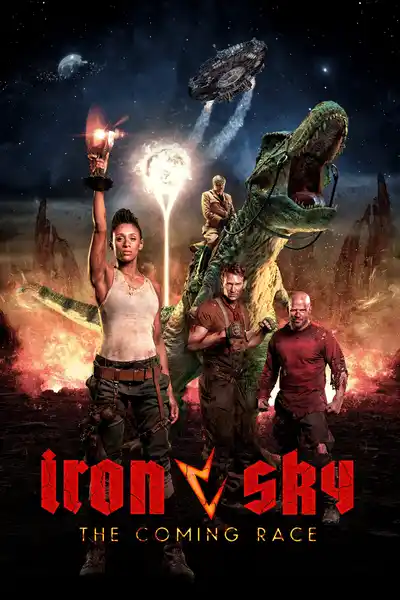
Timo Vuorensola returns to his cult science fiction universe with this wildly ambitious sequel that trades the moon base of the original for a journey to the hollow Earth, complete with dinosaurs, lost civilizations, and Hitler riding a T-Rex. Yes, really. The film doubles down on the gonzo absurdity that made "Iron Sky" a midnight movie favorite, though the results are decidedly mixed this time around. The practical effects and creature work show real creativity on a limited budget, and there's genuine audacity in the film's anything-goes approach to sci-fi lunacy. However, the satire that gave the first film its edge feels more scattershot here, and the pacing sags considerably in the middle section. Lara Rossi gamely leads the cast through increasingly bizarre scenarios, but the performances struggle to match the crazy concepts. Die-hard fans of the original will find moments to appreciate, and the sheer weirdness has its own appeal, but newcomers might wonder what they've stumbled into.

Fritz Kiersch attempts to bring John Norman's controversial Gor novels to screen and delivers a fantasy adventure that feels cheap even by 1980s sword-and-sorcery standards. The film follows an American professor, played by a wooden Urbano Barberini, who gets transported to the counter-Earth planet Gor, where he must somehow become a warrior hero despite showing no particular aptitude for it. The costume design looks like rejected Renaissance Faire outfits, while the special effects rarely convince, particularly during the creature encounters that should provide excitement but instead prompt unintentional laughter. Rebecca Ferratti and Jack Palance try their best with the material, but the script gives them little beyond fantasy clichés and exposition dumps. Kiersch's direction lacks energy, turning potential action sequences into sluggish sword-waving with no sense of choreography or spatial awareness. The film's outdated gender politics haven't aged well either, making this a curiosity at best.