Spaghetti Western Movies
The dusty borderlands between Mexico and the American Southwest became the unlikely canvas for Italy's most revolutionary contribution to cinema—the spaghetti western. Born in the 1960s from European studios seeking to reimagine the American frontier, these stylish genre masterpieces transformed the cowboy film from straightforward morality plays into operatic meditations on greed, violence, and survival. With their sweeping cinematography, iconic Ennio Morricone scores, and morally ambiguous antiheroes who shoot first and rarely ask questions, Italian westerns traded Hollywood's mythmaking for cynical realism wrapped in baroque visual splendor. Directors like Sergio Leone elevated the genre through extreme close-ups, pregnant silences, and explosive gunfights that feel like tragic ballets. These revisionist westerns feature lone gunfighters, ruthless bounty hunters, and enigmatic strangers whose motivations remain perpetually unclear, all navigating a lawless frontier where survival demands compromise and honor proves costly. From the groundbreaking Dollars Trilogy to the brutal nihilism of snowbound revenge tales, this curated selection of 21 essential spaghetti westerns spans the genre's most influential decades, showcasing the films that didn't just imitate the American western—they deconstructed, redefined, and ultimately revolutionized it for generations of filmmakers worldwide.

Sergio Leone brings his operatic sensibility to the Mexican Revolution in this explosive, surprisingly funny epic about an unlikely partnership between a cynical Irish explosives expert and a Mexican bandit. Rod Steiger plays Juan Miranda, the outlaw who dreams of robbing banks, while James Coburn is John Mallory, the IRA veteran who keeps getting pulled into revolutionary politics despite his disillusionment. Leone orchestrates spectacular action sequences—particularly a train robbery that becomes a masterclass in suspense—while Ennio Morricone's score alternates between haunting and rousing. What distinguishes this from standard action fare is its ambivalence about revolution and heroism, finding dark comedy in violence while acknowledging its human cost. The film's sprawling runtime allows for both epic scope and intimate character moments, resulting in a deeply satisfying entry in Leone's legendary filmography.
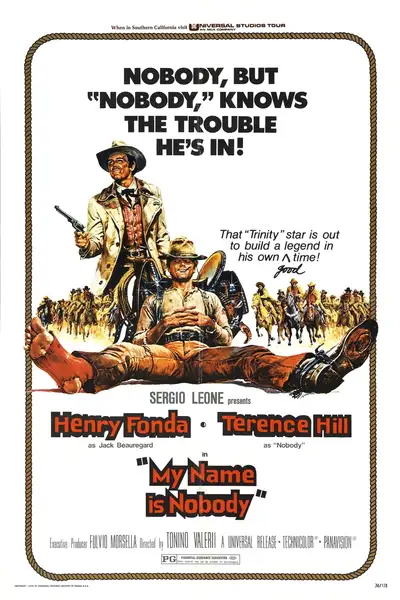
In the waning days of the Old West, a young gunslinger played by Terence Hill crosses paths with his aging hero, the legendary Jack Beauregard, portrayed by Henry Fonda in a wonderfully world-weary performance. Sergio Leone produced this playful deconstruction of Western mythology, directed by Tonino Valerii with a perfect blend of comedy, action, and genuine affection for the genre's conventions. Hill's Nobody is determined to orchestrate one final showdown that will cement Beauregard's legend before the frontier disappears entirely, leading to clever set pieces that lovingly parody classic Western tropes. Ennio Morricone's score alternates between sweeping grandeur and whimsical humor, perfectly matching the film's tone. The chemistry between Hill's energetic trickster and Fonda's exhausted gunfighter gives the film surprising emotional depth beneath its lighthearted surface, making it a worthy companion piece to Leone's more serious Westerns.

Terence Hill stars as Trinity, a laconic, lightning-fast gunslinger who arrives in a dusty Western town to discover his brother Bambino (Bud Spencer) masquerading as the sheriff. Enzo Barboni's spaghetti Western comedy became a massive hit by blending genre tropes with slapstick humor and an easygoing, irreverent tone that set it apart from the genre's typically grim affairs. Hill and Spencer have wonderful chemistry, with Hill's acrobatic gunfighting and laid-back charm playing perfectly against Spencer's bruising physicality. The plot involves Mormon settlers, horse thieves, and the brothers' reluctant heroism, but the real pleasure comes from the comedic set pieces and the pair's bickering camaraderie. Franco Micalizzi's memorable score captures the film's playful spirit. The action sequences mix genuine skill with physical comedy, creating something that works both as Western and as comedy. It launched a successful franchise and remains hugely entertaining—a film that proved the Western could be fun without losing its essential appeal.

A Swedish mercenary and a pacifist revolutionary find themselves reluctantly partnered during the Mexican Revolution in this entertaining spaghetti western from director Sergio Corbucci. Franco Nero stars as Yodlaf Peterson, the amoral Swede motivated purely by money, while Tomas Milian plays revolutionary El Vasco, whose idealism clashes with his partner's cynicism. Corbucci, who previously directed the influential "Django," brings his characteristic visual style and political awareness to this buddy-movie framework, using the Mexican Revolution backdrop to explore themes of greed, idealism, and unlikely friendship. The film balances humor and violence effectively, with Milian's manic energy providing comic relief alongside the action sequences. Ennio Morricone's score combines Mexican musical elements with his signature baroque western sound, enhancing the film's adventurous tone. While not reaching the genre-defining heights of Leone's best work, "Compañeros" offers an engaging combination of action, comedy, and political commentary that showcases spaghetti western filmmaking beyond the usual revenge narratives.

A half-white, half-Native American gunfighter returns to his plague-ravaged frontier town to confront both a corrupt regime and the family that never accepted him. Director Enzo G. Castellari crafts one of the twilight spaghetti westerns, arriving after the genre's peak but delivering a gritty, politically charged entry. Franco Nero plays Keoma with weary intensity, a warrior shaped by violence who still possesses moral clarity in a world that's lost its compass. The film tackles racism, exploitation, and societal collapse with more seriousness than many westerns attempt, though it never forgets to deliver strong action sequences. The supporting cast, including William Berger and Woody Strode, adds depth to what could have been stock characters. Castellari's direction emphasizes the physical and moral filth of this dying town. The result is a darker, more reflective western that benefits from arriving after the genre's conventions had been thoroughly established and explored.

In the dusty landscape of the Old West, the Trinity Kid returns alongside his hulking brother Bambino for another round of comic spaghetti western mayhem that improves on the already delightful original. Terence Hill and Bud Spencer reunite with director Enzo Barboni (as E.B. Clucher) for a sequel that leans even harder into the comedy while maintaining genuine affection for western tropes. Hill's lazy, impossibly fast gunslinger and Spencer's lumbering horse thief brother stumble into a range war, scheming to play both sides while actually developing something resembling principles. The physical comedy is inventive and expertly timed, particularly in the film's celebrated brawling sequences where Spencer demolishes entire gangs with bemused efficiency. What distinguishes this from typical genre parodies is the genuine warmth between the leads and Barboni's affection for the western itself. It's broad, good-natured entertainment that became a massive international hit for good reason.

Epic and operatic in scope, this Argentine historical drama traces the tragic life of gaucho folk hero Juan Moreira with sweeping cinematography and passionate performances. Director Leonardo Favio transforms a familiar national legend into something approaching myth, using bold visual compositions and a stirring musical score to elevate the material beyond conventional biopic territory. Rodolfo Bebán inhabits the title role with fierce intensity, portraying Moreira as both victim of systemic injustice and architect of his own downfall through pride and violence. The film doesn't shy from the brutal realities of 19th-century rural Argentina, where corruption and class divisions drove men to desperate acts. Favio's camera movements and editing create a hypnotic rhythm that pulls viewers into Moreira's increasingly desperate world, even during the slower middle section. It's a powerful piece of national cinema that manages to honor its source material while interrogating the romanticization of outlaw figures.

This brutal Spanish Western from director Joaquín Luis Romero Marchent doesn't flinch from depicting the harsh realities of frontier justice and human survival. A sergeant (Robert Hundar) escorts seven convicted criminals through a treacherous mountain winter, where avalanches, freezing temperatures, and mounting desperation transform the journey into a savage struggle for survival. Marchent embraces the nihilistic edge that defined European Westerns of this era, creating an atmosphere of relentless bleakness punctuated by shocking violence. The snow-covered locations provide a striking contrast to the sun-baked settings typical of the genre, while cinematographer Luis Cuadrado captures both the stark beauty and mortal danger of the landscape. The film's willingness to let characters deteriorate morally and physically gives it a raw power that still resonates. It's uncompromising and occasionally uncomfortable viewing, but those seeking a Western stripped of romanticism will find much to appreciate.

A condemned gunfighter is offered a pardon if he'll murder a rancher in this revisionist Western from director Monte Hellman that turns the genre's conventions on their head. Warren Oates plays Clayton Drumm, the outlaw given this deadly assignment, only to find himself drawn to the rancher's wife (Fabio Testi and Jenny Agutter) in ways that complicate his mission. Hellman brings his characteristic existential approach to the material, creating a sun-bleached meditation on loyalty, desire, and the impossibility of escaping one's past. The Italian-Spanish co-production moves at a deliberate pace that allows character moments to breathe, with Oates delivering one of his typically compelling performances. Composer Pino Donaggio's score adds an unexpected romantic dimension to what could have been a standard revenge tale. It's an offbeat entry in the Western canon that rewards patient viewers willing to embrace its melancholic rhythm.

A weary gunfighter seeking redemption collides with a ruthless landowner's expansion plans in this Italian Western that explores familiar territory with enough style to justify the journey. Director Michele Lupo crafts a revenge tale anchored by Giuliano Gemma as a former outlaw attempting to leave violence behind, only to be drawn back when innocent settlers face displacement and death. The moral landscape here is typically murky for the genre—heroes carry significant baggage, villains occasionally display humanity, and justice arrives through bullets rather than law. Gemma brings weathered charisma to his conflicted protagonist, while the supporting cast populates the frontier town with recognizable types elevated by capable performances. The action sequences deliver Spaghetti Western fundamentals competently if not exceptionally, with dusty shootouts and tense standoffs punctuating a plot that builds steadily toward its violent resolution. The score and cinematography evoke the genre's iconic aesthetic without transcending it. For fans of Italian Westerns, it's a reliably entertaining entry that won't disappoint, though it likely won't become anyone's favorite either.

Lucio Fulci ventures into Spaghetti Western territory with this gritty tale following four outcasts navigating the brutal American frontier. Fabio Testi leads the group, which includes a pregnant prostitute, a mentally unstable gambler, and an alcoholic, as they encounter various dangers including a sadistic bandit played with unsettling intensity by Tomas Milian. The film doesn't shy away from violence and dark subject matter, reflecting the twilight years of the Western genre when filmmakers were deconstructing its myths. Fulci brings his characteristic visual flair to the proceedings, though the pacing can be uneven, and some sequences drag. The film works best when focusing on the fractured relationships between its desperate characters, all trying to survive in an unforgiving landscape. While not reaching the heights of Leone or Corbucci, it offers a compellingly bleak alternative take on Western tropes.

This Spaghetti Western from director Giancarlo Santi (working under Sergio Leone's mentorship) delivers solid genre entertainment even if it doesn't quite reach the heights of its more famous contemporaries. Lee Van Cleef plays a mysterious gunfighter who protects a young man wrongly accused of murder, facing off against a trio of powerful brothers seeking revenge. Alberto Dentice co-stars as the accused, while the reliable Horst Frank brings menace as one of the antagonists. The film benefits from Luis Bacalov's memorable score and some well-staged action sequences, particularly the climactic showdown. Santi demonstrates a clear understanding of the Western formula, incorporating political corruption and moral ambiguity into what could have been a straightforward revenge tale. While it doesn't break new ground, the pacing remains tight and Van Cleef's weathered charisma anchors the proceedings effectively. It's a respectable addition to the Spaghetti Western catalog that deserves more recognition.

In early 1970s Turkey, director Seden Kiziltunç crafts a melodrama that captures the social tensions and romantic complications of its era. The film follows a young woman navigating class differences and family expectations as she pursues an unlikely romance, with the Bosphorus serving as a recurring visual motif throughout. While the pacing occasionally falters and some dramatic beats feel overly theatrical by contemporary standards, there's an earnest charm to the storytelling that carries the narrative forward. The lead performances convey genuine chemistry, and Kiziltunç demonstrates a strong eye for composition, particularly in scenes contrasting urban sophistication with traditional values. The film doesn't break new ground in the romantic drama genre, but it represents a solid example of Turkish popular cinema from this period. Cultural historians and fans of international melodrama will find plenty to appreciate in its sincere approach to timeless themes of love and social mobility.

Maurizio Merli stars as Mannaja, a solitary bounty hunter who wields a tomahawk as his weapon of choice in this gritty Spaghetti Western from director Sergio Martino. The film follows Blade as he arrives in a mining town controlled by corrupt forces, where he becomes entangled in a conflict involving stolen silver and local power struggles. Merli brings a stoic intensity to the role, supported by John Steiner as the villain and Martine Brochard as a saloon owner with her own agenda. While the plot treads familiar Western territory, Martino delivers solid action sequences and maintains a suitably dusty atmosphere throughout. The film may not reinvent the genre, but it offers enough violent set pieces and moral ambiguity to satisfy fans of Italian Westerns seeking a competent entry from the tail end of the movement.

Bud Spencer stars as a gunslinger who reluctantly finds himself protecting a group of Mormons traveling west in this spaghetti western comedy. Director Michele Lupo leans heavily into Spencer's established persona—the gruff, brawling tough guy with a hidden soft side—delivering exactly what fans of the actor expect. The fish-out-of-water premise, pairing a violent gunman with pacifist settlers, mines familiar comedic territory, with Spencer's signature fight scenes providing the main entertainment. The western elements are present but secondary to the comedy, which relies on Spencer's physical presence and comic timing. While the plot is threadbare and predictable, and the humor is broad and occasionally repetitive, there's an easygoing charm to the proceedings. The supporting cast serves their purpose without making strong impressions, functioning mainly as foils for Spencer's antics. Production values are adequate for the genre and era, with decent location work capturing the western landscape. It's undemanding entertainment that delivers what Spencer's fanbase wanted—brawls, laughs, and his particular brand of charisma—without aspiring to anything more ambitious.

This Spaghetti Western entry in the Sartana series offers solid genre entertainment with director Giuliano Carnimeo delivering stylish gunfights and the requisite twists. Gianni Garko returns as the sharpshooting, poker-playing anti-hero Sartana, this time investigating a stagecoach heist that leads to a complex web of betrayal involving stolen gold. The film embraces the baroque tendencies of Italian Westerns with elaborate costumes, inventive weaponry, and a convoluted plot that keeps viewers guessing about shifting allegiances. Carnimeo stages the action competently, and the film benefits from colorful supporting characters and the dry wit that defines the series. While it may not reach the heights of Sergio Leone's masterworks, it understands the appeal of these stylized Westerns and delivers enough creative flourishes—including Sartana's trademark gadgets and trick shots—to satisfy fans of the genre seeking entertaining escapism with a distinctly European flavor.

Duccio Tessari, who helped establish the spaghetti western genre, brings his stylistic sensibilities to this Italian-French production featuring Alain Delon as the legendary masked hero. The film attempts to inject new energy into the Zorro mythos with European sensibilities and Tessari's action expertise, though the results feel somewhat uneven despite moments of genuine flair. Delon brings charisma to the dual role of the foppish Don Diego and his masked alter ego, and the supporting cast includes Stanley Baker as the primary antagonist. The action sequences demonstrate Tessari's skill with choreography and editing, delivering several entertaining sword fights that justify the film's existence. However, the tone wavers between swashbuckling adventure and darker, more cynical territory without fully committing to either approach. The production design is serviceable if not particularly memorable. It's a perfectly watchable entry in the Zorro canon that will satisfy fans seeking a different take on the character, even if it doesn't rank among the definitive versions.

Giuliano Carnimeo directs this spirited entry in the Sartana series, delivering the stylized violence and twisty plotting that genre fans expect. Gianni Garko returns as the enigmatic gunslinger, his black-clad antihero navigating a convoluted scheme involving stolen gold, double-crosses, and a town full of suspicious characters. The film embraces the spaghetti western's theatrical aesthetic with elaborate production design and Stelvio Cipriani's memorable score, creating a comic book atmosphere that prioritizes entertainment over realism. Carnimeo stages the action sequences with flair, particularly a memorable shootout in a saloon rigged with deadly traps. While the plot becomes nearly impossible to follow through its multiple betrayals and revelations, that complexity feels intentional—part of the playful, puzzle-box approach that defines the series. The supporting cast chews scenery enthusiastically, and the film maintains enough energy and visual invention to overcome its narrative excesses.

When an English aristocrat travels to the American frontier to claim his inheritance, he must learn the ways of the Wild West from three grizzled cowboys who take him under their wing. Terence Hill stars as the fish-out-of-water nobleman opposite Gregory Walcott, Yanti Somer, and Harry Carey Jr. as his unlikely mentors in this comedy Western directed by Enzo Barboni. The film plays the culture clash for gentle laughs rather than sharp satire, as Hill's refined gentleman gradually transforms into a capable frontiersman through a series of increasingly absurd training sequences. The tone remains light throughout, with Barboni (who directed the popular Trinity films with Hill) demonstrating his knack for blending comedy with Western action. While the humor is broad and the plot predictable, Hill's natural charm carries the film through its more formulaic moments. The supporting cast brings energy to their archetypal roles, and the Italian-Spanish locations stand in convincingly for the American West. It's pleasant, undemanding entertainment that delivers what it promises without pretension.

This Spaghetti Western twists genre conventions by centering on an unlikely criminal partnership between a Swedish outlaw and a Mexican woman seeking revenge. Directed by Sergio Corbucci, the film stars Tomas Milian as the charismatic bandit Jed and Susan George as Sonny, whose quest for vengeance against those who wronged her family drives the narrative forward. The duo's relationship evolves from uneasy alliance to genuine partnership as they rob, scheme, and shoot their way across a dusty frontier landscape. Corbucci brings his characteristic visual flair and cynical worldview to the material, though this entry doesn't quite reach the heights of his more celebrated works like "Django." The action sequences deliver the genre's expected pleasures—quick draws, elaborate shootouts, dust-choked standoffs—while the script attempts to subvert some Western tropes through Sonny's agency and unconventional role. Ennio Morricone's score adds the requisite epic sweep. It's a solid genre entry that benefits from George's surprisingly fierce performance and the chemistry between its leads.

Director Giuseppe Vari delivers a serviceable Spaghetti Western that embraces the genre's cynical worldview and violent aesthetics with workmanlike efficiency. The film follows a mysterious stranger who arrives in a town torn apart by competing factions fighting over gold, playing both sides while pursuing his own agenda. Klaus Kinski appears in a supporting role, bringing his characteristic intensity to a revenge-seeking character, while lead actor Craig Hill handles the action requirements capably if without particular charisma. Vari stages gunfights with adequate flair and maintains reasonable pacing through the double-crosses and shifting allegiances that define these Italian Westerns. The film doesn't innovate within the genre but demonstrates understanding of what makes these films work: morally ambiguous characters, sudden violence, a cynical view of human nature, and enough plot twists to maintain interest. It's solid genre entertainment that will satisfy Western enthusiasts seeking another entry in the Italian cycle, even if it doesn't distinguish itself enough to become a standout among the numerous similar films produced during the era.