Sea Adventure Movies
The vast, unpredictable ocean has captivated filmmakers for over a century, providing the perfect backdrop for some of cinema's most thrilling maritime adventures. From the golden age of Hollywood to contemporary blockbusters, sea adventure movies have transported audiences into treacherous waters filled with fierce pirates, epic naval warfare, mysterious underwater worlds, and heart-pounding survival tales. These nautical films showcase the raw power and beauty of the open ocean while exploring humanity's eternal fascination with maritime exploration and the dangers that lurk beneath the waves. Whether depicting historical naval battles, treasure-hunting buccaneers, shipwreck survivors clinging to hope, or submarines navigating the deep, the best sea adventure movies combine spectacular ocean cinematography with gripping storytelling that captures both the romance and peril of life at sea. Our carefully curated selection of 21 all-time great films spans decades of cinema history, highlighting the genre's evolution from classic seafaring epics to modern tales of maritime courage and exploration. Prepare to embark on an unforgettable cinematic voyage through tempestuous storms, uncharted waters, and the timeless allure of adventure on the high seas.

Roy Scheider's Chief Martin Brody becomes an unlikely hero in this masterpiece of suspense that redefined the summer blockbuster. Steven Spielberg's direction turns a simple premise—a great white shark terrorizing a beach town—into an absolutely riveting thriller that never loosens its grip. The genius lies in what you don't see; Spielberg keeps the shark hidden for much of the runtime, building unbearable tension through John Williams' iconic score and expert pacing. Robert Shaw and Richard Dreyfuss round out a perfect cast as the grizzled shark hunter and marine biologist who join Brody's desperate mission. The final act aboard the Orca delivers some of the most thrilling sequences ever captured on film. Decades later, this remains the gold standard for creature features and proof that sometimes less truly is more.

Immersive and meticulously crafted, Peter Weir's naval epic transports viewers to the Napoleonic Wars with remarkable authenticity and attention to detail. Russell Crowe plays Captain Jack Aubrey of HMS Surprise, ordered to intercept a French privateer that outguns and outmaneuvers his vessel. Rather than delivering a straightforward action film, Weir creates a thoughtful character study about leadership, duty, and the costs of command, particularly in Aubrey's relationship with ship's surgeon Stephen Maturin (Paul Bettany), whose scientific curiosity sometimes conflicts with military necessity. The film captures the rhythms of life aboard a man-of-war with documentary-like precision, from the cramped living conditions to the shocking violence of naval combat. Russell Boyd's cinematography and the sound design create a truly sensory experience that makes you feel the spray of salt water and the concussive force of cannon fire. It's a film that respects its audience's intelligence, trusting us to follow naval terminology and strategic thinking without dumbing anything down. A masterful piece of historical filmmaking that deserved more recognition.

This visually stunning adventure drama tells the extraordinary story of a young man's survival at sea following a shipwreck that claims his family. Director Ang Lee crafts a breathtaking meditation on faith, storytelling, and the will to live, anchored by newcomer Suraj Sharma's remarkable performance as Pi Patel. Stranded on a lifeboat with a Bengal tiger named Richard Parker, Pi must find ways to coexist with the magnificent predator while battling the elements. The film's visual effects are nothing short of spectacular, creating photorealistic animals and oceanic landscapes that range from terrifying to transcendently beautiful. Lee balances the survival thriller aspects with deeper philosophical questions about the nature of reality and belief. Based on Yann Martel's beloved novel, the film earned Claudio Miranda a well-deserved Oscar for cinematography and proves that thoughtful, visually ambitious filmmaking can captivate mainstream audiences.

When a notorious pirate captain escapes imprisonment and seeks to reclaim his ship from his mutinous former crew, he reluctantly teams up with a humble blacksmith to rescue a governor's daughter from supernatural outlaws. Director Gore Verbinski revitalizes the swashbuckler genre with tremendous energy and style, crafting a thrilling adventure that never takes itself too seriously. Johnny Depp creates an instant icon in Captain Jack Sparrow, bringing unpredictable humor and surprising depth to what could have been a one-note character. Orlando Bloom and Keira Knightley handle the romantic subplot with charm, while Geoffrey Rush clearly relishes playing villainous Captain Barbossa. The supernatural elements add genuine stakes and visual flair without overwhelming the character-driven story. Klaus Badelt's rousing score and the spectacular action sequences—particularly the moonlit sword fight—make this consistently entertaining. Based on a theme park ride, this had no business being this good, yet it delivers swashbuckling fun in abundance.

In this mesmerizing survival thriller, Robert Redford delivers a nearly wordless performance as a solo sailor fighting for his life after his yacht collides with a shipping container in the Indian Ocean. Director J.C. Chandor strips the narrative to its essentials, following the unnamed protagonist through an escalating series of catastrophes with minimal dialogue and maximum tension. Redford carries the entire film through physical performance and facial expressions, demonstrating why he remains one of cinema's most compelling screen presences. Chandor's precise direction and the stunning cinematography create an immersive experience that places viewers directly alongside the struggling sailor. The result is a gripping, elemental story about human resilience and the will to survive that proves dialogue is optional when filmmaking craft is this accomplished.

Years after the first film's events, Jake Sully and his family are forced to flee their forest home and seek refuge among Pandora's reef-dwelling Metkayina clan when a vengeful human threat returns to the moon. James Cameron returns to direct this long-awaited sequel that expands the world of Pandora with stunning underwater environments and new cultures to explore. Sam Worthington and Zoe Saldaña reprise their roles as parents now, with their children providing fresh perspectives on the human-Na'vi conflict. The technical achievement remains Cameron's forte—the underwater motion-capture sequences represent a genuine breakthrough, creating aquatic creatures and environments with extraordinary detail. Kate Winslet joins as Ronal, a freediver whose performance required remarkable physical preparation. While the narrative follows familiar Cameron themes of family, environmentalism, and indigenous cultures resisting colonialism, the visual spectacle justifies the theatrical experience. At over three hours, it demands patience, but the payoff in pure cinematic beauty makes it worthwhile for those willing to dive back into this world.

James Cameron takes the underwater thriller to unprecedented depths in this technically ambitious blend of science fiction, suspense, and emotional drama. Ed Harris stars as Bud Brigman, the foreman of an experimental underwater drilling platform recruited by the Navy to search for a sunken nuclear submarine. What begins as a rescue mission transforms into a tense encounter with mysterious aquatic entities while the crew deals with escalating Cold War paranoia, equipment failures, and the crushing pressure of the deep ocean. Mary Elizabeth Mastrantonio delivers a powerful performance as Bud's estranged wife, and their fractured relationship provides genuine emotional stakes amid the spectacular set pieces. Cameron's obsession with practical effects and authentic underwater photography creates an immersive, claustrophobic experience that remains visually impressive decades later. The extended cut restores crucial footage that strengthens the film's themes. Ambitious, thrilling, and surprisingly moving, this showcases Cameron at his most technically audacious and narratively bold.

In this Cold War thriller based on Tom Clancy's bestselling novel, Sean Connery commands the screen as Soviet submarine captain Marko Ramius, who makes the dangerous decision to defect with Russia's most advanced nuclear submarine. Director John McTiernan crafts a tense, intelligent procedural as CIA analyst Jack Ryan, played by Alec Baldwin, races to determine whether Ramius truly wants to defect or plans to launch a first strike against the United States. The film excels at building suspense through dialogue and strategy rather than constant action, trusting audiences to follow complex geopolitical maneuvering and submarine warfare tactics. Connery brings gravitas and unexpected warmth to Ramius, making his motivations believable and sympathetic. The supporting cast, including Sam Neill, James Earl Jones, and Scott Glenn, elevates the material across the board. It's a thinking person's thriller that respects its audience's intelligence while delivering genuine tension and excitement.

A breathtaking reimagining of Homer's epic poem brings ancient Greece to vivid life with stunning visual effects and emotional depth that honors the source material while making it accessible to modern audiences. Director Christopher Nolan crafts an ambitious journey following Odysseus's ten-year struggle to return home after the Trojan War, navigating mythical creatures, vengeful gods, and his own hubris. The film features a powerhouse performance from Oscar Isaac as the cunning hero, supported by Zendaya as the faithful Penelope and an ensemble cast that includes Andy Serkis in a motion-capture tour de force as the Cyclops. The practical effects combined with cutting-edge CGI create genuinely awe-inspiring sequences, from the Sirens' haunting call to the terrifying encounter with Scylla and Charybdis. This is epic filmmaking at its finest—a rare blockbuster that delivers both spectacle and substance, proving that ancient stories still resonate powerfully when told with passion and vision.

The high seas come alive with pirates, treasure maps, and felt in this delightfully entertaining adaptation that proves the Muppets can tackle classic literature without losing their anarchic charm. Director Brian Henson balances Robert Louis Stevenson's adventure story with the franchise's trademark humor, while Tim Curry delivers a memorably theatrical performance as Long John Silver, matching the Muppets' energy beat for beat. The human cast, including Kevin Bishop as Jim Hawkins, wisely plays it straight, letting Kermit, Miss Piggy, and the gang provide the comedy. The musical numbers are catchy without overstaying their welcome, and the production design creates a surprisingly immersive pirate world despite the obvious puppetry. It's family entertainment that doesn't condescend to younger viewers while keeping adults engaged with clever wordplay and genuine adventure.

Johnny Depp's Captain Jack Sparrow returns for another adventure, this time racing to settle his blood debt with the ghostly Davy Jones while searching for the legendary Dead Man's Chest. Director Gore Verbinski expands the scope considerably from the first film, adding Bill Nighy's motion-captured Jones and his barnacle-encrusted crew to the mix of swashbuckling action and supernatural intrigue. The film delivers elaborate set pieces—including a spectacular three-way sword fight atop a runaway water wheel—and maintains the self-aware humor that made the original fun. Orlando Bloom and Keira Knightley continue their roles, though their romantic subplot sometimes feels overshadowed by the increasingly complex mythology. The film suffers slightly from middle-chapter syndrome, setting up more than it resolves, but the journey is entertaining enough that you won't mind. Depp remains endlessly watchable, even as the film piles on plotlines and characters. It's big, loud, and enjoyable summer entertainment.

Directors Joachim Rønning and Espen Sandberg bring Thor Heyerdahl's legendary 1947 expedition to vivid life, following the Norwegian explorer's attempt to prove ancient peoples could have sailed from South America to Polynesia. Pål Sverre Hagen stars as Heyerdahl, capturing both his visionary determination and the recklessness that endangered his crew during their 101-day journey across the Pacific on a balsa wood raft. The film balances historical adventure with intimate character drama, showing how isolation and danger test both theories and friendships. The ocean cinematography is stunning, making the vastness and peril of their journey palpable. While the script occasionally simplifies the complex dynamics and scientific debates, the sheer audacity of the expedition provides natural dramatic tension. The supporting cast effectively portrays the diverse crew members, each with their own reasons for joining this potentially suicidal voyage. It's an old-fashioned adventure film in the best sense, celebrating human courage and curiosity without excessive CGI spectacle.

Gore Verbinski returns to helm the third installment of the swashbuckling franchise, delivering a sprawling epic that ties together multiple storylines from the previous films. Johnny Depp's Captain Jack Sparrow joins forces with Orlando Bloom's Will Turner and Keira Knightley's Elizabeth Swann for a final confrontation with the East India Trading Company and Davy Jones. The plot gets complicated with shifting alliances and elaborate double-crosses, but the action sequences are inventive and the production values remain impressive. The massive maelstrom battle is particularly memorable. While it doesn't quite capture the fresh energy of the first film and runs a bit long, there's enough swashbuckling fun and visual spectacle to satisfy fans of the series looking for an entertaining adventure.

This live-action musical reimagining of Disney's animated classic brings vibrant visuals and strong vocal performances to the beloved fairy tale, even if it doesn't quite escape the shadow of the original. Halle Bailey is luminous as Ariel, possessing both the vocal chops and emotional presence to anchor the film, and her rendition of "Part of Your World" is genuinely stirring. Director Rob Marshall handles the underwater sequences with impressive technical craft, creating a colorful aquatic world that feels appropriately fantastical. Melissa McCarthy brings campy energy to Ursula, while Jonah Hauer-King makes for a likeable Prince Eric with more personality than his animated counterpart. The film expands on the original's story in ways that mostly work, adding depth to character motivations and updating some dated elements. Lin-Manuel Miranda contributes new songs alongside Alan Menken's classic compositions. While the photorealistic approach sometimes works against the musical's inherent theatricality, and the extended runtime occasionally drags, there's enough magic here to make it worthwhile, particularly for younger viewers discovering the story for the first time.
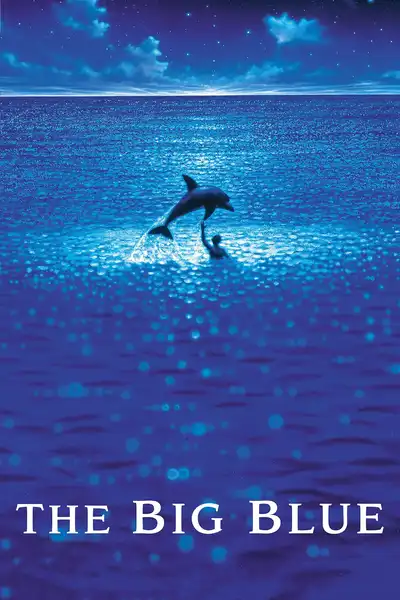
Set against the stunning underwater vistas of the Mediterranean and the Greek islands, this visually hypnotic film follows two champion freedivers whose obsessive rivalry and friendship play out in the ocean's depths. Director Luc Besson creates a dreamlike meditation on competition, friendship, and humanity's relationship with the sea. Jean-Marc Barr and Jean Reno star as the divers whose bond since childhood has evolved into something between brotherhood and contest. Besson's underwater cinematography is breathtaking, presenting the ocean as both beautiful and alien, a place where his characters feel more at home than on land. Rosanna Arquette provides the human connection as a woman trying to understand men who seem to belong to another element entirely. The film's leisurely pace and abstract emotional landscape won't appeal to everyone, but those willing to surrender to its rhythms will find something mesmerizing. The score by Éric Serra enhances the ethereal quality. This is less a conventional sports drama than a philosophical exploration of obsession and the call of something beyond ordinary human experience.

The challenge of chronicling Ferdinand Magellan's ambitious and ultimately tragic circumnavigation attempt forms the compelling backbone of this historical documentary. Director's approach brings fresh perspective to the 16th-century expedition by emphasizing the diverse crew members and their varying motivations, rather than focusing solely on the Portuguese explorer himself. The film, helmed by Matthew Testa, uses a combination of detailed maritime recreations and expert historians to trace the journey's triumphs and disasters across three years of oceanic travel. Particularly effective are the segments exploring the cultural encounters—and often violent clashes—with indigenous peoples in the Philippines and South America. The documentary doesn't shy from Magellan's controversial decisions and the mutinies that plagued the voyage, presenting a more nuanced portrait than traditional heroic narratives allow. For history enthusiasts interested in the Age of Exploration, this offers an engaging and informative examination of an expedition that fundamentally changed global understanding.

When a confluence of weather systems creates the storm of the century off the New England coast, the crew of the fishing vessel Andrea Gail faces impossible odds in their fight for survival. Director Wolfgang Petersen brings his technical mastery to this true story, creating genuinely harrowing ocean sequences that convey the awesome power of nature. George Clooney leads the ensemble as Captain Billy Tyne, desperate for one last profitable catch, while Mark Wahlberg, John C. Reilly, and William Fichtner round out the crew with lived-in performances that make us care about these working-class fishermen. The film balances spectacular disaster sequences with quieter character moments ashore, particularly in Diane Lane's portrayal of a loved one waiting helplessly on land. Petersen never sensationalizes the tragedy, instead treating the real-life events with respect while delivering gripping maritime drama. The visual effects hold up remarkably well in depicting the monstrous waves and desperate rescue attempts.

Thomas Vinterberg directs this harrowing dramatization of the 2000 Kursk submarine disaster, in which 118 Russian sailors became trapped on the ocean floor while their government prioritized secrecy over rescue efforts. Matthias Schoenaerts leads an international cast as Mikhail Averin, representing the crew fighting for survival in deteriorating conditions, while Colin Firth portrays a British commodore desperate to help despite political obstruction. Vinterberg alternates between the claustrophobic horror aboard the doomed vessel and the frustrating diplomatic maneuvering on the surface, creating a portrait of bureaucratic failure with fatal consequences. The film doesn't shy from depicting both the physical suffering of the trapped men and the anguish of their families, particularly Léa Seydoux as a wife demanding answers from indifferent officials. While it occasionally struggles to balance its large ensemble and multiple storylines, the underlying tragedy gives the film undeniable power. Vinterberg brings the same humanism that distinguished The Hunt to this real-life catastrophe, honoring the victims while indicting the systems that failed them.

Baltasar Kormákur directs this survival drama based on the true story of Tami Oldham, who must navigate a damaged yacht across the Pacific after a catastrophic hurricane. Shailene Woodley delivers a committed physical performance as Tami, carrying much of the film alone as she struggles with injuries, grief, and the overwhelming challenge of survival. Sam Clafin plays Richard, her fiancé, and the film structures their romance in flashbacks that provide emotional context for the present-day ordeal. Kormákur, experienced with survival narratives, handles the maritime setting with confidence, capturing both the ocean's beauty and its indifference. The film doesn't sensationalize Tami's experience, instead focusing on the grinding reality of her situation—the practical problems of navigation, food, and maintaining hope. A narrative twist in the third act recontextualizes what we've watched, adding emotional depth to an already compelling story. Woodley's performance anchors everything, conveying resourcefulness and vulnerability in equal measure. It's well-crafted, emotionally honest filmmaking that respects both its subject and its audience, offering a survival story with genuine human weight.

Bruce Lyons stars as Griffin, a young copper miner in 14th-century Cumbria who experiences prophetic visions that he believes will save his plague-stricken village. Director Vincent Ward crafts a genuinely original time-travel tale as Griffin leads a small band of miners through a tunnel that impossibly deposits them in 1980s New Zealand. The film's striking black-and-white photography of the medieval sequences contrasts beautifully with the color-saturated modern world, creating a disorienting yet poetic visual experience. While the pacing occasionally drags and some symbolic elements feel heavy-handed, Ward's imaginative approach to the medieval-meets-modern premise offers something refreshingly different from typical time-travel fare. The performances are earnest and grounded, anchoring the more fantastical elements in genuine human emotion. It's an ambitious, visually distinctive film that rewards patient viewers willing to embrace its unconventional storytelling.

This is a story about determination, self-discovery, and the particular courage it takes for a young person to attempt something the world insists is impossible. Director Sarah Spillane chronicles the true story of Jessica Watson (Teagan Croft), who at sixteen became the youngest person to sail solo, nonstop, and unassisted around the world. The film doesn't shy away from the criticism Jessica and her family faced—many called her parents reckless for supporting such a dangerous dream—but it also captures why the journey mattered to her beyond mere record-setting. Croft brings both vulnerability and steel to the role, while Cliff Curtis and Anna Paquin provide solid support as her parents. The sailing sequences effectively convey both the beauty and terror of solo ocean voyaging. It's an earnest, old-fashioned inspirational story that earns its emotional beats through specificity rather than manipulation.