Sci-Fi Epic Shows
The golden age of science fiction television has given us some of the most ambitious and visually stunning storytelling ever conceived for the small screen, where epic narratives unfold across seasons of captivating adventures among the stars. From groundbreaking classics that redefined the genre to cutting-edge modern productions boasting Hollywood-level budgets, sci-fi epic shows transport viewers to expansive universes filled with intricate mythologies, complex characters, and profound explorations of humanity's place in the cosmos. These sprawling series combine the best elements of science fiction—from space opera spectacle to hard sci-fi concepts—with serialized storytelling that allows for deeper world-building than traditional films can achieve. Whether you're drawn to tales of interstellar conflict, time-traveling adventures, or humanity's survival against impossible odds, the greatest science fiction television epics deliver cinematic production values and sophisticated narratives that rival anything on the big screen. Our curated selection of 21 essential sci-fi epic shows spans decades of television excellence, showcasing how the genre has evolved while maintaining its core mission: to inspire wonder, challenge our understanding of existence, and envision breathtaking possibilities for our future among the infinite reaches of space.
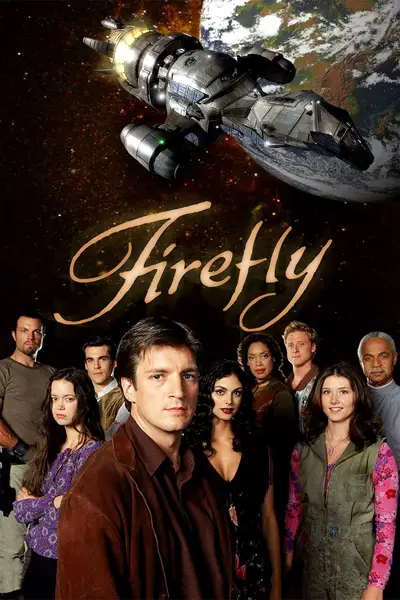
Nathan Fillion leads this brilliant space western as Captain Malcolm Reynolds, a charming rogue navigating the galaxy's outer rim aboard his beloved Firefly-class ship, Serenity. Created by Joss Whedon, this criminally short-lived series blends witty banter, lived-in sci-fi aesthetics, and genuine heart into something truly special. The ensemble cast—including Gina Torres, Alan Tudyk, and Morena Baccarin—creates a found family dynamic that feels authentic and deeply affecting. Each episode balances standalone adventures with serialized character development, exploring themes of loyalty, freedom, and survival in a 'verse where the Alliance's reach extends far but not everywhere. The Western-meets-space-opera setting provides endless opportunities for creative storytelling, while the Mandarin-peppered dialogue and lived-in production design make the universe feel remarkably real. Despite lasting only one season, Firefly's influence on science fiction television remains undeniable, proving that fourteen episodes can leave a lasting legacy.
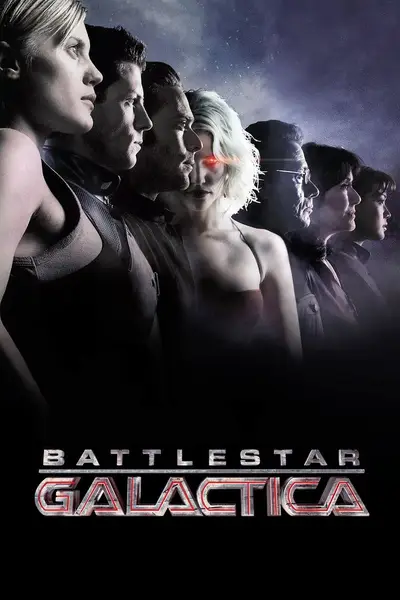
Edward James Olmos leads this reimagined space opera as Admiral William Adama, commanding humanity's last survivors after a devastating Cylon attack. Created by Ronald D. Moore, this series transforms the 1970s concept into a masterwork of serialized television that tackles religious extremism, political corruption, and what it means to be human. The performances are universally stellar, with Mary McDonnell's President Roslin and James Callis's Gaius Baltar delivering career-defining work. The show maintains relentless tension across four seasons, balancing large-scale space battles with intimate character drama. Every episode feels essential, every twist earned. This is science fiction television at its absolute peak—a show that respects its audience's intelligence while delivering pulse-pounding action and genuine emotional weight.
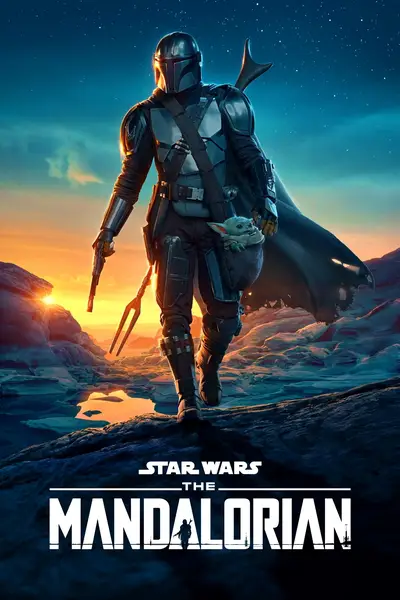
Jon Favreau has crafted something truly special with this Star Wars series that captures the spirit of the original trilogy while carving out its own legendary path. The Mandalorian follows Din Djarin (Pedro Pascal), a lone bounty hunter navigating the outer reaches of the galaxy in the aftermath of the Empire's fall, whose life changes completely when he encounters a mysterious Force-sensitive child. The episodic structure brilliantly evokes classic Westerns, with each adventure feeling like a self-contained story while building toward larger narrative arcs. The practical effects and creature work are phenomenal, giving the series a tangible quality that modern blockbusters often lack. Giancarlo Esposito delivers a chilling performance as Moff Gideon, while the supporting cast of recurring characters enriches the expanding world. The show respects Star Wars lore without being enslaved by it, making it accessible to newcomers while rewarding longtime fans with deep-cut references and connections that enhance rather than overshadow the storytelling.
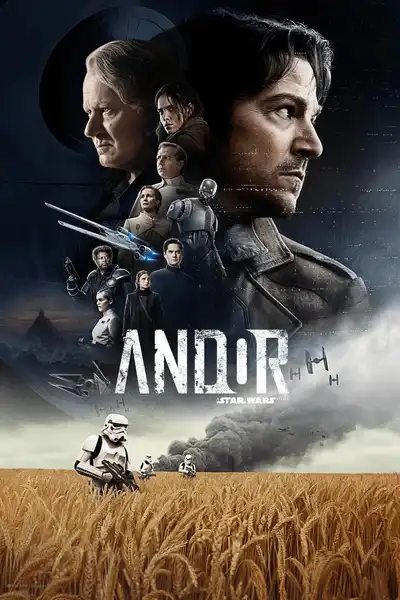
Following Cassian Andor in the years before Rogue One, this Star Wars series explores how ordinary people become radicalized into rebellion against an authoritarian regime, delivering the franchise's most mature and politically sophisticated storytelling to date. Creator Tony Gilroy strips away the typical Star Wars mythology to focus on the ground-level reality of life under the Empire, showing how oppression and injustice gradually transform a cynical survivor into a committed revolutionary. Diego Luna brings depth and moral ambiguity to Cassian, supported by an exceptional ensemble including Stellan Skarsgård as a rebellion architect and Fiona Shaw as a complex adoptive mother figure. The show takes its time building tension and character, trusting the audience to engage with slower pacing in service of richer storytelling. The dialogue crackles with intelligence, the production design feels lived-in and authentic, and the exploration of fascism's mundane bureaucratic evil resonates powerfully. This is ambitious, adult science fiction that transcends its franchise origins.
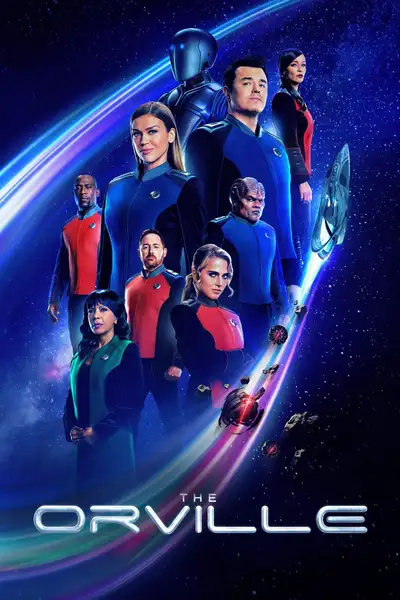
This science fiction series follows the USS Orville, a mid-level exploratory spaceship in the Planetary Union, and its crew navigating both cosmic phenomena and interpersonal drama under the command of Captain Ed Mercer (Seth MacFarlane). Created by MacFarlane, the show begins as an obvious Star Trek homage with comedic elements, but evolves into something more ambitious as it progresses. The ensemble cast—including Adrianne Palicki, Penny Johnson Jerald, Scott Grimes, and Peter Macon—develops genuine chemistry, making the bridge crew interactions as engaging as the sci-fi concepts. What distinguishes The Orville is its willingness to tackle serious ethical and social issues through allegory while maintaining optimistic humanism reminiscent of classic Trek. Later seasons reduce the comedy in favor of thoughtful storytelling that respects both the characters and audience intelligence. The production values rival prestige science fiction, with impressive visual effects and detailed alien worlds. For viewers disappointed by modern Star Trek's darker tone, this offers the hopeful, philosophical space exploration they've been missing.

Frank Spotnitz developed this adaptation of Philip K. Dick's novel, imagining an alternate 1960s America where the Axis powers won World War II and divided the United States between Japanese and German control. The premise is undeniably compelling, and the production design meticulously creates this disturbing alternate reality. Alexa Davalos and Rufus Sewell anchor the cast as characters navigating the oppressive regime and encountering mysterious films showing a different version of history. The show demonstrates ambition in its world-building and occasionally delivers powerful moments exploring resistance and collaboration under fascism. However, the pacing often drags, and the series struggles to maintain narrative momentum across its seasons. Some storylines feel underdeveloped while others meander without clear purpose. It's a thought-provoking concept that doesn't always fulfill its potential, offering intriguing ideas wrapped in uneven execution.
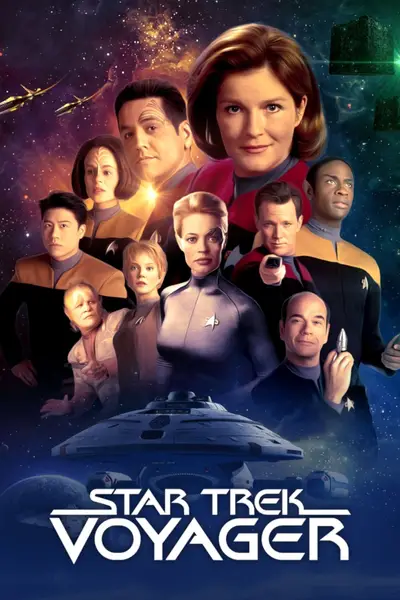
Adventurous, thoughtful, and consistently engaging, this fourth "Star Trek" series follows Captain Kathryn Janeway (Kate Mulgrew) and her crew after their starship is hurled 70,000 light-years from home into the unexplored Delta Quadrant. Created by Rick Berman, Michael Piller, and Jeri Taylor, "Voyager" excels at balancing episodic storytelling with its compelling premise of a crew trying to get home while maintaining Federation principles far from Federation space. Mulgrew delivers one of the franchise's finest captain performances, bringing authority, compassion, and complexity to Janeway. The ensemble cast, including Robert Beltran, Roxann Dawson, Tim Russ, and later addition Jeri Ryan as Seven of Nine, creates genuine chemistry. The series isn't afraid to experiment, delivering memorable episodes about time travel, morality, and scientific curiosity while introducing fascinating new species like the Borg collective and Species 8472. "Voyager" represents "Star Trek" at its best: optimistic, intelligent, and endlessly imaginative across seven strong seasons.
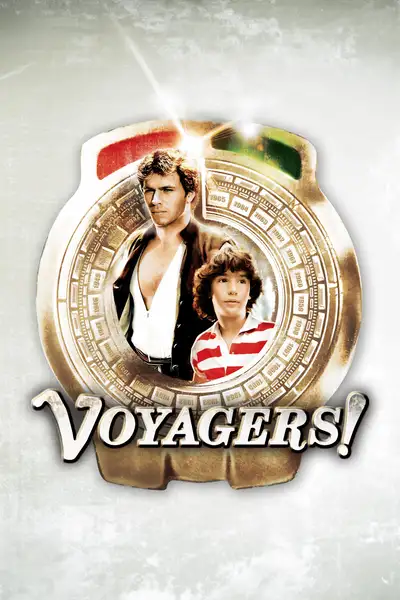
At its heart, this time-traveling adventure series explores responsibility, heroism, and the weight of history through the lens of accessible family entertainment. Created by James D. Parriott, the show follows Phineas Bogg (Jon-Erik Hexum) and orphan Jeffrey Jones (Meeno Peluce) as they jump through time with a malfunctioning Omni device, correcting historical mistakes to keep the timeline intact. Each episode becomes a mini history lesson wrapped in adventure, as our heroes encounter figures like the Wright Brothers, Thomas Edison, and Buffalo Bill while trying to ensure key moments happen as intended. The chemistry between the swashbuckling Bogg and the history-smart Jeffrey gives the show warmth beyond its educational mission, and the premise allows for endless variety in settings and scenarios. Though it lasted only one season, it remains fondly remembered for making history exciting and accessible.
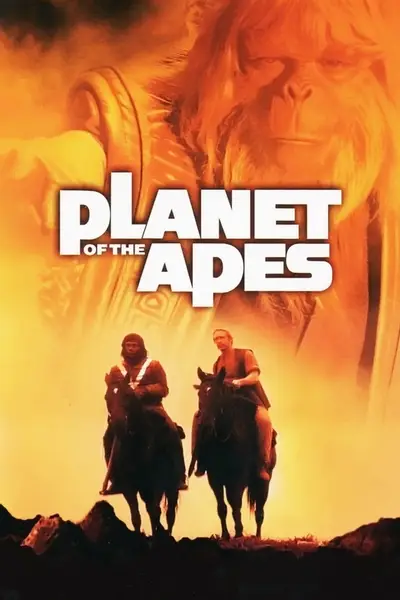
Producer Herbert Hirschman and writer Anthony Wilson brought Pierre Boulle's iconic science fiction concept to the small screen with this short-lived but fascinating television series. Following the events of the film franchise, the show follows two astronauts, played by Ron Harper and James Naughton, who find themselves stranded on a future Earth dominated by intelligent apes. Roddy McDowall reprises his role from the films, adding continuity and star power to the proceedings. Despite budget limitations that sometimes show, the series manages to explore thought-provoking themes about civilization, prejudice, and power dynamics. The weekly adventures strike a balance between action and social commentary, making this a worthy extension of the beloved film series that deserves more recognition than it typically receives.
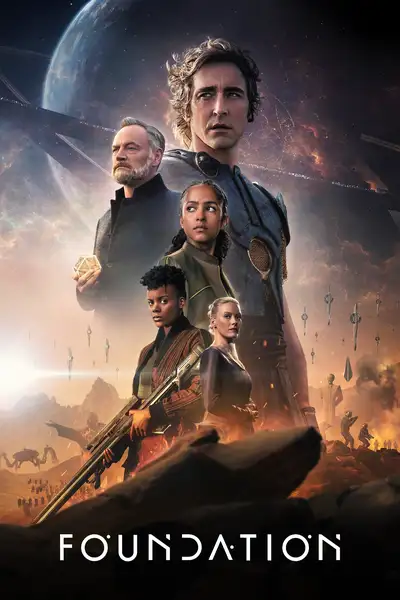
This science fiction epic adapts Isaac Asimov's legendary book series, tackling one of the genre's most ambitious narratives about the fall and rise of galactic civilizations. Showrunner David S. Goyer brings Asimov's psychohistory concept to life, following mathematician Hari Seldon (Jared Harris) as he predicts the Empire's collapse and establishes a foundation to preserve knowledge through the coming dark age. The series makes smart choices in expanding character development beyond Asimov's idea-focused original, particularly with Lee Pace's magnetic performance as the cloned Emperor. Spanning multiple timelines and generations, the show juggles complex political intrigue, philosophical questions, and spectacular visual effects. The production values are impressive, creating a lived-in universe that feels appropriately vast. While purists might debate certain adaptations, the series succeeds in making Asimov's cerebral concepts dramatically engaging for television.
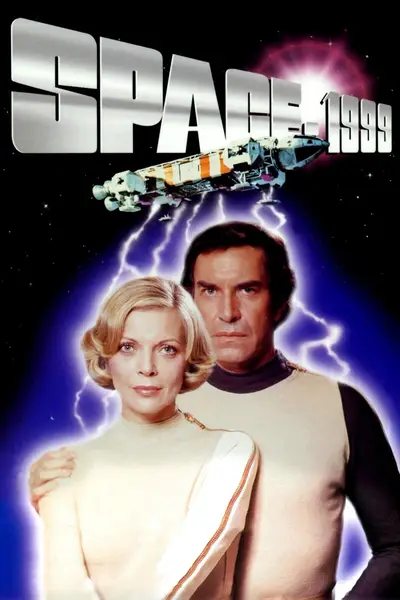
When a massive nuclear explosion knocks the Moon out of Earth's orbit, the 311 inhabitants of Moonbase Alpha find themselves hurtling through space on an impossible journey into the unknown. Created by Gerry and Sylvia Anderson, this ambitious British science fiction series stars Martin Landau and Barbara Bain as Commander John Koenig and Dr. Helena Russell, leaders trying to keep hope alive as their lunar base encounters bizarre alien phenomena and existential threats. The series is remarkable for its philosophical approach to sci-fi storytelling, often prioritizing psychological and metaphysical questions over action sequences. The production design and special effects, while dated, possess a distinct aesthetic that remains visually striking decades later. The show's willingness to embrace weird, surreal narratives—sometimes leaving questions deliberately unanswered—makes it uniquely compelling even when individual episodes don't fully cohere. It's thoughtful space opera that treats its audience as intelligent viewers capable of handling ambiguity and complex ideas.
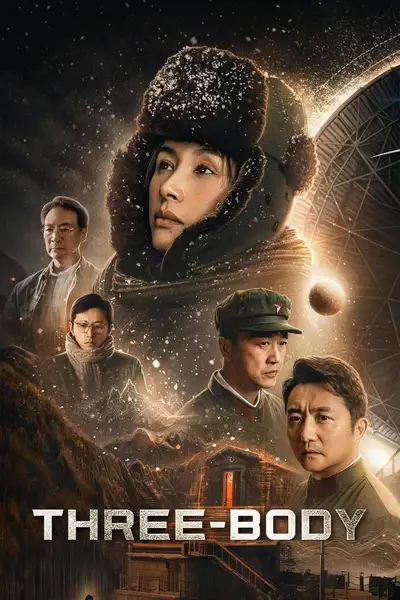
When humanity receives messages from an alien civilization that will arrive in 400 years, scientists discover the extraterrestrials have already deployed technology to halt Earth's scientific progress, triggering a global crisis about survival and resistance. Based on Liu Cixin's renowned novel, this Chinese adaptation stars Yu Hewei and Chen Jin navigating the political and scientific turmoil following first contact. The series excels at translating the novel's complex scientific concepts and philosophical questions into compelling drama, maintaining the source material's hard science fiction rigor while developing emotionally resonant characters. Production values are impressive, particularly when visualizing the story's more mind-bending technological elements. Director Yang Lei handles the large-scale narrative with confidence, balancing intimate character moments with civilization-scale stakes. For science fiction fans who appreciate cerebral concepts alongside their drama, this delivers on both fronts. The adaptation captures the novel's sense of cosmic dread while remaining grounded in recognizable human concerns about faith, science, and survival.

Imaginative and endlessly reinventive, this continuation of the classic British series brings the time-traveling alien known as the Doctor to new audiences with updated special effects and contemporary sensibilities. Starting with Christopher Eccleston and continuing through multiple incarnations including David Tennant, Matt Smith, and Jodie Whittaker, the show's regeneration concept allows for constant renewal while maintaining continuity. Showrunners Russell T Davies and Steven Moffat each bring distinct styles, with Davies focusing on emotional accessibility and Moffat crafting intricate temporal puzzles. The companion characters, from Billie Piper's Rose to Jenna Coleman's Clara, provide the human perspective that grounds the Doctor's alien worldview. The show balances standalone adventures with season-long arcs, though the quality varies depending on the era and creative team. The emotional storytelling and creative alien designs usually outweigh the occasional budget limitations or overly complicated plotting.
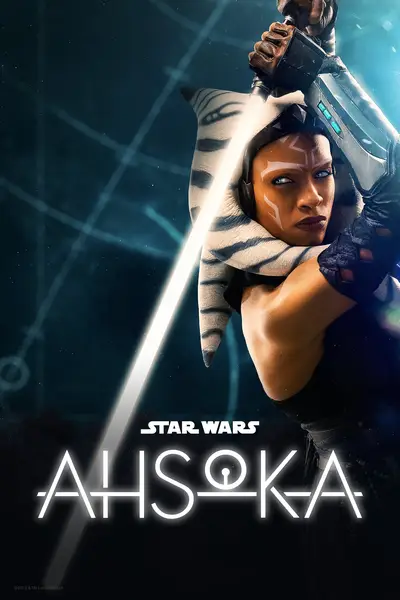
Former Jedi Ahsoka Tano searches for Grand Admiral Thrawn and her missing friend Ezra Bridger in this Star Wars series from Dave Filoni that assumes significant familiarity with animated predecessors like The Clone Wars and Rebels. Rosario Dawson brings physical presence to the title role she debuted in The Mandalorian, though the script gives her surprisingly little emotional range to explore beyond stoic determination. The series delivers some visually striking lightsaber duels and introduces intriguing characters like Shin Hati (Ivanna Sakhno), but the pacing drags considerably in middle episodes that feel like they're marking time until the finale. For devoted fans of Filoni's animated work, seeing these characters in live-action carries inherent appeal, and the show's deep-cut references will resonate strongly. However, newcomers may find themselves lost in unexplained history and relationships that the series expects you to care about without earning that investment. It's competently made fan service that struggles to stand on its own merits.
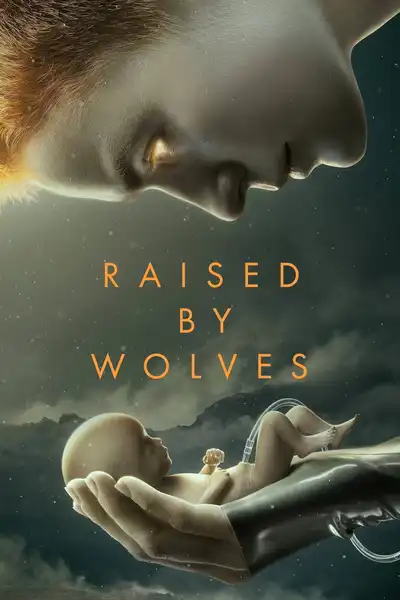
Ridley Scott's vision of androids raising human children on a desolate alien planet is undeniably ambitious, blending science fiction with religious allegory in ways that don't always cohere. The series follows two androids, Mother (Amanda Collin) and Father (Abubakar Salim), attempting to raise human embryos as atheists on the planet Kepler-22b, only to clash with arriving religious fundamentalists. The visual design is stunning—stark, alien landscapes and biomechanical imagery that recalls Scott's best work. Collin's performance as Mother is genuinely compelling, bringing unexpected emotion to an artificial being. However, the show's reach often exceeds its grasp; plotlines become increasingly convoluted, mysteries pile up without satisfying answers, and the philosophical questions it poses are more interesting than the actual storytelling. The series' early cancellation means threads remain unresolved. It's fascinating and frustrating in equal measure—worth watching for Scott completists and sci-fi devotees, but with tempered expectations.
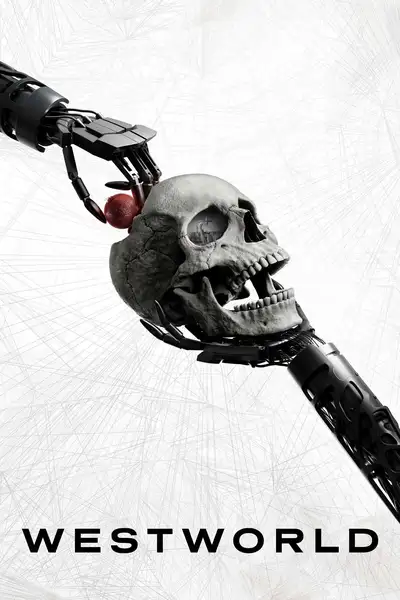
In a futuristic theme park populated by lifelike androids, wealthy guests can indulge their darkest fantasies without consequence—until the hosts begin to wake up. Created by Jonathan Nolan and Lisa Joy, this sci-fi thriller features standout performances from Evan Rachel Wood as Dolores and Anthony Hopkins as the park's enigmatic creator. The series poses fascinating questions about consciousness, free will, and what it means to be human, wrapped in a stylish Western-meets-cyberpunk aesthetic. While the non-linear storytelling can occasionally feel overly complex, the world-building is impressive and the action sequences are spectacularly executed. The first season especially delivers thought-provoking twists that reward careful attention, making it compelling viewing for fans of cerebral science fiction.
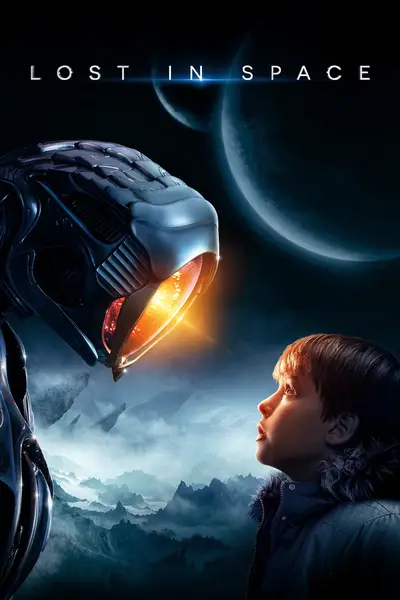
When the Robinson family's spaceship is thrown off course during their journey to colonize a distant planet, survival becomes the immediate priority as they crash-land on a mysterious alien world filled with dangers. This Netflix reboot of the 1960s series, developed by Matt Sazama and Burk Sharpless, transforms the campy original into a legitimate sci-fi adventure with impressive production values. Toby Stephens and Molly Parker lead as the parents, while Parker Posey delivers an entertainingly unpredictable performance as the duplicitous Dr. Smith. Each episode typically presents the family with a new environmental or technical challenge that requires both ingenuity and teamwork, capturing the problem-solving spirit that made the Martian so engaging. The family dynamics feel authentic, and the series wisely balances peril with hope. While some plot contrivances stretch credibility and the pacing occasionally drags, the show offers solid entertainment for viewers wanting accessible science fiction that the whole family can enjoy. The reimagined Robot remains a highlight, both visually striking and emotionally resonant.
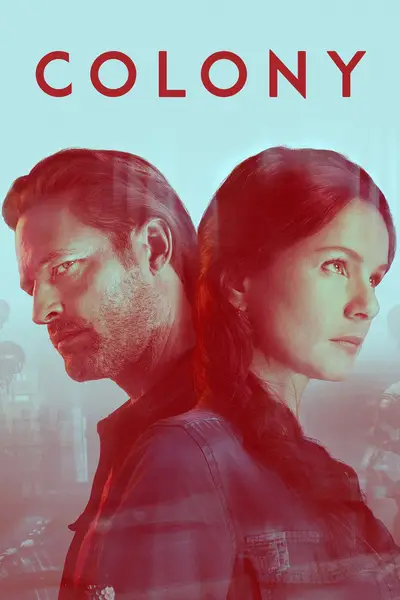
Set in a near-future Los Angeles under alien occupation, this sci-fi drama from Carlton Cuse and Ryan Condal follows the Bowman family as they navigate survival in a world divided by walls and collaboration. Josh Holloway and Sarah Wayne Callies star as parents making difficult choices about whether to resist or cooperate with the authoritarian regime installed by their extraterrestrial overlords. The premise is intriguing and the production values are solid, creating a believably oppressive atmosphere in a familiar city transformed by occupation. However, the series struggles with uneven pacing and occasionally frustrating character decisions that strain credibility. The show's ambitious mythology sometimes promises more than it delivers, and while there are genuinely tense moments exploring family loyalty versus moral responsibility, it doesn't always capitalize on its potential. It's worth a watch for sci-fi fans, but temper expectations.
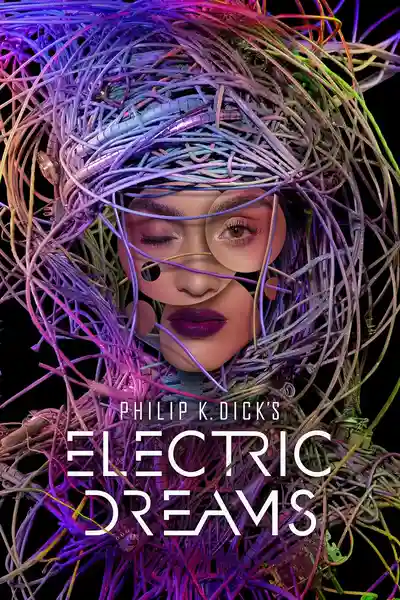
Spanning different timelines and realities, this anthology series adapts ten short stories from Philip K. Dick's extensive science fiction catalog, with each episode presenting a self-contained world exploring themes of reality, consciousness, and humanity's relationship with technology. Executive produced by Bryan Cranston and featuring directors like Francesca Gregorini and Alan Taylor, the series boasts impressive talent both behind and in front of the camera, including Steve Buscemi, Anna Paquin, and Terrence Howard across various episodes. The adaptations vary wildly in quality—some episodes brilliantly capture Dick's paranoid, reality-bending sensibility, while others feel like generic sci-fi that could have been written by anyone. The production design is consistently strong, creating distinctive visual worlds for each story, but the writing doesn't always honor the philosophical complexity of the source material. When it works, it's thought-provoking television; when it doesn't, it's frustratingly superficial.
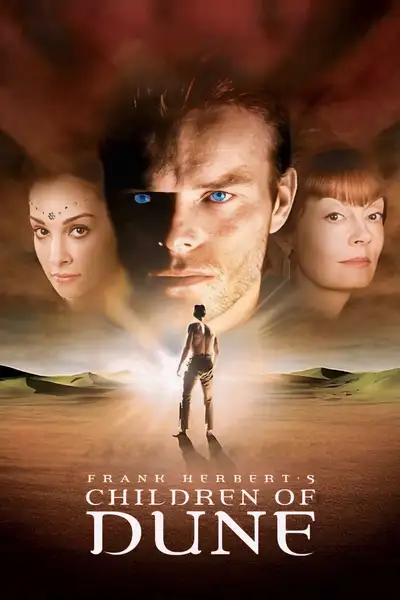
Following the events of Frank Herbert's legendary saga, this miniseries adaptation tracks the next generation of the Atreides family as they navigate the complex politics and religious fervor that has transformed Arrakis. The story picks up years after Paul Muad'Dib's reign, focusing on his twin children Leto II and Ghanima as they confront threats both external and disturbingly internal. James McAvoy leads the ensemble cast with compelling intensity, while the production brings Herbert's philosophical themes about power, prophecy, and human evolution to vivid life. The miniseries successfully captures the dense, contemplative nature of Herbert's later Dune novels, even if the pacing occasionally struggles under the weight of the source material's complexity. For fans who found the original books impenetrable, this adaptation provides an accessible entry point while respecting the sophisticated ideas at the heart of the story.
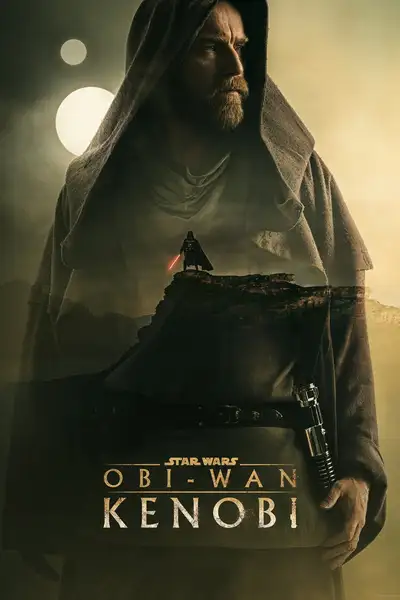
Ewan McGregor returns as Obi-Wan Kenobi in this limited series set ten years after the events of Revenge of the Sith, finding the once-great Jedi Master broken and hiding on Tatooine while watching over young Luke Skywalker. Director Deborah Chow brings a more intimate scale to the Star Wars universe, focusing on character drama over spectacle, though the action sequences deliver when needed. The series explores Obi-Wan's guilt and trauma following the fall of the Jedi Order and Anakin's transformation into Darth Vader. Hayden Christensen's return as Vader provides emotional weight, particularly in the confrontations between former master and apprentice. Moses Ingram makes a strong impression as Reva, an Inquisitor with her own complex motivations. While the show occasionally struggles with pacing and some plot conveniences strain credibility, McGregor's nuanced performance and the emotional payoff of seeing these characters reconnect make it a worthwhile addition to the franchise.