Recent Stoner Comedy Shows
Looking to spark up your streaming queue with the freshest cannabis-centered entertainment? The landscape of stoner comedy shows has evolved dramatically over the past five years, moving beyond tired stereotypes to deliver sophisticated, hilarious series that capture today's changing attitudes toward weed culture. Recent stoner comedies blend hazy hijinks with surprisingly sharp social commentary, exploring everything from entrepreneurial adventures in the legal cannabis industry to unlikely friendships forged over shared joints. These contemporary series embrace diverse perspectives and modern sensibilities while maintaining the genre's signature laid-back humor and munchie-worthy entertainment value. Whether you're searching for shows that perfectly capture the chill vibes of cannabis culture or comedies that use marijuana as a launching point for bigger themes about identity, family, and connection, these recent releases represent the genre's creative renaissance. From anthology-style narratives following delivery workers through New York's streets to buddy comedies featuring unexpected pairings, today's best stoner shows prove that cannabis-fueled humor has grown up without losing its playful edge. Get ready to discover ten recently released series that bring fresh perspectives and contemporary laughs to the time-honored tradition of getting high and watching TV.
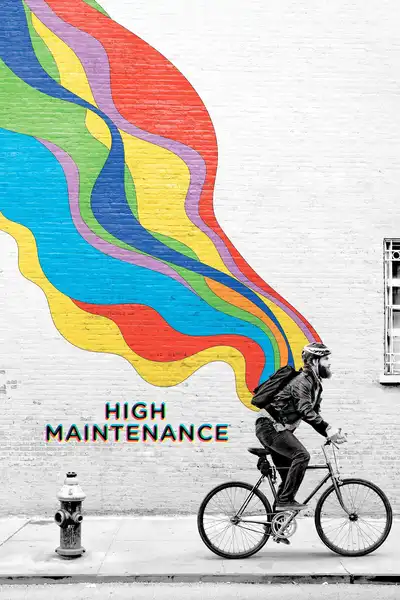
Ben Sinclair and Katja Blichfeld created this beautiful anthology series that uses a marijuana delivery person (Sinclair) as the connecting thread through diverse slices of New York City life. Each episode visits different characters and neighborhoods, using The Guy's brief appearances as windows into fully realized stories about loneliness, connection, creativity, and the search for meaning in urban life. What makes High Maintenance exceptional is its profound empathy for every character, from struggling artists to wealthy professionals, from aging eccentrics to young couples, treating each with equal curiosity and humanity. The writing finds humor and pathos in everyday moments, while the direction captures New York with intimate authenticity. Sinclair's low-key performance as The Guy provides the perfect unobtrusive observer, while the rotating cast of guest actors—including many recognizable faces in small roles—uniformly deliver naturalistic, lived-in performances. The series trusts its audience to appreciate quiet character studies without forced drama or neat resolutions, creating something that feels genuinely literary in its approach to television. It's a gem that rewards attention and accumulates emotional power across its run.
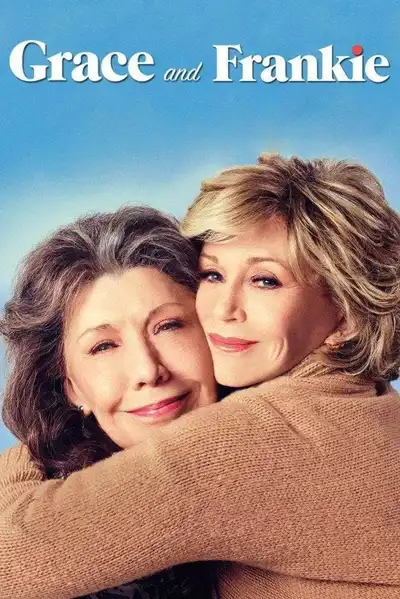
This comedy-drama created by Marta Kauffman and Howard J. Morris takes an unexpected friendship and mines it for both laughs and genuine pathos. Jane Fonda and Lily Tomlin star as the titular Grace and Frankie, two women whose lives are upended when their husbands, played by Martin Sheen and Sam Waterston, announce they're in love with each other and want to get married. What could have been a one-joke premise instead develops into a warm exploration of reinvention, aging, and found family. The chemistry between Fonda and Tomlin carries the series through its seven seasons, as their characters evolve from reluctant roommates to inseparable companions. The show tackles issues facing older adults with both humor and honesty, creating space for stories rarely told on television.
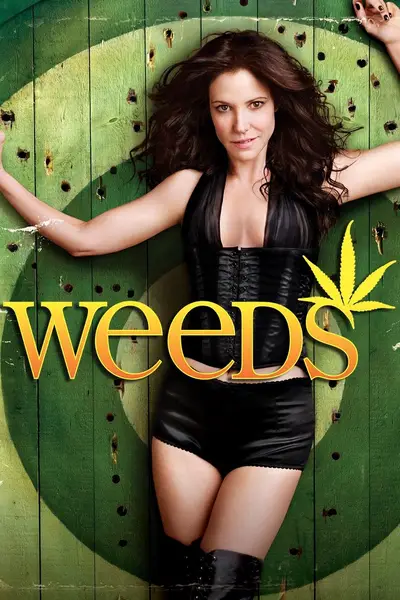
In suburban Agrestic, California, recently widowed Nancy Botwin discovers that her upper-middle-class lifestyle can't be sustained on her late husband's life insurance alone. Created by Jenji Kohan, this dark comedy follows Nancy (Mary-Louise Parker) as she enters the marijuana business to maintain her family's comfortable existence. The show excels in its early seasons by contrasting the banality of suburban life with the increasingly dangerous world of drug dealing. Parker delivers a nuanced performance as a woman constantly improvising her way through moral compromises, while the supporting cast—including Elizabeth Perkins, Kevin Nealon, and Justin Kirk—adds layers of dysfunction and humor. The series works best when exploring the contradictions of American suburban culture, though it occasionally struggles to maintain tonal consistency as Nancy's circumstances become more extreme.
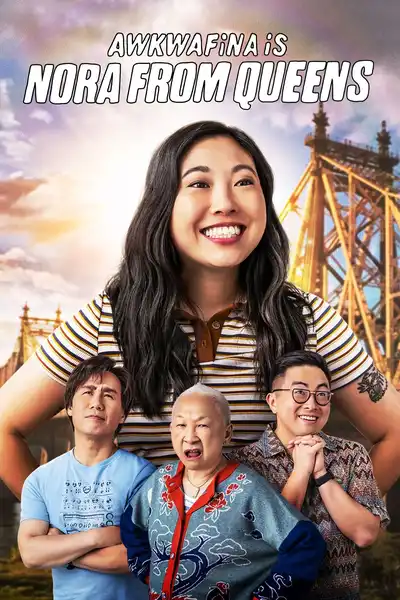
Awkwafina created and stars in this semi-autobiographical comedy about a twenty-something woman living with her father and grandmother in Flushing, Queens, navigating adulthood with varying degrees of success. The series draws on the comedian's real-life experiences, supported by BD Wong and Lori Tan Chinn in standout roles as her family members who steal many scenes. The show's humor ranges from absurdist to genuinely heartfelt, though the tonal shifts don't always work smoothly. Some episodes offer sharp observations about cultural identity and family dynamics, while others rely on broader, less effective comedy. When the series focuses on the specific details of Nora's Queens neighborhood and Asian-American experience, it finds its footing, but it occasionally struggles to distinguish itself in the crowded field of millennial comedies.

Gregg Araki brings his distinctive queer sensibility to this Los Angeles-set series that blends millennial aimlessness with surreal apocalyptic undertones. The show follows Ulysses and his friends as they navigate dating, career uncertainty, and sexual exploration while strange phenomena suggest something ominous lurking beneath the surface of their sun-soaked existence. Avan Jogia leads the ensemble cast through storylines that oscillate between explicit sexuality, stoner comedy, and paranoid science fiction without fully committing to any single register. Araki's signature visual style is present throughout, but the tonal shifts can feel jarring rather than provocative, and the apocalyptic elements often seem grafted onto what might have worked better as a straightforward character study. The series has moments of genuine insight into contemporary queer life and relationships, yet also indulges in stylistic excess that doesn't always serve the narrative, resulting in an occasionally fascinating but ultimately frustrating viewing experience.
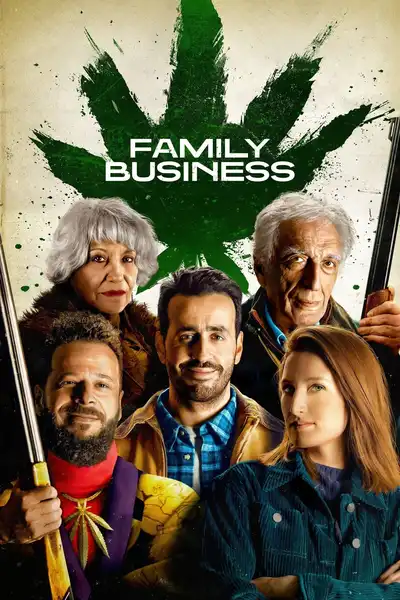
At its core, this French Netflix comedy examines family dynamics, ambition, and morality through the unlikely lens of a Parisian butcher shop turned cannabis dispensary. When France legalizes marijuana, the struggling Hazan family sees an opportunity to save their business, leading to predictably chaotic results. Gérard Darmon heads the ensemble as the traditionalist patriarch navigating this new venture, while Jonathan Cohen brings manic energy as his entrepreneur son. Created by Igor Gotesman, the series has moments of genuine humor and an appealing premise, but it too often settles for broad stereotypes and predictable sitcom beats. The satire of startup culture and family obligation shows promise, yet the execution feels inconsistent across its two seasons. Some episodes hit the mark with clever observations, while others rely on repetitive gags that wear thin quickly.
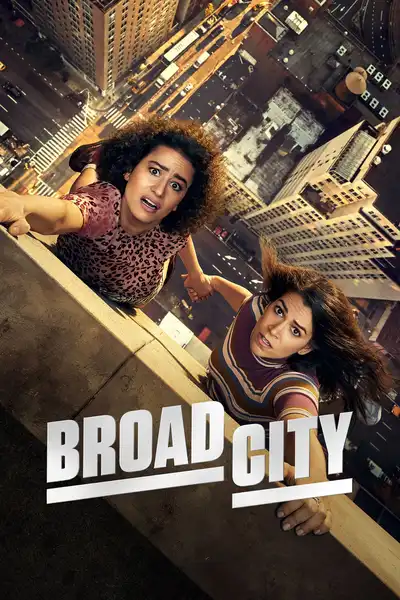
In this series, Abbi Jacobson and Ilana Glazer play heightened versions of themselves as two twenty-something best friends stumbling through life in New York City. The comedy captures a specific millennial experience with its focus on dead-end jobs, tiny apartments, and the determination to wring adventure from mundane circumstances. The show's humor is aggressively quirky and often raunchy, which works brilliantly in some episodes but feels try-hard in others. When it connects, the friendship between the leads feels genuine and the observations about city life ring true. However, the relentless zaniness can be exhausting, and the characters' aimlessness occasionally tips from relatable to frustrating. The DIY aesthetic gives it authenticity that glossier productions lack, but the improvisational feel means the quality varies considerably from episode to episode.
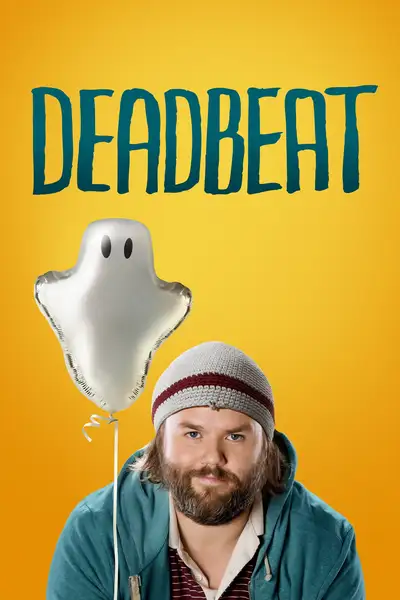
Stuck between the living and the dead, slacker medium Kevin Pacalioggi reluctantly uses his ability to see ghosts to help spirits complete their unfinished business—usually for the wrong reasons and with chaotic results. Tyler Labine stars as Kevin in this supernatural comedy that struggles to find consistent footing between gross-out humor and genuine emotion. Created by Brett Konner and Cody Heller, the series follows Kevin and his drug-dealer best friend Roofie (Brandon T. Jackson) as they navigate various ghostly requests while Kevin tries to avoid his ex-girlfriend Yvette and her new partner Clyde. The show has moments of inspired comedy and occasionally touches on interesting ideas about death and purpose, but too often relies on crude humor that undercuts its more thoughtful impulses. Cat Deeley appears as Camomile White, adding some charm to the proceedings. When the series focuses on creative supernatural scenarios and Labine's natural likability, it works; when it leans into shock value, it falters.
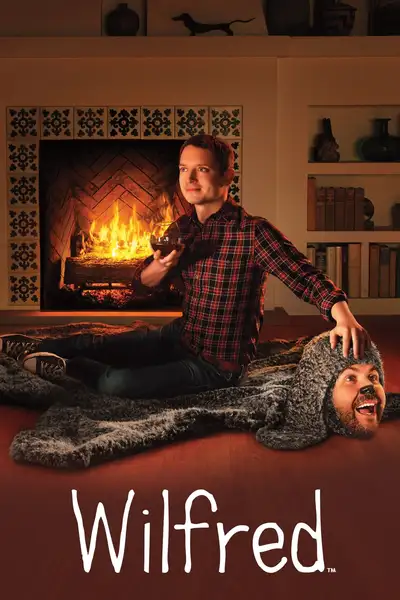
Elijah Wood stars as Ryan, a depressed young man who forms an unlikely friendship with his neighbor's dog Wilfred—except Ryan sees Wilfred as a full-grown man in a dog costume, played by Jason Gans. Created by David Zuckerman and adapted from the Australian series, this FX comedy explores mental health, loneliness, and reality through increasingly surreal scenarios. The show has moments of genuine insight and dark humor, particularly in its first season, but struggles to maintain momentum as it stretches its central premise across four seasons. The chemistry between Wood and Gans provides consistent entertainment, even when the philosophical musings feel heavy-handed. It's an oddball experiment that doesn't always work but offers something different from typical sitcom fare.
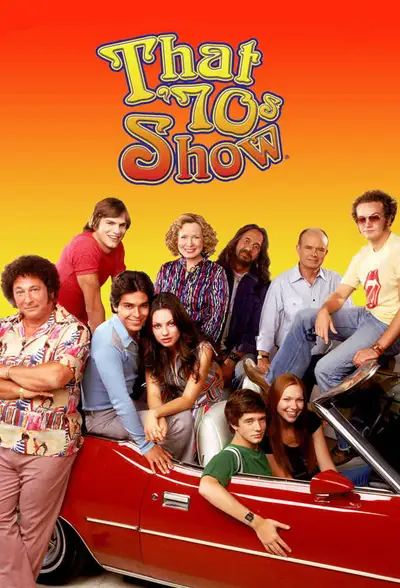
In this series following Wisconsin teenagers in the 1970s, a group of friends hangs out in Eric Forman's basement, navigating adolescence with sitcom predictability. Created by Bonnie and Terry Turner and Mark Brazill, That '70s Show relies heavily on nostalgia, period music, and the cast's chemistry—particularly Topher Grace as the neurotic Eric and the late-breaking star power of Ashton Kutcher and Mila Kunis. The humor is hit-or-miss, with some genuinely clever observations about the era alongside lazy stereotypes and jokes that haven't aged well. The famous circle scenes where characters get high are more tedious than funny in retrospect. While there's comfort in the show's formulaic approach, it rarely transcends conventional sitcom territory despite its talented young cast.