Giallo Movies
Sink into the mesmerizing world of Italian giallo films, where black-gloved killers stalk their prey through shadows drenched in crimson and neon, and baroque murder mysteries unfold with operatic intensity. This stylish thriller subgenre emerged from Italy in the 1960s and revolutionized suspense cinema with its intoxicating blend of horror, mystery, and avant-garde visual artistry. The best giallo movies transform violent crimes into psychedelic fever dreams, featuring elaborate death sequences, unreliable perspectives, and shocking twists that keep audiences guessing until the final frame. Masters like Mario Bava and Dario Argento pioneered these atmospheric thrillers that would later influence everything from American slasher films to modern psychological horror. These 21 essential giallo films span decades of Italian cinema's most audacious era, showcasing the genre's evolution from its nascent beginnings through its golden age and beyond. Expect stunning cinematography that treats murder as macabre ballet, pulsing prog-rock and jazz scores that amplify paranoia, and labyrinthine plots where trauma, obsession, and madness collide in unforgettable ways that continue to captivate thriller enthusiasts and cinephiles worldwide.

Dazzling in its technical virtuosity and genuinely terrifying in its atmosphere, Dario Argento's giallo masterpiece stands as one of horror cinema's most visually stunning achievements. David Hemmings plays Marcus Daly, a British jazz pianist living in Rome who witnesses the murder of a psychic and becomes obsessed with solving the crime, convinced he's overlooking a crucial detail in what he saw. Argento orchestrates a series of elaborate murder sequences that function almost as macabre set pieces, using his camera with balletic precision and his signature style of vivid colors and unexpected angles. The prog-rock score by Goblin is absolutely perfect, creating an unsettling soundscape that amplifies every moment of dread. What makes the film exceptional is how Argento balances the mystery plot with pure cinematic craftsmanship—this is a director completely in command of his medium, using every visual tool available to create something both beautiful and deeply disturbing. The final revelation is genuinely surprising, and the film's influence on subsequent horror cinema cannot be overstated.

Haunting, enigmatic, and absolutely mesmerizing, Nicolas Roeg's psychological thriller stands as one of cinema's most perfectly crafted exercises in dread and atmosphere. Donald Sutherland and Julie Christie give career-best performances as a couple grieving their daughter's accidental drowning, who travel to Venice where he's restoring a church and she encounters two sisters claiming psychic connection to the dead child. Roeg weaves a spellbinding tapestry of fractured time, recurring visual motifs, and creeping unease as Venice itself becomes a labyrinth of narrow passages and reflected water, beauty concealing danger at every turn. The editing by Graeme Clifford is extraordinary, creating connections across time that disorient and disturb while maintaining perfect narrative clarity. Every frame drips with foreboding, building to a conclusion that's both shocking and inevitable. The famous love scene remains remarkably intimate and frank, while Pino Donaggio's score amplifies the mounting terror. It's a masterpiece of mood and suggestion that rewards repeated viewings.

Dario Argento delivers one of his most stylish and suspenseful gialli with this meta thriller about an American crime novelist (Anthony Franciosa) promoting his latest book in Rome when a killer begins mimicking murders from his fiction. The premise becomes a twisted hall of mirrors as reality and fiction blur, with the author desperately trying to solve crimes that seem ripped from his own imagination. Argento's technical virtuosity is on full display—the cinematography by Luciano Tovoli is gorgeous, all gleaming surfaces and geometric compositions that contrast beautifully with the brutal violence. The murder sequences are elaborately choreographed set pieces that showcase Argento's understanding of spatial tension, while the prog-rock score by Goblin and Simonetti pulses with anxiety. The supporting cast, including Daria Nicolodi and John Saxon, adds texture to what could have been stock characters. What distinguishes this from Argento's more supernatural work is its psychological complexity and razor-sharp editing. This is giallo at its most refined and intelligent—a must-see for thriller fans.

Audacious in its construction and deeply unsettling in its execution, Brian De Palma's erotic thriller showcases the director at his most Hitchcockian while establishing his own provocative voice. Michael Caine stars as a psychiatrist whose patient, played by Angie Dickinson, meets a violent end after a museum encounter leads to an impulsive affair, drawing a call girl witness (Nancy Allen) and Caine's character into a cat-and-mouse game with a mysterious killer. De Palma orchestrates suspense with virtuoso technique—split screens, extended tracking shots, and a shower sequence that deliberately echoes Psycho while creating its own impact. The film's sexual politics remain controversial, but there's no denying the craftsmanship of De Palma's direction or the effectiveness of Pino Donaggio's score in heightening tension. Keith Gordon impresses as Caine's troubled son who assists in the investigation, adding dimension to what could have been mere thriller mechanics.

Thematically, this is Brian De Palma's exploration of voyeurism, performance, and the dangerous intersection between watching and participating. Craig Wasson plays an out-of-work actor who becomes obsessed with a beautiful neighbor he watches through a telescope, only to witness what appears to be her murder. De Palma orchestrates a Hitchcockian thriller that's also a commentary on Hollywood illusion, complete with a film-within-a-film and a porn industry subplot that blurs reality and fantasy. The director's virtuoso camera movements and split-screen techniques create a deliberately artificial style that reinforces the theme of constructed images. Melanie Griffith delivers memorable work as an adult film actress who becomes entangled in the mystery. De Palma pushes buttons and crosses lines with characteristic audacity, crafting sequences that are simultaneously thrilling and self-aware about cinema's manipulative power.

In the gilded theaters of contemporary Italy, Dario Argento crafts his most visually overwhelming nightmare, centering on a young opera singer forced to witness brutal murders. Cristina Marsillach plays Betty, an understudy thrust into the lead role of Verdi's Macbeth, only to attract a killer who tapes needles under her eyes, forcing her to watch his crimes. Argento's camera prowls through the opera house with predatory grace, finding baroque beauty in violence through his signature style of elaborate murder setpieces and prowling Steadicam work. The backstage setting allows for theatrical excess that matches the director's operatic sensibilities—this is horror as Grand Guignol performance art. Vanessa Redgrave appears briefly but memorably, while Argento layers in his obsessions with perception, trauma, and the relationship between audience and spectacle. It's aggressively stylized and occasionally overwhelms narrative coherence, but the visual audacity is undeniable.

This psychological horror-thriller from Edgar Wright delivers a stylish descent into madness wrapped in swinging '60s aesthetics. Thomasin McKenzie plays Eloise, a fashion student who discovers she can somehow experience 1960s London through the eyes of an aspiring singer (Anya Taylor-Joy), only to find the past holds darker secrets than she imagined. Wright demonstrates his trademark visual flair with neon-soaked Soho streets and clever transitions between eras, creating a film that's as much a love letter to London as a cautionary tale. The performances anchor the increasingly hallucinatory narrative, with both leads fully committed to the material's demands. While the third act becomes somewhat conventional compared to the audacious setup, the journey remains consistently engaging. The film works best as a meditation on nostalgia and the dangers of romanticizing bygone eras, all wrapped in a package that looks absolutely stunning.

Fernando Di Leo directs this stylish Italian crime thriller about an ex-con released from prison and immediately caught between the police, who believe he knows where stolen money is hidden, and the criminals who want it for themselves. Gastone Moschin plays Ullo Piazza with weary resignation, a man who insists he knows nothing while everyone around him seems convinced otherwise. Di Leo orchestrates the paranoid atmosphere with precision, using Milan's urban landscape as a cold, unwelcoming backdrop to the escalating violence. The film balances philosophical dialogue about power and corruption with sudden bursts of brutal action, creating an uneasy tension between contemplation and violence. Luigi Pistilli brings menacing intelligence to his role as a crime boss, while Barbara Bouchet adds complexity beyond what the script strictly requires. Armando Trovajoli's jazz-inflected score enhances the noirish atmosphere. This launches Di Leo's "Milieu Trilogy" with confidence, establishing the cynical worldview and moral ambiguity that would define his best crime films.

Dario Argento announced himself as a master of stylish terror with this directorial debut, a giallo thriller that established many of the visual and narrative tropes that would define the genre. Tony Musante plays Sam Dalmas, an American writer in Rome who witnesses an attempted murder in an art gallery and becomes obsessed with solving a series of brutal killings, despite sensing something crucial about that first attack eludes his memory. Argento transforms a straightforward mystery into a hypnotic exercise in suspense, using striking cinematography, unusual camera angles, and Ennio Morricone's unsettling score to create an atmosphere of paranoia and dread. The murder set pieces are inventively staged, the mystery genuinely intriguing, and the film's influence on subsequent thrillers—from slashers to psychological horror—cannot be overstated.

In this Yugoslav neo-noir, director Zoran Tadić crafts a stylish crime thriller that examines the criminal underworld of 1980s Zagreb with visual flair and moral ambiguity. Ivica Vidović stars as a jazz musician drawn into a dangerous world of organized crime, where artistic passion collides with violence and corruption. Tadić employs shadow-drenched cinematography and a moody jazz score to create an atmosphere that recalls classic film noir while remaining distinctly Balkan in its setting and sensibility. The film balances genre thrills with social commentary about economic anxiety and the seductive appeal of easy money. Strong supporting performances and genuinely stylish direction elevate material that could have been standard crime fare in less capable hands. This remains an underappreciated gem of Eastern European genre cinema that deserves wider recognition.

Lucio Fulci delivers one of his most restrained and effective films with this giallo that investigates a series of child murders plaguing a small Italian village. Long before his notorious gore spectacles, Fulci demonstrates genuine directorial craft here, building atmosphere through paranoia and social decay rather than excessive violence. The film functions as both a compelling murder mystery and a sharp critique of superstition, hypocrisy, and scapegoating in insular communities. Florinda Bolkan and Tomás Milián anchor the investigation as outsiders who face the town's hostility while pursuing the truth. Ennio Morricone's unsettling score enhances the oppressive atmosphere, and cinematographer Sergio D'Offizi captures the sun-bleached Southern Italian landscape with documentary-like authenticity. The solution to the mystery is genuinely surprising, and the film's willingness to confront uncomfortable themes gives it a provocative edge that persists decades later.

Stylish and intricately plotted, Dario Argento's second giallo thriller demonstrates the Italian director's growing mastery of suspense and visual composition. The film follows a blind puzzle-maker (Karl Malden) and a journalist (James Franciscus) who team up to solve a series of murders connected to a genetics research institute. While not quite reaching the delirious heights of Argento's later masterpieces, this mystery showcases his talent for constructing elaborate set pieces and maintaining tension through careful pacing and misdirection. Ennio Morricone's score adds another layer of sophistication, moving between haunting themes and jarring stings that punctuate the film's violence. The whodunit structure is genuinely engaging, with enough red herrings and twists to keep viewers guessing, even if the final revelation requires some logical leaps. Argento's camera work finds interesting angles and movements that elevate what could have been standard thriller material into something more visually distinctive and memorable for genre enthusiasts.

When a young art restorer arrives in a remote Italian village to restore a disturbing fresco depicting St. Sebastian's martyrdom, he quickly discovers the painting's deceased creator harbored dark secrets that still haunt the community. Director Pupi Avati builds an atmosphere of creeping dread through the decaying villa's oppressive interiors and the villagers' evasive behavior, creating a giallo that prioritizes psychological unease over graphic violence. Lino Capolicchio brings appropriate curiosity and mounting paranoia to the protagonist as he uncovers connections between the painting, local murders, and ritualistic obsession. The film's deliberate pacing may test viewers accustomed to more frantic Italian horror, but patience rewards with genuinely unsettling imagery and a mystery that maintains its grip. Avati's background in arthouse cinema brings unexpected sophistication to genre material, resulting in a giallo that lingers in the mind like a half-remembered nightmare.

When a woman returns to Vienna and reconnects with her husband after fleeing a sadistic affair, her past quite literally returns to haunt her in this stylish giallo thriller from director Sergio Martino. Edwige Fenech stars as Julie Wardh, tormented by both traumatic memories and a series of razor murders targeting women in her social circle. Martino orchestrates the baroque violence and psychological manipulation with considerable flair, employing the genre's trademark elements—black-gloved killers, baroque murder setpieces, ornate European locations—while maintaining surprising coherence in the plot's various twists. Cinematographer Emilio Foriscot's camera prowls through Vienna's architecture and Julie's sumptuous apartment with predatory elegance, while Bruno Nicolai's score oscillates between lounge sophistication and discordant menace. Ivan Rassimov brings genuine threat as Julie's former lover, while George Hilton provides ambiguous support as her husband's cousin and potential protector. The film's treatment of sexuality and violence remains provocative, blurring lines between victimization and desire in ways both uncomfortable and thematically purposeful. As giallo specimens go, this stands among the more accomplished examples, delivering lurid entertainment without sacrificing visual sophistication.

Hallucinatory and visually striking, Lucio Fulci's giallo mystery follows Carol (Florinda Bolkan), a London woman whose vivid nightmares about murdering her hedonistic neighbor begin bleeding into reality when the woman actually turns up dead. The Italian director crafts a deliberately disorienting experience where dreams, drug trips, and waking life blur together through kaleidoscopic editing and psychedelic imagery. The murder-mystery plot provides structure, but Fulci seems more interested in exploring psychological unraveling and societal hypocrisy than delivering straightforward thrills. Ennio Morricone contributes an unsettling score that shifts between discordant experimentation and melodic melancholy. Jean Sorel and Stanley Baker provide solid support, though Bolkan's committed performance as a woman questioning her own sanity anchors the surreal proceedings. The film's willingness to embrace ambiguity and reject easy answers won't satisfy viewers seeking conventional resolution, but for those appreciating early-'70s Italian genre filmmaking at its most stylistically adventurous, this delivers memorably nightmarish imagery and genuine atmosphere.

In early 1970s London, a series of brutal murders targeting Catholic schoolgirls sends shockwaves through a prestigious institution. Director Massimo Dallamano delivers one of the most polished entries in the Italian giallo genre, following Fabio Testi as Enrico Rosseni, a professor whose investigation into the killings becomes increasingly dangerous. The film balances psychological tension with procedural detective work, eschewing some of the genre's typical excesses for a more restrained and atmospheric approach. Joachim Fuchsberger co-stars as the school's priest, while the cinematography captures both the stately beauty of English architecture and the lurking menace beneath its civilized surface. The mystery unfolds with genuine intrigue, keeping viewers guessing while maintaining a consistent tone of dread. Ennio Morricone's haunting score elevates the entire production, making this a standout giallo that transcends its exploitation roots.

A woman begins experiencing vivid psychic visions of a murder she's compelled to investigate, even as the premonitions blur the line between future and past. Director Lucio Fulci crafts an elegant giallo that emphasizes atmosphere and psychological unease over his later work's extreme gore. Jennifer O'Neill is compelling as the clairvoyant caught in a web of mysteries that may or may not connect to her own buried trauma, while Gianni Garko provides steady support as her concerned husband. Fulci and cinematographer Giuseppe Ruzzolini create a visual style that's both beautiful and unsettling, using architecture and space to generate tension. The plot mechanics grow increasingly complex, but the dream-logic progression feels appropriate for a story about precognition and uncertain reality. This is Fulci working in a more restrained register, and the result is one of his most sophisticated and rewatchable films.

Darkly comedic yet genuinely unsettling, Alice Lowe's directorial debut presents a twisted tale of prenatal horror that defies easy categorization. Lowe also stars as Ruth, a pregnant widow who embarks on a killing spree supposedly directed by her unborn child's murderous urgings. The film walks a tightrope between pitch-black comedy and psychological horror, with Lowe's committed performance anchoring the increasingly surreal narrative. Her direction shows remarkable confidence, using vivid cinematography and careful pacing to maintain tension while acknowledging the premise's inherent absurdity. The violence is stylized yet impactful, never glorified but certainly not shying away from gore. What elevates the material beyond shock value is Lowe's willingness to explore grief, isolation, and bodily autonomy through this extreme genre framework. The supporting cast effectively portrays Ruth's various victims, each representing different aspects of social frustration. Shot while Lowe was actually pregnant, the film possesses an authenticity that makes its outrageous premise weirdly believable, resulting in a memorable thriller that announces a distinctive filmmaking voice.
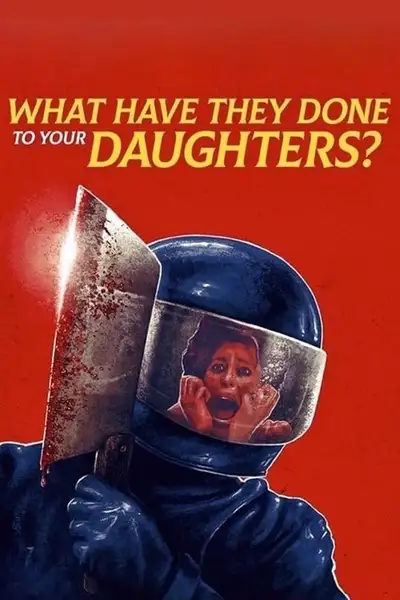
In 1970s Milan, a shocking discovery of a teenage girl's body launches a police investigation that uncovers a conspiracy reaching into the city's privileged circles. Director Massimo Dallamano's giallo operates in a grittier register than many genre entries, incorporating genuine social critique alongside the expected thriller elements. The film balances police procedural mechanics with the stylistic flourishes giallo fans expect—Dallamano's camera prowls through Milan's contrasting worlds of elite society and urban underbelly with equal attention to atmospheric detail. The mystery itself is surprisingly intricate, with Dallamano and his screenwriters constructing a plot that maintains suspense while addressing uncomfortable questions about class, corruption, and the exploitation of young women. While some elements feel dated, the film's willingness to engage with serious subject matter gives it more substance than typical genre fare. The performances are solid across the board, and Stelvio Cipriani's score effectively amplifies the mounting paranoia. It's a strong example of politically conscious giallo that doesn't sacrifice entertainment value.

Jane's battle with traumatic memories following a brutal assault leads her down a disturbing path when her fragile mental state makes her vulnerable to manipulation by a Satanic cult. Director Sergio Martino crafts an atmospheric giallo that blurs the line between psychological thriller and supernatural horror, with Edwige Fenech delivering a genuinely committed performance as the increasingly paranoid protagonist. The film benefits from Martino's stylish direction and Giancarlo Ferrando's vibrant cinematography, which bathes scenes in the lurid primary colors that define the best Italian genre cinema of this period. While the plot occasionally sacrifices coherence for mood, the persistent sense of dread and the genuine question of whether Jane's experiences are real or imagined maintain tension throughout. George Hilton and Ivan Rassimov provide solid support in a film that successfully merges giallo conventions with occult horror. It's an effective entry in the Italian thriller canon that deserves wider recognition among genre enthusiasts.

At its core, this stylish giallo explores themes of guilt, perception, and how trauma distorts our understanding of truth. Director Luigi Bazzoni crafts one of the genre's more psychologically complex entries, following journalist Franco Nero as he investigates a series of murders that may connect to his own troubled past. Bazzoni brings an art-house sensibility to the thriller framework, employing Ennio Morricone's haunting score and Vittorio Storaro's striking cinematography to create an atmosphere of paranoia and dread that transcends typical genre exercises. Nero delivers a more internalized performance than many giallo protagonists, playing a man whose investigation becomes increasingly personal and destabilizing. The mystery itself is layered and genuinely engaging, avoiding the narrative incoherence that sometimes plagues the genre. While it may lack the lurid excess of Argento's work, Bazzoni's measured approach creates its own kind of tension, building to a resolution that feels both surprising and psychologically earned.