Desert Adventure Movies
The desert has long captivated filmmakers as one of cinema's most visually arresting and dramatically potent backdrops, transforming arid wastelands into the ultimate proving ground for human endurance and ambition. These desert adventure movies span the entire history of cinema, showcasing how directors have harnessed the raw power of endless sand dunes, scorching horizons, and unforgiving terrain to craft unforgettable tales of survival, treasure hunting, and epic quests. From sweeping historical epics and gritty Westerns to dystopian thrillers and science fiction spectacles, the genre demonstrates remarkable versatility while maintaining the desert's central role as both setting and adversary. Whether following archaeological expeditions through ancient ruins, nomadic tribes navigating shifting sands, or lone wanderers battling dehydration and desperation, these films transform barren landscapes into canvases for breathtaking cinematography and pulse-pounding action. Our selection of 21 essential desert adventure films represents the finest examples of how filmmakers have captured the brutal beauty and merciless challenges of Earth's most inhospitable environments, delivering stories where characters must confront not only external threats but the psychological toll of isolation in the world's harshest wildernesses.

Relentless, visceral, and absolutely breathtaking, George Miller's return to his post-apocalyptic wasteland is pure cinema adrenaline distilled into two hours of non-stop action. Tom Hardy takes over as Max Rockatansky, the road warrior who gets swept up in Imperator Furiosa's (Charlize Theron) desperate mission to free a group of women from the tyrannical Immortan Joe. What follows is essentially one extended chase sequence across the desert, but Miller stages it with such creativity, practical stunt work, and visual invention that every moment feels fresh and exhilarating. Theron gives Furiosa tremendous depth and determination, making her the film's true heart. The production design is extraordinary, creating a fully realized world of chrome, dust, and flame. This is action filmmaking elevated to art.

Timothée Chalamet returns as Paul Atreides in Denis Villeneuve's staggering conclusion to Frank Herbert's epic, delivering a performance that charts the character's transformation from reluctant messiah to something far more dangerous and complex. Picking up immediately after the first film, Paul embraces his role among the Fremen while romance blooms with Chani (Zendaya, finally given substantial screen time) and his visions of a horrific future grow increasingly unavoidable. Villeneuve's world-building reaches new heights, with the desert planet Arrakis feeling utterly tangible—you can practically feel the sand in your teeth. Austin Butler makes a terrifying impression as the psychotic Feyd-Rautha, while Florence Pugh brings unexpected depth to Princess Irulan. The action sequences, particularly the worm-riding and final battle, are breathtaking in their scale and execution. Greig Fraser's cinematography and Hans Zimmer's thunderous score create an immersive sensory experience that demands the biggest screen possible. This is visionary science fiction filmmaking at its absolute peak, epic in scope yet intimate in its character work, cementing Villeneuve's place among cinema's great masters.

The race to recover a biblical artifact before it falls into Nazi hands drives Raiders of the Lost Ark, an exhilarating throwback to 1930s adventure serials elevated to pure cinema. Harrison Ford defines the adventurer-hero archetype as Indiana Jones, an archaeology professor who trades his classroom for death-defying quests when the government recruits him to find the Ark of the Covenant. Director Steven Spielberg orchestrates one spectacular set piece after another—from the boulder escape to the truck chase—with such infectious energy that you can't help but grin. Karen Allen matches Ford's charisma as Marion Ravenwood, Jones's former flame and current partner, while Paul Freeman makes a memorable adversary as rival archaeologist Belloq. Douglas Slocombe's cinematography and John Williams' iconic march create an atmosphere of pulpy excitement. It's pure entertainment executed with such craftsmanship that it transcends its influences to become the definitive adventure film.

In the unforgiving Australian Outback during the early 1970s, director Nicolas Roeg creates a visual and thematic masterpiece that remains astonishing decades later. When two British siblings find themselves stranded in the wilderness after a family tragedy, they encounter an Aboriginal boy on his ceremonial walkabout, and a tentative alliance forms across cultural divides. Roeg's cinematography transforms the harsh landscape into something both beautiful and indifferent, while Jenny Agutter and Luc Roeg (the director's son) bring authenticity to the siblings navigating survival. David Gulpilil is magnetic as the young Aboriginal guide, communicating volumes through gesture and expression. The film operates on multiple levels—survival story, meditation on civilization versus nature, coming-of-age narrative—all woven together with Roeg's characteristic editorial audacity. This is essential cinema that challenges, provokes, and lingers in the imagination long after viewing.

Denis Villeneuve brings his meticulous visual craftsmanship to Frank Herbert's legendary sci-fi novel, creating a breathtaking adaptation that finally does justice to the source material's epic scope. Where previous attempts stumbled, Villeneuve succeeds by embracing the story's complexity and grounding its fantastical elements in tangible reality. Timothée Chalamet anchors the film as Paul Atreides, a young nobleman thrust into a dangerous political conspiracy on the desert planet Arrakis, while Rebecca Ferguson, Oscar Isaac, and Josh Brolin provide strong support as his family. The casting is impeccable throughout, with Stellan Skarsgård making a memorably grotesque villain and Zendaya's brief appearances promising more to come. Cinematographer Greig Fraser captures the desert landscapes with stunning majesty, and Hans Zimmer's thunderous score perfectly complements the film's sense of scale. Villeneuve wisely focuses on world-building and character in this first installment, trusting audiences to invest in the journey. This is visionary science fiction filmmaking that demands to be experienced on the biggest screen possible.

Jaume Balagueró and Paco Plaza co-direct this Spanish found-footage horror film that follows a television reporter (Manuela Velasco) and her cameraman covering a routine fire department call that becomes a nightmare. Trapped inside a Barcelona apartment building under quarantine, the residents discover that something viral and violent is spreading among them. [REC] succeeds where many found-footage films fail by maintaining consistent logic for why the camera keeps rolling while generating escalating dread from its confined setting. Velasco's performance grounds the increasingly chaotic action, her character's professional composure gradually dissolving into primal terror. The directors demonstrate impressive control over pacing, building from unsettling unease to frantic horror as the situation deteriorates. The film's final sequence, shot in night-vision, delivers genuinely frightening moments that earned [REC] its reputation as one of the decade's most effective horror films. The American remake Quarantine followed, but this Spanish original remains the superior version for those willing to read subtitles.

Harrison Ford's Indiana Jones teams up with his estranged father, played brilliantly by Sean Connery, in this thrilling conclusion to the original trilogy. Director Steven Spielberg crafts an adventure that perfectly balances exciting action sequences with genuine heart and humor, as father and son quest for the Holy Grail while dodging Nazis and reconciling their complicated relationship. The chemistry between Ford and Connery elevates every scene, transforming what could have been a standard treasure hunt into something emotionally resonant. The film delivers everything fans love about the series—clever puzzles, death-defying stunts, and exotic locations—while adding a touching family dynamic that gives the stakes real weight. It's a satisfying, entertaining adventure that proves the franchise still had plenty of magic left.

Anya Taylor-Joy commands the screen as the titular warrior in George Miller's ambitious prequel, which traces Furiosa's transformation from kidnapped child to the fierce Imperator we met in "Fury Road." Miller proves he hasn't lost a step, crafting another visually stunning post-apocalyptic epic that balances breakneck action with genuine character development. Chris Hemsworth is clearly having a blast as the theatrical villain Dementus, though the film belongs entirely to Taylor-Joy's fierce, focused performance. The action set pieces are predictably spectacular—Miller remains the undisputed master of vehicular mayhem—but the film takes time to build its world and establish emotional stakes. At over two hours, the pacing occasionally lags compared to "Fury Road's" relentless momentum, but the additional runtime allows for more narrative complexity. The production design continues to astound with its detailed wasteland aesthetics and imaginative vehicles. While it doesn't quite reach the heights of its predecessor, this is still thrilling, visually inventive filmmaking that expands the Mad Max universe in meaningful ways.

Hauntingly beautiful yet unflinchingly brutal, Gregory Nava's epic chronicles the odyssey of two Guatemalan siblings fleeing political violence and seeking safety in the United States. David Villalpando and Zaide Silvia Gutiérrez play Enrique and Rosa, indigenous Mayans whose arduous journey north becomes a devastating portrait of immigration's human cost. Nava and co-writer Anna Thomas structure the film in three acts—the violence-torn Guatemalan highlands, the grueling passage through Mexico, and the harsh reality of undocumented life in Los Angeles—each section meticulously researched and rendered with documentary-like authenticity. The directors capture both the sublime beauty of their characters' dreams and the nightmarish obstacles they face: exploitative coyotes, harrowing desert crossings, Border Patrol raids, and the constant fear of deportation. Cinematographer James Glennon's work ranges from lush natural landscapes to grim urban poverty without aestheticizing suffering. Made for just $800,000, the film earned a rare Oscar nomination for its screenplay, validating its powerful blend of social realism and humanist storytelling that remains painfully relevant decades later.

Stunning in its desert cinematography and surprisingly intimate in its storytelling, this Jordanian coming-of-age tale follows a young Bedouin boy who must guide a British officer through the treacherous Arabian desert during World War I. First-time actor Jacir Eid Hussein is remarkable as Theeb, whose journey from sheltered youth to hardened survivor unfolds with minimal dialogue and maximum visual storytelling. Director Naji Abu Nowar, working with co-writer Bassel Ghandour, grounds the historical setting in tactile reality—every grain of sand, every scarce drop of water feels vital and present. The film operates as both a gripping survival thriller and a meditation on loyalty, as Theeb must navigate shifting allegiances in a landscape where trust can mean the difference between life and death. The vast, unforgiving desert becomes a character itself, beautifully captured by cinematographer Wolfgang Thaler. What could have been a conventional adventure story instead becomes something more primal and psychologically complex, earning comparisons to classic Westerns while maintaining its own distinctive voice and cultural specificity.

In this powerful true story directed by Phillip Noyce, three Aboriginal girls escape from a government settlement and walk 1,500 miles across the Australian outback to return home to their mothers. Set in 1931, the film exposes the horrific reality of Australia's Stolen Generations policy, which forcibly removed mixed-race Aboriginal children from their families for cultural assimilation. The young actresses—Everlyn Sampi, Tianna Sansbury, and Laura Monaghan—deliver remarkably natural performances as they navigate the harsh landscape while pursued by authorities. Kenneth Branagh portrays the settlement's chief protector, a man who genuinely believes he's acting in the children's best interests, which makes the film's critique of institutionalized racism even more effective. Noyce's direction emphasizes the landscape's beauty and harshness while never losing sight of the human cost of these policies. The film serves as both an adventure story and an important historical reckoning.

Set in the chaotic aftermath of the 1991 Gulf War, David O. Russell's desert heist thriller follows three American soldiers who stumble upon a map leading to stolen Kuwaiti gold hidden near their base. George Clooney, Mark Wahlberg, and Ice Cube star as the unlikely treasure hunters who quickly discover that their morally questionable mission becomes something far more complex when they encounter desperate Iraqi refugees. Russell employs a distinctive visual style—including bleach-bypass processing that gives the film its harsh, sun-bleached look—and balances dark comedy with genuine moral weight as the soldiers' priorities shift from greed to conscience. What could have been a straightforward action film instead becomes a sharp critique of war and its aftermath, with Russell never losing sight of the human cost amid the explosions and humor. The ensemble chemistry is excellent, and the film manages to be both entertaining and provocative.

In 1977, a young woman undertakes an extraordinary 1,700-mile solo trek across the Australian desert from Alice Springs to the Indian Ocean, accompanied only by her dog and four camels. Mia Wasikowska delivers a luminous, deeply internalized performance as Robyn Davidson in this beautifully realized adaptation of Davidson's memoir, directed by John Curran. The film captures both the grueling physical challenges of the journey and the profound spiritual transformation that occurs along the way, with cinematographer Mandy Walker rendering the vast outback landscapes in stunning, almost painterly compositions. Adam Driver appears periodically as National Geographic photographer Rick Smolan, whose presence provides both welcome human connection and unwelcome intrusion into Robyn's solitary quest. The film respects its subject's complexity—her determination, stubbornness, and desire for solitude—without reducing her motivations to simple explanations, resulting in a contemplative and genuinely moving portrait of self-discovery.

Jamie Uys crafted an unlikely international hit with this charming culture-clash comedy that follows the consequences when a Coca-Cola bottle falls from an airplane into a remote Kalahari community. What could have been patronizing becomes genuinely affectionate thanks to the film's good-natured humor and N!xau's wonderful performance as Xi, the Bushman who sets off to return the troublesome object to the gods. The parallel storylines involving bumbling scientists and revolutionaries provide broader comedy that occasionally feels dated, but the fish-out-of-water observations work both ways—the film gently mocks modern civilization as much as it finds humor in Xi's encounters with it. Shot beautifully on location and edited with impeccable comic timing, it's an undemanding crowd-pleaser with more heart than you might expect.

This coming-of-age adventure mystery follows Stanley Yelnats IV, a teenager wrongly convicted and sent to a desert detention camp where boys dig holes all day under the scorching sun. Director Andrew Davis adapts Louis Sachar's beloved novel with respect for both its layered storytelling and young audience, weaving together multiple timelines that eventually connect in satisfying ways. Shia LaBeouf brings earnest likability to Stanley, while Khleo Thomas, Max Kasch, and others create a believable group of misfit friends. Sigourney Weaver chews scenery as the camp's villainous warden, and Jon Voight provides comic menace as her henchman. The film balances humor with darker themes of injustice and family curses, never talking down to viewers. The desert setting becomes a character itself, and the resolution ties together past and present storylines with the kind of narrative cleverness that makes Sachar's work endure. It's a smart, engaging adaptation that captures the novel's spirit.

Based on the incredible true story, a group of prisoners escapes from a Soviet gulag in 1940 and embarks on a 4,000-mile journey on foot to freedom. Director Peter Weir orchestrates this epic survival tale with the patience and scope it deserves, following these desperate men across Siberian winters, Mongolian deserts, and Himalayan mountains. Jim Sturgess, Colin Farrell, Ed Harris, and Saoirse Ronan anchor the ensemble with performances that convey both physical deterioration and unbreakable human spirit. Weir captures the landscapes with stunning cinematography that emphasizes both their beauty and their brutality, making the environment itself a character in the story. The film focuses on the practical and psychological challenges of survival rather than action set pieces, building quiet tension through exhaustion, thirst, and the constant question of whether they can take another step. It's an old-fashioned adventure film with modern sensibilities, celebrating human endurance without glorifying suffering.

George Miller establishes the post-apocalyptic aesthetic that would influence decades of genre filmmaking with this gritty Australian thriller. Mel Gibson stars as Max Rockatansky, a highway patrol officer pursuing violent biker gangs across the decaying roads of a near-future Australia where law and order are crumbling. While the film doesn't yet embrace the full desert wasteland setting of its sequels, it effectively conveys a society on the brink, where authority figures struggle to maintain control against increasingly brutal criminals. The practical stunt work remains impressive, with Miller orchestrating genuinely dangerous-looking vehicle chases on real highways. Gibson's performance captures a man gradually losing his faith in the system he serves, setting up his transformation into the iconic Road Warrior. The film's low budget occasionally shows, but Miller's vision and energy overcome limitations, creating an intense revenge thriller that builds to a memorably dark conclusion.
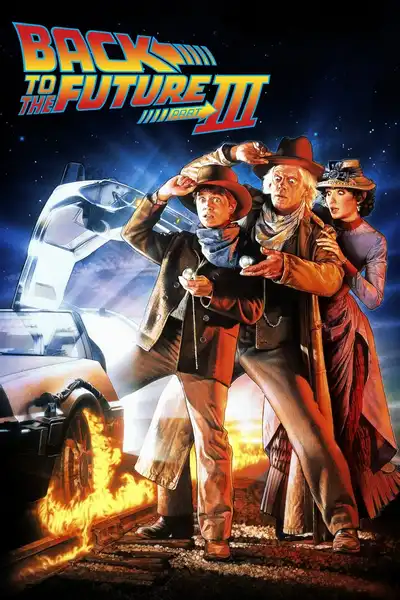
Robert Zemeckis completes his time-traveling trilogy by sending Marty McFly and Doc Brown to the Old West, and while it may not reach the heights of the original, it's still an entertaining romp. Michael J. Fox and Christopher Lloyd remain delightful together, with their chemistry carrying the film through its more familiar beats. This time, Marty must travel back to 1885 to save Doc from being killed by Buford "Mad Dog" Tannen, ancestor to Biff. The Western setting provides fresh visual territory, and the film has fun playing with genre conventions—there's a charming romance between Doc and Mary Steenburgen's schoolteacher that adds unexpected sweetness. The finale involving a locomotive and the DeLorean delivers the creative spectacle you'd expect. While the formula feels more predictable this third time around, Zemeckis and his cast bring enough heart and humor to make this a satisfying conclusion to one of cinema's most beloved trilogies.

This old-fashioned adventure yarn set in 1904 Morocco delivers exactly the kind of exotic, politically incorrect entertainment that Hollywood specialized in during the 1970s. John Milius directs Sean Connery as the Raisuli, a Berber chieftain who kidnaps an American woman (Candice Bergen) and her children to embarrass the Sultan and draw international attention to his cause. What follows is less a hostage thriller than a romanticized clash-of-cultures tale, with Connery's roguish charisma making the kidnapper improbably charming and Bergen's character gradually developing respect for her captor. Brian Keith provides strong support as Theodore Roosevelt, who dispatches the Marines to resolve the situation. Jerry Goldsmith's rousing score and Billy Williams's cinematography of Spanish locations standing in for North Africa give the film genuine sweep. While the politics are simplistic and the cultural representations questionable by contemporary standards, Milius orchestrates the action and character dynamics with enough energy to entertain.

Set during a grueling 700-mile horse race across the early 1900s American West, this endurance competition brings together a diverse group of riders whose personal motivations and developing relationships prove as compelling as the physical challenge itself. Director Richard Brooks crafts an unusually character-driven Western that uses the race structure to explore themes of aging, ambition, and the changing frontier. Gene Hackman and James Coburn deliver excellent performances as veteran competitors whose friendship and rivalry form the film's emotional core, while Candice Bergen plays a woman determined to prove herself in the male-dominated competition. The cinematography by Harry Stradling Jr. captures both the beauty and brutality of the Western landscape, making the physical toll of the race palpable. Rather than rushing toward action, Brooks allows scenes to breathe, developing characters through dialogue and observation. Jan-Michael Vincent and Ben Johnson round out the strong ensemble cast. The film's leisurely pace may test viewers expecting conventional Western shootouts, but patience is rewarded with a thoughtful exploration of what drives people to test their limits and what they discover about themselves in the process.

In the harsh Arizona Territory of 1885, director Robert Aldrich crafts a morally complex and unflinching examination of frontier violence when a seasoned scout and a young cavalry officer pursue a band of Apache warriors led by the fierce Ulzana. Burt Lancaster delivers a nuanced performance as McIntosh, the pragmatic scout whose understanding of Apache tactics comes with a weary acknowledgment of the brutal cycle of revenge driving the conflict. Bruce Davison plays the inexperienced Lieutenant DeBuin, whose Christian idealism is challenged by the savage realities of warfare. What distinguishes this Western from its contemporaries is its refusal to simplify the conflict into heroes and villains; instead, screenwriter Alan Sharp presents a tragedy where both sides are trapped in patterns of violence born from cultural collision and survival. The film's unflinching depiction of brutality serves not as exploitation but as honest portrayal of historical violence, while Aldrich's direction maintains tension throughout. This remains one of the era's most intelligent and uncompromising Westerns.