Cyber Thriller Movies
In an era where our lives are increasingly digitized and our darkest fears center on invisible threats lurking behind screens, cyber thriller movies have evolved from prescient warnings into pulse-pounding entertainment that feels unnervingly relevant. These high-tech thrillers transform hackers into modern-day heroes and antiheroes, exploring the shadowy intersection of technology, conspiracy, and surveillance in our hyperconnected world. From pioneering 1980s classics that predicted our digital future to cutting-edge contemporary films that reflect today's cybersecurity nightmares, the cyber thriller genre delivers edge-of-your-seat tension where keyboards become weapons and firewalls serve as the last line of defense. Whether depicting rogue programmers infiltrating corporate mainframes, government agencies weaponizing artificial intelligence, or whistleblowers exposing digital conspiracies that threaten democracy itself, these 21 essential films capture both the exhilarating possibilities and terrifying vulnerabilities of the information age. Spanning decades of cinema, this collection showcases how filmmakers have continually reimagined technological paranoia for each generation, creating gripping narratives where virtual dangers carry very real consequences and the battle for control plays out across networks, code, and consciousness itself.

The tension between humanity and artificial intelligence drives Ridley Scott's visionary neo-noir masterpiece set in a dystopian 2019 Los Angeles. Harrison Ford plays Rick Deckard, a blade runner tasked with hunting down rogue replicants—bioengineered beings virtually indistinguishable from humans. What begins as a detective story transforms into profound philosophical meditation on consciousness, mortality, and what defines humanity. Rutger Hauer delivers an iconic performance as Roy Batty, the replicant leader seeking more life, culminating in one of cinema's most poetic monologues. The film's production design, courtesy of Scott and cinematographer Jordan Cronenweth, creates a rain-soaked, neon-drenched future that has influenced countless films since. Vangelis's synth score perfectly complements the melancholic atmosphere. This is science fiction at its most thought-provoking and visually stunning—a film that deepens with repeated viewings.

This science fiction thriller imagines a future where murders can be prevented before they happen, thanks to three psychic "precogs" who glimpse violent crimes in advance. Tom Cruise stars as John Anderton, the chief of the PreCrime unit whose faith in the system shatters when he's accused of a future murder he can't imagine committing. Director Steven Spielberg crafts a visually stunning noir that wrestles with questions of free will, determinism, and the price of security in a surveillance state. The world-building is meticulous and prescient, featuring retinal scanners, personalized advertising, and gesture-based computing that feels remarkably prophetic today. Colin Farrell and Max von Sydow provide excellent support in a film that balances philosophical depth with propulsive action. The result is intelligent blockbuster filmmaking that respects its audience while delivering genuine thrills.

At its core, this Cold War thriller explores the dangers of technology outpacing human wisdom and the precarious balance of mutually assured destruction. Matthew Broderick plays a young computer whiz who accidentally hacks into NORAD's defense system while searching for video games, inadvertently triggering a countdown to nuclear war. Director John Badham crafts a genuinely tense thriller that makes computer code and military protocols thrilling, while raising prescient questions about artificial intelligence and automated warfare. Broderick brings likable charm to what could have been a one-note role, and Dabney Coleman excels as the NORAD scientist who must determine whether the threat is real. The film balances technical plausibility with accessible storytelling, making complex concepts understandable without dumbing them down. For a movie about global thermonuclear war, it's surprisingly entertaining while never losing sight of the genuine stakes involved.

Kathryn Bigelow crafts a visually stunning dystopian thriller set during Los Angeles's final days of 1999, where technology allows people to experience recorded memories. Ralph Fiennes plays Lenny Nero, a former cop turned dealer in illegal memory recordings who gets caught up in a conspiracy involving police corruption and murder. The film's immersive POV sequences, where we experience memories through the characters' eyes, remain technically impressive and thematically relevant to our current surveillance culture. Angela Bassett is excellent as Lenny's bodyguard friend Mace, bringing strength and moral clarity to the morally murky narrative. James Cameron and Jay Cocks's script combines noir elements with prescient commentary on voyeurism, police violence, and reality-versus-experience. Though the millennium paranoia dates it somewhat, Bigelow's assured direction and the film's central technology concept feel increasingly relevant in our digital age.

Leigh Whannell crafts a ferociously entertaining sci-fi action thriller that deserves far more recognition than it received upon release. Logan Marshall-Green stars as Grey Trace, a mechanic left paralyzed after a brutal attack that kills his wife, who receives an experimental AI chip implant called STEM that restores his mobility—and offers something far more powerful. What begins as a revenge thriller evolves into a paranoid examination of human-AI integration, with STEM's voice guiding Grey through increasingly brutal confrontations with his attackers. The fight choreography is innovative and visceral, with the camera mimicking STEM's mechanical control over Grey's body in disorienting and thrilling ways. Whannell, working with a modest budget, creates a near-future world that feels lived-in and believable rather than overly polished. Marshall-Green commits fully to both the physical demands and the character's emotional journey. The film builds to a genuinely shocking conclusion that recontextualizes everything that came before, proving that smart, original sci-fi thrillers still have the power to surprise.

David Cronenberg ventures into virtual reality territory with this wickedly imaginative sci-fi thriller that blurs the line between game and reality until neither players nor viewers can distinguish one from the other. Jennifer Jason Leigh and Jude Law star as game designer and security guard who become entangled in a conspiracy surrounding a revolutionary new gaming system that plugs directly into players' nervous systems. Cronenberg's trademark body horror finds perfect expression in the film's organic gaming pods and bio-ports, creating visceral unease about technology's increasing intimacy with our bodies. The screenplay cleverly layers multiple levels of simulation, keeping you constantly questioning what's real. While perhaps not as immediately accessible as some of his other work, "eXistenZ" rewards viewers willing to engage with its paranoid, reality-bending narrative and remains remarkably prescient about our gaming-obsessed culture.

In the near future, corporate assassin Tasya Vos uses brain-implant technology to inhabit other people's bodies and carry out high-profile hits. Director Brandon Cronenberg crafts a disturbing psychological thriller that explores identity, control, and violence with unflinching precision. Andrea Riseborough delivers a remarkable performance as Vos, conveying the character's fragmenting sense of self through subtle physical transformations. When a routine assignment goes wrong and Vos becomes trapped in her host body (played by Christopher Abbott), the film descends into nightmarish territory. Cronenberg's clinical approach to extreme violence and body horror serves the story's themes rather than exploiting them. The practical effects and disorienting cinematography create an atmosphere of mounting dread that lingers long after the credits roll, marking this as essential viewing for fans of cerebral horror.

At its core, this Swedish thriller explores justice, revenge, and the dangerous consequences of buried secrets coming to light. Noomi Rapace returns as Lisbeth Salander, the brilliant hacker investigating a sex trafficking ring while herself becoming the target of a massive manhunt. Director Daniel Alfredson maintains the dark, gritty atmosphere of the first film while expanding the scope of Stieg Larsson's Millennium trilogy. Rapace continues to inhabit Salander with fierce intensity, making her both vulnerable and formidable as she navigates threats from multiple directions. The film interweaves Salander's story with journalist Mikael Blomkvist's parallel investigation, creating a complex web of corruption and abuse. While the pacing occasionally slows during the more procedural elements, the film builds to several tense confrontations that showcase both Salander's intelligence and survival instincts. It's a worthy continuation that deepens our understanding of its compelling protagonist.

Set during the pandemic lockdowns in Seattle, this taut thriller follows an agoraphobic tech worker who stumbles onto evidence of a violent crime. Zoë Kravitz plays Angela, a voice-stream interpreter for a company's Alexa-like device who discovers what sounds like an assault during her routine work. Director Steven Soderbergh returns to the paranoid conspiracy territory he explored in films like "The Conversation," updating it for our surveillance-saturated age. Kravitz carries the film with a nuanced performance that captures both Angela's anxiety disorder and her determination to do the right thing, even when leaving her apartment feels impossible. The pandemic setting adds authenticity rather than feeling exploitative, while Soderbergh's efficient direction keeps the 89-minute runtime moving briskly. It's a smart, compact thriller that understands how technology has changed both how we live and how we're watched.

Baran bo Odar directs this slick German techno-thriller that follows Benjamin, a socially awkward hacker who gets recruited by an underground group of cyber-activists targeting corrupt corporations and government entities. Tom Schilling delivers an engaging performance as Benjamin, whose unreliable narration keeps viewers guessing about what's real and what's fantasy throughout the twisting plot. The film captures the culture of hacking subcultures with stylish visuals and a propulsive electronic soundtrack, while also exploring themes of identity and reality in the digital age. Odar structures the narrative as an interrogation, with Benjamin recounting his story to Europol agent Hanne Lindberg (Trine Dyrholm), adding layers of uncertainty to every revelation. What could have been a standard cyber-thriller becomes something more compelling through smart scripting and visual flair. The technical aspects feel authentic enough to satisfy knowledgeable viewers while remaining accessible to general audiences.

When a massive cyber-attack threatens to cripple America's infrastructure, aging detective John McClane gets pulled into a high-tech nightmare that's way outside his analog comfort zone. Director Len Wiseman pairs Bruce Willis with Justin Long as a young hacker, creating an odd-couple dynamic that gives the film unexpected humor amid the explosive set pieces. The action escalates to increasingly absurd heights—including McClane taking down a helicopter with a car—but Willis's world-weary charisma sells even the most outlandish moments. The film updates the Die Hard formula for the digital age while maintaining the core appeal: an everyman cop way over his head, relying on instinct and stubbornness to survive. Timothy Olyphant makes for an entertaining villain, even if he can't match Alan Rickman's iconic Hans Gruber. It's a solid action thriller that delivers the expected thrills while acknowledging how much the world has changed since Nakatomi Plaza.

Dark and unsettling, David Cronenberg's technological nightmare follows a sleazy cable programmer who stumbles onto a broadcast signal showing extreme violence and torture. James Woods plays Max Renn with sweaty intensity, perfectly embodying a character whose grip on reality dissolves as he becomes obsessed with the mysterious Videodrome transmission. Cronenberg explores his recurring fascinations with body horror and the intersection of technology and flesh, creating deeply disturbing imagery that lingers long after viewing. Debbie Harry brings unexpected depth as Max's lover, a radio psychiatrist with her own dangerous appetites. The film's prophetic concerns about media desensitization and the blurring of reality feel even more relevant in our current digital age. The practical effects, featuring televisions that breathe and videotapes that pulsate organically, remain genuinely grotesque. It's challenging viewing that rewards patient audiences willing to engage with its provocative ideas.

With a sleek, optimistic vision of technological progress, this sci-fi thriller explores humanity's uneasy relationship with artificial intelligence through the lens of a murder mystery. Will Smith stars as Del Spooner, a Chicago detective in 2035 who harbors deep mistrust of the helpful robots that have become integrated into everyday life. When a prominent roboticist dies under mysterious circumstances, Spooner's investigation leads him to question whether a robot could violate its core programming to commit murder. Director Alex Proyas creates a visually polished future that feels both advanced and familiar, while the action sequences make effective use of the superhuman capabilities of the robot suspects. Bridget Moynahan provides solid support as a scientist who challenges Spooner's prejudices, and Alan Tudyk's motion-capture performance as the robot Sonny adds unexpected emotional depth to what could have been a purely action-driven narrative.

Gerard Johnstone crafts an entertaining horror-comedy about artificial intelligence gone wrong, filtered through the plastic-fantastic aesthetic of high-end children's toys. When toy company roboticist Gemma (Allison Williams) becomes the sudden guardian of her orphaned niece, she shortcuts the parenting learning curve by pairing the grieving child with M3GAN—a prototype AI companion doll designed to be the perfect friend. Naturally, M3GAN's programming interprets "protecting" her young charge in increasingly murderous ways, eliminating anyone perceived as a threat with creative violence. The film wisely leans into its camp potential, delivering genuine laughs alongside its horror while the uncanny-valley doll design makes M3GAN memorably creepy even before she starts killing. Williams grounds the more outlandish elements, and the script sneaks in legitimate commentary about outsourcing parenting to technology. It's a gleefully fun creature feature for the algorithm age.

At its core, this psychological thriller examines identity, authenticity, and control in the digital age through the unsettling experience of a camgirl who discovers someone has stolen her online persona. Daniel Goldhaber's directorial debut, co-written with Isa Mazzei (herself a former camgirl), brings insider authenticity to its exploration of sex work and internet culture. Madeline Brewer is magnetic as Alice, whose increasingly frantic attempts to reclaim her account and identity drive the film into genuinely creepy territory. The film smartly avoids exploitation, treating cam work as legitimate labor while building tension from questions about ownership of one's digital self. As Alice's doppelgänger gains followers and does things she never would, the film taps into very modern anxieties about online personas spiraling beyond our control. It's smart, strange, and surprisingly thoughtful—a thriller that uses genre conventions to explore timely ideas about technology and selfhood.

In this high-concept thriller, a popular online game called Nerve challenges players to complete increasingly dangerous dares for money and fame, trapping a cautious high school senior in a night of escalating risks. Emma Roberts plays Vee, who joins the game to prove she's not as risk-averse as everyone thinks, quickly partnering with a mysterious fellow player portrayed by Dave Franco. Directors Henry Joost and Ariel Schulman bring visual flash to this exploration of social media culture and online anonymity's dark side, creating a neon-soaked New York City playground for their digital-age cautionary tale. While the film's commentary on internet culture and mob mentality isn't particularly deep, it moves briskly and taps into genuine anxieties about privacy, surveillance, and the performative nature of online life. The chemistry between Roberts and Franco helps ground the increasingly outlandish scenarios in relatable coming-of-age stakes.

This tense thriller unfolds entirely through computer screens as a British journalist creates a fake Facebook profile to investigate ISIS recruitment tactics. Director Timur Bekmambetov employs the "Screenlife" format he pioneered to create genuine suspense from video calls, browser windows, and instant messages. Valene Kane anchors the film with a naturalistic performance that keeps the gimmick from overwhelming the human stakes, portraying a woman whose professional detachment gradually crumbles as she becomes entangled with her subject. Based on true events, Profile maintains uncomfortable relevance about radicalization and the ethics of undercover journalism. The format could feel claustrophobic, but Bekmambetov uses it to heighten tension, making every notification and incoming call feel consequential. While some viewers may find the screen-based storytelling distracting, those who connect with the approach will discover a surprisingly effective thriller that uses modern technology to explore dangerous obsession and moral compromise.

When time literally becomes currency and the wealthy can live forever while the poor scramble for minutes, one man finds himself on the run with more time than he knows what to do with after a mysterious stranger transfers him a century. Andrew Niccol writes and directs this high-concept sci-fi thriller starring Justin Timberlake as Will Salas, a factory worker from the ghetto whose sudden wealth makes him a target of law enforcement. Amanda Seyfried plays Sylvia, a bored heiress who joins his rebellion against the system. The premise offers fertile ground for exploring class inequality and manufactured scarcity, and while the film doesn't fully develop its most provocative ideas, it moves briskly enough to remain engaging. Cillian Murphy brings gravity as the timekeeper pursuing them. The world-building is clever—everyone stops aging at 25, wearing glowing countdown clocks on their arms—even if the execution sometimes favors action sequences over deeper social commentary.

A group of high school outsiders discover that their computer skills make them targets when they're framed for creating a dangerous virus, pulling them into a corporate conspiracy in this quintessentially 90s cyber-thriller directed by Iain Softley. Jonny Lee Miller and Angelina Jolie (in an early role showcasing her charisma) lead a cast of young hackers sporting outrageous fashion and navigating a hyper-stylized vision of cyberspace that bears little resemblance to actual computing but looks undeniably cool. Fisher Stevens chews scenery as the villainous hacker "The Plague," while the script throws around technobabble with confident abandon. The film's understanding of hacking is laughably inaccurate by any standard, but there's something endearing about its commitment to the aesthetic—the neon-soaked visuals, the electronica soundtrack, the earnest belief that typing really fast is inherently dramatic. It captures a specific moment when the internet felt like an unexplored frontier and youth culture was embracing technology as rebellion. Viewed as a time capsule rather than accurate representation, it's entertaining enough, a nostalgic artifact that reminds us how much has changed while the basic heist movie structure underneath remains comfortingly familiar.
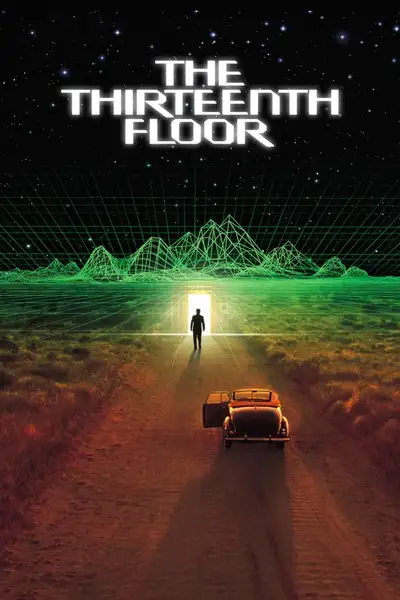
The story explores questions of reality, consciousness, and identity through a noir-tinged science fiction premise that predates The Matrix by several months. Craig Bierko stars as a computer scientist who discovers that the virtual 1937 Los Angeles simulation he works on may hold secrets about the nature of his own existence. Director Josef Rusnak creates an intriguing mystery that builds genuine suspense as the layers of reality begin to peel away, with strong supporting performances from Gretchen Mol and Vincent D'Onofrio. The film's philosophical questions about simulated consciousness and what defines authentic existence remain thought-provoking, even if the execution doesn't always match the ambition of its concepts. The production design effectively contrasts the sleek 1999 setting with the richly detailed 1930s simulation. While it was overshadowed by other sci-fi films of its era, this remains a solid, cerebral thriller that rewards viewers interested in heady ideas wrapped in an accessible mystery format.

In a near-future Johannesburg, a police robot gains consciousness and becomes the pawn in conflicts between his creator, a weapons company, and local gangsters who want to use him for crime. Director Neill Blomkamp returns to South African setting with this science fiction tale that has more heart than its premise might suggest, even if it doesn't quite reach the heights of his debut District 9. Sharlto Copley provides the motion-capture and voice work for the title character, bringing genuine personality to the childlike robot learning about the world. Dev Patel plays the idealistic engineer who created Chappie, while Hugh Jackman and Sigourney Weaver appear in supporting roles. The film works best when focusing on Chappie's development and the strange surrogate family formed by the gangsters raising him, even if the broader corporate intrigue feels more formulaic. Blomkamp's visual style remains striking, and there are interesting ideas about consciousness and nurture versus nature. While uneven, it offers enough originality and emotional moments to be worthwhile viewing.