Costume Drama Movies
Step into the opulent worlds of the past with the finest costume drama movies that have graced the silver screen across cinema history. These masterfully crafted period pieces transport audiences to bygone eras through lavish costumes, meticulously recreated settings, and compelling narratives that explore the complexities of historical societies. From the Regency elegance of Jane Austen adaptations to the grandeur of royal courts, from antebellum plantations to 18th-century European salons, costume dramas blend historical authenticity with powerful storytelling to create unforgettable cinematic experiences. Whether showcasing forbidden romance across social classes, depicting pivotal moments in history, or exploring the intimate lives of both commoners and nobility, these films captivate viewers with their visual splendor and emotional depth. Our curated selection of 21 essential costume drama films spans decades of filmmaking, celebrating both timeless classics that defined the genre and contemporary masterpieces that continue to push its boundaries. Each entry demonstrates the enduring appeal of period cinema, where sumptuous production design, exquisite attention to historical detail, and universal human stories combine to create movies that are as intellectually enriching as they are visually stunning.

A shattering examination of slavery's brutal reality and one man's fight for freedom, Steve McQueen's historical drama refuses to look away from America's darkest chapter. Chiwetel Ejiofor delivers a powerhouse performance as Solomon Northup, a free Black man from New York who is kidnapped and sold into slavery in the pre-Civil War South, enduring twelve years of unimaginable cruelty before regaining his freedom. McQueen directs with unflinching honesty, creating sequences of both terrible violence and quiet dignity that burn into memory. The supporting cast—including Lupita Nyong'o in her breakthrough role, Michael Fassbender as a monstrous plantation owner, and Benedict Cumberbatch—brings depth to this essential American story. Based on Northup's own memoir, the film serves as both historical document and profound meditation on resilience, humanity, and survival. It's necessary, devastating, and ultimately transcendent cinema that demands to be seen and remembered.

An ambitious social climber's rise and catastrophic fall drives this stunning period epic that showcases Stanley Kubrick at his most visually magnificent. Ryan O'Neal plays the titular Irish rogue who schemes his way from poverty into 18th-century aristocracy through calculated charm, a strategic marriage, and relentless ambition. Kubrick shoots almost entirely with natural candlelight and specially adapted lenses, creating frames that resemble classical paintings while emphasizing the artificial nature of Barry's cultivated world. The deliberate pacing allows viewers to become immersed in the period details and observe Barry's gradual moral deterioration with clinical precision. Marisa Berenson delivers a heartbreaking performance as Lady Lyndon, the wealthy woman Barry manipulates and ultimately destroys. Michael Hordern's sardonic narration provides ironic commentary on Barry's self-deception throughout his journey. This is Kubrick crafting pure cinema—a meticulously composed masterpiece where every image carries meaning and the tragedy unfolds with devastating inevitability. Simply unmissable filmmaking.

At its core, this is a profound meditation on genius, jealousy, and the unbearable weight of mediocrity in the presence of true greatness. Director Miloš Forman transforms the story of Mozart and his rival Salieri into an absolutely captivating exploration of artistic ambition and divine injustice. F. Murray Abraham is phenomenal as Salieri, the court composer tormented by his recognition of Mozart's supernatural gift, while Tom Hulce brings unexpected depth to Mozart, portraying him as both childish and transcendent. The period recreation is immersive and authentic, with Prague standing in gorgeously for 18th-century Vienna. What elevates this beyond typical biopic territory is its philosophical weight—it asks profound questions about talent, recognition, and whether God plays favorites. The classical music sequences are staged with operatic grandeur that makes them accessible and thrilling even for newcomers. It's a masterpiece that deserves every accolade it received.

Warm, vibrant, and brimming with life, this adaptation of Louisa May Alcott's beloved novel feels utterly fresh while honoring its source material. Director Greta Gerwig crafts a non-linear narrative that draws fascinating parallels between the March sisters' artistic ambitions and the constraints of their era. Saoirse Ronan leads an exceptional ensemble cast including Florence Pugh, Emma Watson, and Eliza Scanlen, each bringing depth and individuality to their roles. What makes this version so special is how it sharpens the story's feminist themes—particularly through Jo's struggle between artistic integrity and commercial necessity. Timothée Chalamet captures Laurie's boyish charm and eventual heartbreak beautifully. The costume design and cinematography create a painterly aesthetic that draws you completely into the world. Gerwig has achieved something remarkable here: a classic story reimagined with such intelligence and heart that it feels simultaneously timeless and urgently contemporary.

Haunting and meticulously crafted, Michael Haneke's masterpiece examines the roots of fascism in a German village on the eve of World War I with unflinching precision and chilling restraint. Shot in stark black and white by Christian Berger, the film follows a series of mysterious, increasingly disturbing incidents that plague a small Protestant community where rigid authoritarian parenting and religious repression have created an atmosphere of fear and hidden violence. Haneke never explicitly explains the events, instead allowing viewers to draw connections between the cruel discipline inflicted on children and the totalitarian impulses that would soon engulf Europe. The ensemble cast of largely unknown actors delivers remarkably naturalistic performances that enhance the film's documentary-like authenticity. Haneke's patient, observational approach requires concentration, but rewards it with one of cinema's most powerful examinations of how societies cultivate evil. This is filmmaking of the highest order—intelligent, disturbing, and impossible to forget.

This is a meditation on grief, creativity, and the invisible lives of those who exist in the shadows of famous men. Director Chanya Button adapts Maggie O'Farrell's acclaimed novel about the death of Shakespeare's only son and how that loss reverberated through his family and work. Jessie Buckley delivers a stunning performance as Agnes (Anne Hathaway), Shakespeare's wife, portrayed here not as a footnote but as a complex woman with her own spiritual and emotional depth. The film resists conventional biopic structure, instead moving through time fluidly to explore how a family processes unbearable loss. Tom Glynn-Carney brings unexpected vulnerability to Shakespeare, here called by his family name rather than immortalized as The Bard. Button's direction finds visual poetry in domestic spaces and natural landscapes, creating an intimate epic that honors both historical detail and emotional truth. This is exceptional filmmaking that understands how personal tragedy shapes art.

Wickedly satirical and deliciously venomous, Yorgos Lanthimos's period comedy is a baroque feast of backstabbing, manipulation, and power plays set in the court of Queen Anne. Olivia Colman delivers an Oscar-winning performance as the physically and emotionally fragile monarch, caught between two women vying for her favor: Lady Sarah Churchill (Rachel Weisz), her longtime friend and advisor, and Sarah's impoverished cousin Abigail (Emma Stone), who arrives at court seeking employment and quickly reveals her own ruthless ambitions. Lanthimos and cinematographer Robbie Ryan employ fish-eye lenses and natural lighting to create a visual style that feels both sumptuous and grotesque, perfectly matching the film's tonal balance between absurdist humor and genuine cruelty. The three lead performances are magnificent, each actress finding different shadings of vulnerability within their characters' calculated maneuvering. It's a film about the corrupting nature of power that never loses its sense of dark humor, resulting in something both entertaining and surprisingly poignant.

Keira Knightley as Elizabeth Bennet delivers an utterly captivating performance that makes this adaptation of Jane Austen's beloved novel absolutely shine. Director Joe Wright crafts a visually stunning period piece that feels both authentic and refreshingly accessible, with sweeping cinematography that captures the English countryside in all its glory. Matthew Macfadyen's Mr. Darcy smolders with restrained intensity, and the chemistry between the leads crackles in every scene. The film expertly balances romance, wit, and social commentary, streamlining Austen's story without losing its essence. Wright's bold choices—from the naturalistic lighting to the intimate handheld camerawork—give this classic tale a contemporary energy that draws you in completely. It's a romance that will make your heart soar.
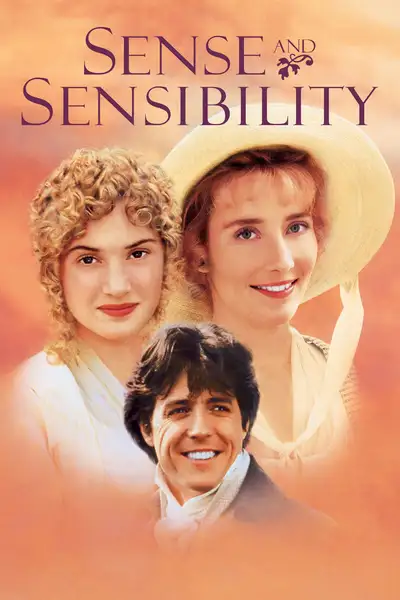
In this luminous adaptation of Jane Austen's novel, director Ang Lee and screenwriter Emma Thompson create a deeply romantic and emotionally intelligent period drama that honors its source while making it accessible to contemporary audiences. Thompson stars as Elinor Dashwood, embodying sense and restraint, while Kate Winslet brings youthful passion to her sister Marianne, representing sensibility and feeling. The film follows the sisters as they navigate reduced circumstances, romantic disappointments, and societal expectations in Regency England. Lee's direction finds the perfect balance between lavish period detail and intimate character moments, while Thompson's Oscar-winning screenplay sharpens Austen's wit without sacrificing emotional depth. The supporting cast is uniformly excellent, with Hugh Grant, Alan Rickman, and Greg Wise bringing complexity to their respective roles as the objects of the sisters' affections. Patrick Doyle's score enhances the emotional beats without overwhelming them. This remains one of the most satisfying Austen adaptations, proving that careful attention to character and theme can make centuries-old stories feel immediate and affecting.

Immersive and meticulously crafted, Peter Weir's naval epic transports viewers to the Napoleonic Wars with remarkable authenticity and attention to detail. Russell Crowe plays Captain Jack Aubrey of HMS Surprise, ordered to intercept a French privateer that outguns and outmaneuvers his vessel. Rather than delivering a straightforward action film, Weir creates a thoughtful character study about leadership, duty, and the costs of command, particularly in Aubrey's relationship with ship's surgeon Stephen Maturin (Paul Bettany), whose scientific curiosity sometimes conflicts with military necessity. The film captures the rhythms of life aboard a man-of-war with documentary-like precision, from the cramped living conditions to the shocking violence of naval combat. Russell Boyd's cinematography and the sound design create a truly sensory experience that makes you feel the spray of salt water and the concussive force of cannon fire. It's a film that respects its audience's intelligence, trusting us to follow naval terminology and strategic thinking without dumbing anything down. A masterful piece of historical filmmaking that deserved more recognition.

The clash between frontier expansion and indigenous sovereignty drives this sweeping epic that examines American history through a more complex lens than Hollywood typically offered. Kevin Costner directs and stars as Lt. John Dunbar, a Union soldier who requests a remote posting on the western frontier and gradually becomes integrated into a Lakota Sioux community, eventually siding with them against his own army. The film, shot beautifully by Dean Semler across South Dakota's plains, takes time to develop Dunbar's relationships with the tribe, particularly with Wind In His Hair (Rodney A. Grant) and Stands With A Fist (Mary McDonnell), a white woman raised by the Lakota. While some elements feel romanticized through a white savior lens, the film's respect for Lakota culture, extensive use of subtitled native language, and willingness to portray the U.S. military's brutality marked a significant shift in how Westerns approached their subject matter.

Mel Gibson embodies William Wallace, the 13th-century Scottish warrior who becomes an unlikely revolutionary leader in Braveheart. Directed by Gibson himself, this epic historical drama traces Wallace's transformation from a simple farmer seeking a peaceful life into a symbol of Scottish independence after personal tragedy strikes. The film doesn't shy away from brutal medieval combat, but balances the violence with a sweeping romance and stirring speeches about freedom that have become iconic. James Horner's soaring score accompanies breathtaking cinematography of the Scottish Highlands, while the supporting cast including Sophie Marceau and Patrick McGoohan adds depth to this tale of resistance against English tyranny. It's a long journey at three hours, but the emotional investment pays off for those drawn to historical epics with heart.

Jean-Paul Rappeneau brings Edmond Rostand's classic play to vibrant life with this sumptuous adaptation that honors the source material while making it feel urgently cinematic. Gérard Depardieu is magnificent as the long-nosed poet-swordsman whose wit and courage are matched only by his romantic devotion to his cousin Roxane, played with grace by Anne Brochet. Depardieu inhabits the role completely, making Cyrano's vulnerability and bravado equally convincing, whether he's dueling multiple attackers or composing love letters for his inarticulate rival. The production design captures 17th-century Paris with lavish detail, while Rappeneau's direction ensures the theatrical origins enhance rather than constrain the storytelling. Vincent Perez rounds out the triangle as the handsome but simple Christian. The film runs over two hours but never drags, balancing action, comedy, and genuine pathos. This is a passionate, enormously entertaining adaptation that proves classic stories can feel fresh with the right artists behind them.

James Ivory delivers one of his finest films with this adaptation of E.M. Forster's novel about forbidden love in Edwardian England. James Wilby stars as Maurice Hall, a young man coming to terms with his homosexuality at Cambridge and in the repressive upper-class society of the early 20th century. Hugh Grant gives a luminous early performance as Clive Durham, Maurice's first love who ultimately chooses social acceptability over authenticity. The film's emotional core arrives when Maurice finds genuine connection with Clive's gamekeeper, played with quiet intensity by Rupert Graves. Ivory and screenwriter Kit Hesketh-Harvey handle Forster's themes with sensitivity and restraint, never reducing the characters to mere symbols. The period detail is exquisite, but the emotions feel utterly contemporary. It's a moving examination of the courage required to live truthfully in a world determined to deny your existence.

Andrew Dominik crafts a meditative, visually stunning Western that deconstructs American mythology through the relationship between legendary outlaw Jesse James (Brad Pitt) and his eventual killer, the ambitious Robert Ford (Casey Affleck). Rather than glorifying its iconic subject, the film portrays Jesse as paranoid, cruel, and increasingly unstable during his final months, while Bob Ford emerges as a tragic figure destroyed by hero worship and desperate need for recognition. Pitt delivers one of his finest performances, capturing both Jesse's charisma and menace, while Affleck is heartbreaking as the insecure young man whose fame-seeking leads to infamy. Roger Deakins's cinematography is breathtaking, transforming the American frontier into a dreamlike landscape of golden light and creeping shadows. Nick Cave's mournful score enhances the film's elegiac tone. The deliberate pacing and literary narration create an almost hypnotic experience that demands patience but rewards attention. At nearly three hours, it's admittedly slow, but Dominik's ambitious vision results in a truly haunting examination of legend, violence, and the American obsession with fame.

Achingly romantic and visually sumptuous, Jane Campion's biographical drama explores the passionate final years of poet John Keats (Ben Whishaw) and his love affair with Fanny Brawne (Abbie Cornish). Campion crafts an intimate portrait of artistic devotion and romantic longing, letting scenes breathe with unhurried confidence. Whishaw brings fragility and intensity to Keats, capturing both his poetic genius and his awareness of mortality, while Cornish is a revelation as Fanny—intelligent, creative, and deeply feeling rather than the frivolous figure history sometimes portrayed. Their chemistry is palpable, making the obstacles keeping them apart genuinely heartbreaking. The film's attention to period detail, from costumes to the natural world that inspired Keats's work, creates an immersive sensory experience. Cinematographer Greig Fraser captures the English countryside with painterly beauty, while the use of Keats's actual poetry feels organic rather than shoehorned. Paul Schneider provides excellent support as the protective but frustrated Charles Brown. This is costume drama at its finest—emotionally authentic and gorgeous to behold.

Leonardo DiCaprio as Amsterdam Vallon anchors Martin Scorsese's sprawling epic about tribal warfare in 1860s Manhattan with raw intensity and emotional depth. The film chronicles Amsterdam's quest for revenge against Bill "The Butcher" Cutting (Daniel Day-Lewis in a legendary performance) who murdered his father years earlier. Scorsese crafts a visceral, intoxicating portrait of a New York built on blood and ambition, where immigrant gangs clash in the Five Points slum against the backdrop of the Civil War Draft Riots. The production design is staggering, the violence is brutal and unflinching, and Day-Lewis delivers one of cinema's great villain performances. While the romance subplot occasionally slows the momentum, the film's ambition, craftsmanship, and sheer cinematic power make it essential viewing for anyone interested in American history or Scorsese's body of work.

An orphaned young woman takes a position as governess at the mysterious Thornfield Hall, where she develops a complex relationship with her brooding employer, Edward Rochester. Director Cary Joji Fukunaga brings fresh visual energy to Charlotte Brontë's classic novel, shooting on location in actual English manor houses that feel appropriately Gothic and atmospheric. Mia Wasikowska captures Jane's quiet strength perfectly—she's neither victim nor rebel but something more interesting and real. Michael Fassbender matches her intensity as Rochester, finding vulnerability beneath the character's imperious exterior and making their intellectual and emotional connection feel genuinely earned. The film wisely focuses on Jane's perspective throughout, using handheld cameras and intimate framing to keep us close to her experience. Fukunaga doesn't shy away from the novel's darker elements, including its troubling treatment of Bertha Mason, while maintaining the central love story's power. The result is one of the most viscerally effective Brontë adaptations, honoring the source while feeling cinematically alive.

Brutal and uncompromising, this Australian western from director John Hillcoat strips away any romanticism from frontier justice to reveal something raw and morally complicated. Set in the harsh Outback of the 1880s, the film follows Captain Stanley (Ray Winstone), a lawman who gives outlaw Charlie Burns (Guy Pearce) an impossible proposition: find and kill his older brother, a notorious gang leader, or watch his younger brother hang by Christmas. Hillcoat, working from a screenplay by musician Nick Cave, creates a sun-scorched nightmare where violence erupts suddenly and consequences linger. The performances are uniformly excellent, with Pearce carrying the weight of impossible choices and Danny Huston radiating menace as the brother he must betray. It's a western that feels genuinely dangerous, uncomfortable, and unflinching in its portrayal of colonialism's violence and the thin line between civilization and savagery.

Cate Blanchett commands the screen as young Elizabeth I, navigating the treacherous political waters of 16th-century England as she transforms from uncertain heir to formidable monarch. Director Shekhar Kapur takes a dynamic, almost contemporary approach to the period drama, infusing the historical material with thriller-like tension and visual flair. The film focuses on Elizabeth's early reign, when assassination plots, religious conflicts, and court intrigue threatened her crown and her life. Geoffrey Rush is excellent as Sir Francis Walsingham, her ruthless spymaster, while Joseph Fiennes portrays Robert Dudley, the lover she must ultimately sacrifice for power. The production design and costumes are sumptuous without overwhelming the human drama at the story's core. Blanchett's performance captures Elizabeth's gradual hardening from vulnerable young woman to the iconic "Virgin Queen," showing the personal cost of political survival. It's a costume drama with genuine bite and energy, making centuries-old history feel immediate and relevant.

In Edwardian New York, a beautiful but unmarried woman navigates the treacherous waters of high society, where one wrong step can mean social ruin. Gillian Anderson delivers a luminous performance as Lily Bart, a woman caught between her desire for love and the practical necessity of securing a wealthy husband in a world that offers women few other options. Director Terence Davies adapts Edith Wharton's novel with exquisite attention to period detail and emotional nuance, creating a devastating portrait of a society that destroys what it claims to cherish. The film moves with deliberate pacing, allowing viewers to fully absorb the suffocating constraints of Lily's world and the tragic consequences of her choices. With strong support from Laura Linney and Dan Aykroyd, this is a beautifully crafted examination of class, gender, and the cost of independence.