Best Movies of 2005
The year 2005 stands as a remarkable milestone in cinematic history, delivering an extraordinary collection of films that pushed creative boundaries and left an indelible mark on movie lovers worldwide. From intimate character studies to sweeping romantic epics, the best movies of 2005 showcased visionary directors at the height of their craft, breakthrough performances that earned critical acclaim, and storytelling that challenged conventions across multiple genres. Whether you're searching for thought-provoking documentaries that blur the line between reality and art, internationally acclaimed dramas that captivated festival circuits, beloved animated features that delighted audiences of all ages, or emotionally powerful films that sparked important cultural conversations, this definitive ranking of 21 essential titles captures the year's most significant cinematic achievements. These award-winning films and hidden gems represent the diverse creative energy that made 2005 unforgettable, offering modern viewers a chance to discover or revisit the groundbreaking movies that critics and audiences celebrated nearly two decades ago. Explore the performances, directors, and stories that defined this exceptional year in cinema and understand why these films continue to resonate with movie enthusiasts today.

This documentary from Werner Herzog examines the life and death of Timothy Treadwell, an environmental activist who spent thirteen summers living among grizzly bears in Alaska before being killed and eaten by one of them in 2003. Herzog constructs a fascinating portrait from Treadwell's own extensive video footage, which captures both the beauty of his connection with the animals and the troubling signs of delusion and mental instability. Rather than simply celebrating or condemning his subject, Herzog maintains a complex perspective, admiring Treadwell's passion while questioning his methods and understanding of nature. The director's narration provides philosophical counterpoint to Treadwell's anthropomorphizing of the bears, with Herzog seeing in nature not kindness but indifference. The result is both a character study of a troubled individual and a meditation on humanity's relationship with the wilderness. It's Herzog at his most compelling, finding profound questions in an extreme story, and creating something far more thought-provoking than standard nature documentary or true-crime fare.

Heath Ledger and Jake Gyllenhaal deliver achingly vulnerable performances as Ennis Del Mar and Jack Twist, two young ranch hands whose 1963 summer working together on Wyoming's Brokeback Mountain ignites a passionate relationship that spans decades of stolen moments and painful separation. Ang Lee's adaptation of Annie Proulx's short story is a devastating meditation on love constrained by societal prejudice and internalized shame. The Wyoming landscape, captured beautifully by cinematographer Rodrigo Prieto, becomes both sanctuary and symbol of the impossible freedom these men seek. Michelle Williams and Anne Hathaway bring depth to the wives caught in this tragedy. Lee handles the romance with sensitivity and restraint, making the brief moments of connection all the more powerful against years of longing and compromise. Ledger's performance is particularly remarkable—his Ennis is a man of few words whose every gesture reveals oceans of suppressed emotion. The film transcends its specific story to become a universal portrait of love denied, making it an essential and heartbreaking masterpiece.

Ion Fiscuteanu gives an astonishing performance as Dante Lazarescu, an elderly Bucharest resident whose routine medical complaint spirals into a nightmarish odyssey through Romania's overwhelmed healthcare system. Director Cristi Puiu crafts an unforgettable experience that plays almost in real-time across a single night as ambulance driver Luminita Gheorghiu shepherds her increasingly ill patient from hospital to hospital, each facility finding reasons to turn them away. The film's nearly three-hour runtime mirrors Lazarescu's exhausting journey, yet Puiu maintains tension through accumulating frustration and the protagonist's deteriorating condition. What could have been a heavy-handed critique instead becomes a deeply humanist portrait of systemic failure and the few individuals who try to help. This is filmmaking of the highest order—compassionate, unflinching, and impossible to forget.

Keira Knightley as Elizabeth Bennet delivers an utterly captivating performance that makes this adaptation of Jane Austen's beloved novel absolutely shine. Director Joe Wright crafts a visually stunning period piece that feels both authentic and refreshingly accessible, with sweeping cinematography that captures the English countryside in all its glory. Matthew Macfadyen's Mr. Darcy smolders with restrained intensity, and the chemistry between the leads crackles in every scene. The film expertly balances romance, wit, and social commentary, streamlining Austen's story without losing its essence. Wright's bold choices—from the naturalistic lighting to the intimate handheld camerawork—give this classic tale a contemporary energy that draws you in completely. It's a romance that will make your heart soar.

In contemporary Paris, a bourgeois couple's comfortable existence begins to unravel when they receive anonymous videotapes showing surveillance footage of their home's exterior. Michael Haneke directs this masterfully unsettling thriller that transforms a simple mystery into a profound examination of guilt, memory, and complicity. Daniel Auteuil and Juliette Binoche deliver complex performances as Georges and Anne, whose relationship fractures under the pressure of these invasive intrusions. What makes this film extraordinary is Haneke's refusal to provide easy answers or conventional thriller satisfactions—instead, he implicates both his characters and audience in uncomfortable questions about colonial history, personal responsibility, and the stories we tell ourselves. The static camera work creates mounting dread from ordinary images, while the famous opening shot asks us to reconsider what we're actually watching. This is challenging, thought-provoking cinema that rewards close attention and lingers in your mind long after its ambiguous conclusion.

In the quaint English village of West Wallaby Street, the beloved duo of Wallace and his faithful dog Gromit face their most formidable challenge yet when a mysterious creature threatens the annual Giant Vegetable Competition. Directors Nick Park and Steve Box have crafted an absolute masterpiece of stop-motion animation, with every frame bursting with meticulous detail and quintessentially British charm. The film brilliantly parodies classic horror cinema while maintaining its family-friendly heart, as our heroes operate their humane pest control business "Anti-Pesto" before confronting the titular were-rabbit. The voice work from Peter Sallis as Wallace is perfection, while Gromit's silent-but-expressive reactions steal every scene he inhabits. The wordplay, visual gags, and background jokes reward multiple viewings, and the craftsmanship on display remains genuinely awe-inspiring. This is animation at its finest—clever, warm, and utterly irresistible.

From the underground music scenes of 1980s Austin, Texas, emerges one of the most compelling and heartbreaking artist portraits ever committed to film. Jeff Feuerzeig's documentary traces the life of Daniel Johnston, the lo-fi musician whose raw, emotionally devastating songs earned him cult status and the admiration of Kurt Cobain, even as severe mental illness threatened to consume him entirely. This isn't just a music documentary—it's an intimate, deeply moving examination of creativity, family, and the thin line between artistic genius and psychological fragility. Using Johnston's own artwork, home recordings, and remarkably candid footage, Feuerzeig creates a portrait that honors his subject's talent while never romanticizing his struggles. The film achieves something extraordinary: it makes you fall in love with Johnston's music while breaking your heart with his story, resulting in an unforgettable experience that stays with you long after the credits roll.

This is a story about parenthood and responsibility viewed through the most unsparing lens imaginable, as the Dardenne brothers follow Bruno, a petty thief who makes an unthinkable decision regarding his newborn son. Jérémie Renier delivers a remarkable performance as a man-child whose emotional awakening comes far too late and at devastating cost, while Déborah François is heartbreaking as Sonia, the young mother trying to build a life for her family. The Dardennes' signature handheld camera style creates an almost documentary-like intimacy that makes Bruno's actions feel uncomfortably immediate and real. What could have been simply a story of condemnation becomes something more complex—an examination of how poverty, immaturity, and moral emptiness intersect, and whether redemption is even possible after certain lines are crossed. The film won the Palme d'Or at Cannes, and its refusal to sentimentalize or simplify its difficult subject matter exemplifies the brothers' compassionate but rigorous approach to social realism.

Marc-André Grondin plays Zac Beaulieu, a young man growing up in 1960s and '70s Quebec as the fifth son in a deeply Catholic family who believes he might be miracle-blessed. Director Jean-Marc Vallée's semi-autobiographical coming-of-age drama charts Zac's struggle with his sexuality against the backdrop of his father's rigid expectations and his mother's quiet understanding. The film captures the texture of each era through its carefully curated soundtrack of period music, which becomes integral to how Zac understands and expresses himself. Grondin delivers a nuanced performance that navigates Zac's journey from confused child to self-accepting adult without hitting false notes. Michel Côté as the stern patriarch creates a complex figure whose own pain informs his inability to accept his son. Vallée balances humor and heartbreak while painting a vivid portrait of French-Canadian family life, creating something both culturally specific and universally resonant about the courage required to live authentically.

Harry's fourth year at Hogwarts takes a deadly turn when he's mysteriously entered into the dangerous Triwizard Tournament despite being underage. Director Mike Newell brings a darker edge to the franchise as Daniel Radcliffe's Harry faces dragons, underwater dangers, and a haunting maze while trying to uncover who put his name in the Goblet of Fire. The stakes feel genuinely higher here, with character deaths that signal the series' shift toward more mature territory. The tournament sequences are thrilling, and the film balances spectacle with the awkward teenage dynamics of school dances and first crushes. Ralph Fiennes makes a chilling entrance as Voldemort in the climactic graveyard scene, setting the stage for the darker chapters to come.

At its heart, this is a story about choosing love over obligation and finding your voice in a world of expectations. Tim Burton and Mike Johnson's stop-motion masterpiece follows Victor, a nervous groom-to-be who accidentally proposes to the deceased Emily while his arranged marriage to Victoria awaits. The painstaking animation is breathtaking, with every frame filled with Burton's signature gothic whimsy. Johnny Depp, Helena Bonham Carter, and Emily Watson voice the central triangle with genuine warmth and melancholy. What could have been merely macabre becomes genuinely touching, as the Land of the Dead proves more vibrant and welcoming than the dreary living world. Danny Elfman's songs enhance rather than interrupt the storytelling. The film balances dark humor with surprising emotional depth, creating a beautifully crafted tale about second chances and letting go.

This documentary follows the 2002 Newark mayoral race between entrenched incumbent Sharpe James and upstart challenger Cory Booker, capturing grassroots politics at its most raw and revealing. Director Marshall Curry, working with a small crew and unprecedented access, documents how the campaign becomes a battle over Newark's future, with issues of race, class, and political power colliding on city streets. The film excels at showing the machinery of local politics—the door-knocking, the rallies, the accusations, and the sometimes questionable tactics employed by both sides. Curry doesn't present a sanitized version of the democratic process; instead, we see how personal it becomes, how allegations fly, and how power protects itself. James and Booker emerge as complex figures rather than simple hero-villain archetypes, though the incumbent's use of city resources raises serious questions. The documentary earned an Oscar nomination for good reason—it's an essential civic document that reveals truths about American politics that remain relevant decades later. Compelling and frequently troubling, it's required viewing for understanding how democracy actually functions at the local level.

In 1959 Kansas, writer Truman Capote arrives to investigate a brutal quadruple murder that would consume six years of his life and produce his masterwork, "In Cold Blood." Philip Seymour Hoffman delivers an Oscar-winning performance that captures both Capote's theatrical public persona and the moral complexities that emerge as he befriends one of the killers on death row. Director Bennett Miller crafts a thoughtful exploration of the blurred lines between observer and participant, showing how Capote's empathy and ambition become impossibly tangled. Catherine Keener provides strong support as Harper Lee, offering a conscience and counterpoint to Capote's increasingly obsessive methods. The film doesn't sensationalize the crime but instead examines the psychological toll of immersing oneself in darkness, and how the pursuit of art can exact an almost unbearable human cost.

Park Chan-wook concludes his celebrated Vengeance Trilogy with this visually stunning and emotionally complex tale of redemption. Lee Geum-ja emerges from prison after thirteen years, her angelic appearance masking a carefully orchestrated plan for revenge against the man who framed her. Lee Young-ae delivers a mesmerizing performance, conveying depths of pain and determination beneath her character's serene exterior. Park's distinctive visual style is on full display, with each frame composed like a piece of art, while the narrative structure cleverly unfolds through non-linear storytelling. The film balances shocking violence with moments of genuine tenderness, exploring themes of guilt, forgiveness, and whether vengeance can ever truly satisfy. It's a darker, more contemplative entry in the trilogy that refuses easy answers, instead presenting a morally complex protagonist whose quest raises uncomfortable questions about justice and retribution.

Billie Joe Armstrong, Mike Dirnt, and Tré Cool command the massive stage at Milton Keynes as this concert film captures Green Day at the height of their mid-2000s renaissance. Directed by Sam Dunn, the documentary chronicles the band's explosive performances before 130,000 fans across two summer nights in 2005, following the success of their politically charged album "American Idiot." The filmmaking captures not just the technical prowess of the performances but the genuine connection between band and audience, as singalongs reach arena-shaking volume and the energy never flags across the generous setlist. Armstrong proves himself a natural showman, engaging the massive crowd with charisma and irreverence while delivering vocally powerful performances. The production values are excellent, with multi-camera coverage and crisp sound mixing that conveys the live experience without sacrificing clarity. For fans who witnessed punk's evolution into stadium spectacle, this document serves as thrilling evidence that raw energy and social consciousness could coexist with massive commercial success. It's essential viewing for Green Day fans and a superb concert film in its own right.

In our modern world of industrial agriculture and mass consumption, this documentary pulls back the curtain on humanity's treatment of animals in ways that will fundamentally change how you see everyday choices. Narrated with piercing clarity by Joaquin Phoenix and directed by Shaun Monson, the film examines five areas where animals serve human purposes: pets, food, clothing, entertainment, and scientific research. The footage is undeniably difficult to watch, but that's precisely the point—these are realities that typically remain hidden from consumers. What makes this documentary so powerful is its comprehensive approach and unwavering commitment to truth-telling. The film doesn't resort to manipulation or sensationalism; it simply shows what actually happens, allowing viewers to draw their own conclusions. Moby's haunting score underscores the gravity of what's on screen. This is essential viewing for anyone who consumes animal products or wants to understand the ethical dimensions of their choices.

In a small Indiana town, Tom Stall runs a quiet diner and lives a peaceful life with his wife and children until a moment of violence reveals unsettling questions about his past. Director David Cronenberg delivers a tightly wound thriller that deconstructs American myths about violence and identity. Viggo Mortensen gives a phenomenal performance, his controlled exterior gradually cracking to reveal darker depths. Maria Bello matches him as his wife Edie, navigating shock and betrayal with raw emotional honesty. When Ed Harris appears as a scarred gangster with a disturbing familiarity, the tension ratchets to almost unbearable levels. What elevates this beyond standard thriller territory is Cronenberg's exploration of how violence erupts in supposedly civilized spaces and what it reveals about who we really are. The supporting cast, including William Hurt in a memorable late appearance, enhances the film's examination of masculine identity and family bonds tested to their limits.
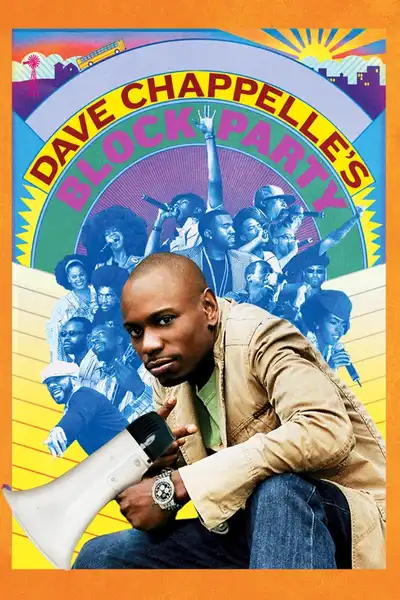
Joyful and infectious, this concert documentary captures comedian Dave Chappelle organizing a free hip-hop show in his old Brooklyn neighborhood. Director Michel Gondry frames the performances—featuring legends like Kanye West, Mos Def, and The Roots—within Chappelle's generous mission to give back to the community that shaped him. The film moves beyond typical concert footage by showing Chappelle personally inviting residents, visiting a barbershop, and engaging with locals who remember him before fame. These interstitial moments reveal the cultural significance of bringing world-class talent to a neighborhood that rarely hosts such events. The performances themselves are electric, caught at pivotal moments in these artists' careers, but what makes the film special is how it documents community and celebration rather than just spectacle. Gondry's visual inventiveness and Chappelle's genuine warmth create something that feels both historic and intimately human.

Nobuhiro Yamashita crafts something genuinely special with this unassuming story about three high school girls who recruit a Korean exchange student to form a band days before their school festival. The premise is simple, but Yamashita's observational style and patience with his characters transform it into something quietly transcendent. Bae Doona is wonderfully understated as Song, the reluctant vocalist who barely speaks Japanese, while her Japanese co-stars bring naturalistic performances that never feel like acting. The film takes real time to show the girls practicing, struggling, and gradually improving, respecting both the music and the incremental nature of connection. There's no manufactured drama or romantic subplots—just the genuine pleasure of watching young people work toward a modest goal with sincerity and determination. It's a film that understands how small moments can carry enormous emotional weight, and the final performance sequence earns every bit of its impact.

This superhero origin story redefined what comic book adaptations could achieve, grounding Batman in gritty realism while honoring the character's mythology. Christopher Nolan strips away the camp and rebuilds Bruce Wayne from the ground up, exploring the psychology behind the mask. Christian Bale brings brooding intensity to both the billionaire playboy and his vigilante alter ego, supported brilliantly by Michael Caine as Alfred and Morgan Freeman as Lucius Fox. The film takes its time developing Wayne's journey from traumatized orphan to Gotham's dark knight, making his transformation feel earned. Cillian Murphy's Scarecrow and Liam Neeson's mysterious mentor add compelling threats. Nolan's direction emphasizes practical effects and real locations, giving Gotham a tangibility that grounds even the most fantastical elements. It successfully launched a trilogy that would change the superhero genre forever.

When parents Bernard and Joan Berkman separate, their two sons become collateral damage in an increasingly bitter divorce that exposes every family dysfunction. Noah Baumbach's semi-autobiographical film captures the specific pain of watching your parents' marriage collapse with uncomfortable honesty and sharp humor. Jeff Daniels and Laura Linney are both excellent as intellectuals whose egos and resentments poison what should be an amicable split, while Jesse Eisenberg and Owen Kline bring authenticity to the sons' confused responses. Set in 1980s Brooklyn, the film nails the details of a particular kind of literary family culture—one where everyone's articulate but nobody communicates well. Baumbach writes with precision and empathy, finding humor in the awkwardness without minimizing the real hurt. The title's metaphor perfectly captures how divorce feels to children: watching two creatures you love destroy each other. It's quietly devastating and remarkably insightful about how families fracture.