Best Movies of 2004
The year 2004 stands as a landmark moment in cinema history, delivering an extraordinary collection of films that pushed creative boundaries and resonated deeply with audiences worldwide. From heartfelt romantic dramas and mind-bending sci-fi narratives to powerful war stories and enchanting animated adventures, the best movies of 2004 showcased remarkable diversity and artistic excellence. This carefully curated selection of 21 films celebrates the year's most compelling storytelling, featuring Oscar-winning performances, visionary directors at the peak of their craft, and innovative screenplays that challenged conventional filmmaking. Whether you're seeking critically acclaimed dramas that tackle profound human experiences, groundbreaking international cinema that offered fresh perspectives, or family-friendly blockbusters that redefined animation, these essential 2004 releases represent the pinnacle of what made that year unforgettable for movie lovers. Explore the films that dominated awards season, sparked cultural conversations, and continue to influence filmmakers today—each entry a testament to 2004's exceptional contribution to cinematic art.

The nature of connection, time, and the roads not taken form the beating heart of this extraordinary meditation on love and life. Director Richard Linklater reunites Jesse (Ethan Hawke) and Céline (Julie Delpy) nine years after their magical night in Vienna, now spending a single afternoon walking through Paris as they navigate the ways their lives have diverged from their younger dreams. The film unfolds in what feels like real-time conversations, with Hawke and Delpy's chemistry deepening into something more complex and bittersweet than youthful romance. Their dialogue, much of it improvised or co-written by the actors, achieves a rare naturalism that captures how people actually talk, think, and circle around what they really mean. Every moment feels precious because we know it's fleeting. This is filmmaking at its most intimate and honest, proof that walking and talking can be as cinematically compelling as any action sequence.

In a not-too-distant version of our world where memories can be surgically erased, a heartbroken man undergoes a procedure to forget his ex-girlfriend, only to realize mid-erasure that he wants to keep her in his mind. Michel Gondry directs Charlie Kaufman's ingenious screenplay with visual creativity that perfectly captures how memory works—fragmented, emotional, and constantly shifting. Jim Carrey delivers one of his finest dramatic performances as Joel, while Kate Winslet is luminous as the impulsive Clementine, making their unconventional love story feel achingly real. The film's structure mirrors its themes brilliantly, moving backwards through their relationship as memories dissolve around them. Mark Ruffalo, Kirsten Dunst, and Tom Wilkinson provide strong support in the present-day storyline. This is a profound meditation on love, loss, and whether the pain of heartbreak is worth the joy that preceded it.

A devastating family drama unfolds with quiet, observational power as director Hirokazu Kore-eda chronicles four children abandoned by their mother in a Tokyo apartment. Based on true events, the film follows twelve-year-old Akira as he attempts to care for his younger siblings while keeping their situation hidden from the outside world. Kore-eda's patient, non-judgmental approach allows the story to breathe naturally, finding moments of childhood joy and resilience even within heartbreaking circumstances. Yūya Yagira delivers an extraordinary performance as Akira, shouldering adult responsibilities while remaining unmistakably a child himself. The director's commitment to showing rather than telling creates an immersive, deeply humanistic portrait of survival and sibling bonds. There's a poetic quality to the cinematography that captures both the beauty of small moments and the weight of isolation. This is essential viewing—a profoundly moving meditation on neglect, responsibility, and the remarkable strength of children that lingers long after the credits roll.

Enchanting, visually sumptuous, and deeply romantic, Hayao Miyazaki's fantasy masterpiece represents Studio Ghibli at its most magical. The film follows young Sophie, transformed into an old woman by a witch's curse, who finds refuge in the walking castle of the mysterious wizard Howl. Miyazaki's imagination runs wild—the castle itself is a steampunk marvel of clanking machinery and impossible architecture, while the story weaves together war, magic, love, and self-acceptance with grace and wisdom. The animation is breathtaking, with every frame suitable for framing, and Joe Hisaishi's score soars with emotional power. Christian Bale and Emily Mortimer (English version) bring warmth to Howl and Sophie, creating a love story that feels earned and moving. It's a film about finding yourself and choosing courage over fear, wrapped in such beauty and wonder that it casts its own spell on viewers.

In this film, Brad Bird explores what happens when superheroes are forced into mundane suburban life after being outlawed by the government. Bob Parr (voiced by Craig T. Nelson) struggles with middle-management tedium while his wife Helen (Holly Hunter) manages their three super-powered children. The premise allows Bird to deliver both spectacular action sequences and genuine family dynamics. When Bob secretly returns to hero work, he endangers everyone he loves. The animation remains impressive, but the screenplay's depth sets this apart—examining themes of mediocrity, purpose, and how society treats exceptional individuals. Samuel L. Jackson voices Frozone, Bob's best friend, providing memorable moments. Michael Giacchino's jazzy score evokes classic spy films. This is Pixar proving that animated films can deliver sophisticated storytelling alongside entertainment, creating something that appeals to children and adults equally.
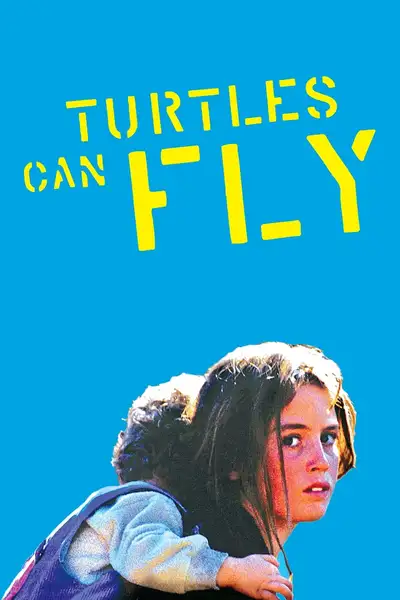
On the Iraqi-Turkish border just before the 2003 U.S. invasion, a group of refugee children scrape by installing satellite dishes and scavenging landmines from the scarred landscape in Bahman Ghobadi's devastating war film. The children, led by the resourceful teenager Satellite, maintain remarkable resilience and ingenuity despite circumstances that have stolen their childhoods—yet Ghobadi never sentimentalizes their suffering or pretends resilience makes their situation acceptable. The arrival of a young girl named Agrin, carrying an infant and harboring traumatic secrets, introduces a narrative thread of almost unbearable sadness. What makes the film extraordinary is how Ghobadi balances unflinching honesty about war's impact on the most vulnerable with deep respect for his young characters' humanity and agency. The non-professional cast, many of them actual refugees, brings raw authenticity to every frame. It's essential, heartbreaking cinema that bears witness to realities too often ignored, made with both fierce political conscience and profound compassion.

Raw, devastating, and ultimately transcendent, Clint Eastwood's drama about redemption and sacrifice stands as one of the finest films of its decade. Eastwood directs and stars as Frankie Dunn, a cantankerous boxing trainer who reluctantly agrees to work with Maggie Fitzgerald, a determined woman past the usual age for starting a fighting career. Hilary Swank is phenomenal as Maggie, bringing fierce physicality and emotional depth to a role that could have been one-note inspiration. Morgan Freeman provides the heart as Eddie "Scrap-Iron" Dupris, Frankie's longtime friend whose narration guides us through this story of surrogate family and hard-won grace. The film takes its time building relationships before delivering an emotional gut-punch that feels earned rather than manipulative. Eastwood's direction is spare and classical, trusting his actors and refusing to sentimentalize the material. It's a masterclass in economical storytelling.

Bruno Ganz delivers an absolutely masterful performance as Adolf Hitler in this German-language historical drama that chronicles the final days of the Nazi regime in 1945 Berlin. Director Oliver Hirschbiegel creates an unflinching, claustrophobic portrait of life inside the Führer's bunker as the Soviet army closes in and the Third Reich crumbles. The film, based on historian Joachim Fest's book and the memoirs of Hitler's secretary Traudl Junge, humanizes its subjects without ever excusing their actions—a delicate balance that makes this one of the most powerful World War II films ever made. Ganz's portrayal is both terrifying and tragic, capturing the dictator's deteriorating mental state with remarkable nuance. The ensemble cast, including Alexandra Maria Lara as Junge, brings depth to this harrowing final chapter of history.

After awakening from a coma, The Bride continues her vengeful path toward Bill and the remaining members of the Deadly Viper Assassination Squad who destroyed her life. Quentin Tarantino's sequel trades some of the first volume's stylized action for deeper character development and emotional complexity, revealing the tragic backstory behind Uma Thurman's relentless warrior. The film masterfully shifts between genres—martial arts epic, Western, melodrama—while maintaining Tarantino's signature dialogue and visual flair. David Carradine's Bill finally steps from the shadows to deliver a mesmerizing performance that makes him far more than a simple villain. The showdown between student and master is worth the wait, culminating in a conclusion that's surprisingly intimate and devastating. This is revenge cinema at its finest, proving that violence and emotion can coexist beautifully.

This fantasy adventure marks a turning point for the series, both in terms of visual sophistication and emotional maturity. Director Alfonso Cuarón brings his artistic sensibility to Hogwarts, creating a moodier, more stylized aesthetic that reflects Harry's adolescence and the darkening wizarding world. Daniel Radcliffe, Emma Watson, and Rupert Grint deliver their strongest performances yet as the trio faces time travel, dementors, and questions about Harry's past. Gary Oldman is magnetic as the escaped prisoner Sirius Black, while David Thewlis brings warmth and sadness to Remus Lupin. Cuarón trusts the audience's familiarity with the world, skipping exposition in favor of character and atmosphere. The time-turner sequence is brilliantly executed, and the revelation of Sirius's true story provides genuine emotional payoff. Michael Gambon takes over as Dumbledore, bringing different energy to the role. The film's willingness to let darkness creep in without losing wonder makes it a high point of the franchise.

Paul Giamatti stars as Miles Raymond, a depressed wine enthusiast and unpublished novelist who takes his about-to-be-married friend Jack (Thomas Haden Church) on a week-long road trip through California's wine country. Director Alexander Payne crafts an absolutely magnificent character study that's equal parts hilarious and heartbreaking, finding profound truths in seemingly small moments. Virginia Madsen delivers a luminous performance as Maya, a waitress who shares Miles' passion for wine and becomes a potential romantic salvation. The film's genius lies in how it uses wine as a metaphor for life itself—some people peak early, others need time to develop their complexity. Giamney's performance is raw and utterly real, capturing middle-aged disappointment without ever begging for sympathy. The script crackles with wit while never losing sight of its characters' very human vulnerabilities, making this one of the most rewarding dramedies you'll encounter.

Ousmane Sembène delivers a powerful drama about female genital cutting and resistance in a Senegalese village, centering on Collé, a woman who invokes the ancient tradition of moolaadé to protect four girls seeking refuge from the ritual. Sembène, often called the father of African cinema, crafts a nuanced exploration of tradition versus human rights without resorting to simplistic Western savior narratives. Fatoumata Coulibaly gives a commanding performance as Collé, whose act of protection sparks village-wide conflict that exposes generational divides and patriarchal control. The film addresses its difficult subject matter with intelligence and compassion, understanding the complex social pressures that perpetuate harmful practices while firmly advocating for change. Sembène's direction is both aesthetically rich and narratively clear, using vibrant colors and careful framing to create a world that feels fully realized. This is essential cinema that tackles urgent human rights issues while remaining dramatically compelling and culturally specific.

This raw, intense drama follows two damaged souls in Hamburg's Turkish-German community who enter into a marriage of convenience that slowly evolves into something far more complicated. Director Fatih Akin doesn't shy away from the messy realities of his characters' lives—Birgit Minichmayr and Sibel Kekilli (in a fearless, award-winning performance) play individuals struggling with addiction, self-destruction, and cultural displacement. What could have been a simple redemption story instead becomes an unflinching examination of how people attempt to rebuild themselves after hitting bottom. Akin's direction is urgent and immediate, placing viewers directly into the chaos and occasional moments of grace that define his protagonists' existence. The film earned the Golden Bear at Berlinale for good reason—it's emotionally powerful cinema that respects its characters enough to show them at their worst and still find their humanity.

Zhang Ziyi stars as Mei, a blind dancer working in a revolutionary group called the House of Flying Daggers, who becomes the object of a dangerous game between two Tang Dynasty police captains (Andy Lau and Takeshi Kaneshiro) tasked with infiltrating the rebel organization. Director Zhang Yimou follows up "Hero" with another visually stunning wuxia epic that somehow surpasses its predecessor in both spectacle and emotional depth. The action choreography is nothing short of poetry, particularly a bamboo forest battle that ranks among the most beautiful fight sequences ever filmed. Cinematographer Zhao Xiaoding captures each season with distinct, saturated colors that reflect the characters' emotional states as loyalties shift and love triangles form. What elevates the film beyond mere visual splendor is its genuine romantic anguish—these aren't just warriors performing balletic combat, but people whose emotions prove as dangerous as any blade. Zhang Yimou demonstrates complete mastery of the form, creating a film that works simultaneously as action spectacular, tragic romance, and meditation on duty versus desire.

This is an epic meditation on displacement, love, and the human cost of history's upheavals, told through the eyes of a Greek refugee family across decades of the twentieth century. Director Theo Angelopoulos crafts a film of extraordinary visual poetry, with cinematographer Andreas Sinanos capturing images of such haunting beauty that individual frames could hang in museums. The story follows Eleni from 1919 through multiple wars and migrations, as she endures personal tragedies against the backdrop of Greece's turbulent history. At nearly three hours, the film demands patience—Angelopoulos favors long, contemplative takes that allow scenes to breathe and emotions to accumulate gradually. This approach won't work for everyone, but those willing to surrender to its rhythm will find a deeply moving experience. The performances, particularly from Alexandra Aidini as the young Eleni, carry profound emotional weight without resorting to melodrama. This is cinema as elegy, a powerful reminder of the countless forgotten people swept up in history's currents.

Mike Leigh crafts a devastating portrait of working-class life in 1950s England through the story of a backstreet abortionist whose compassion leads to tragedy. Imelda Staunton delivers a career-defining performance as Vera, a woman whose kindness and desperation to help other women makes her both heroic and heartbreakingly vulnerable. Leigh's naturalistic approach lets the story unfold with documentary-like intimacy, never sensationalizing the subject matter or turning Vera into a simple martyr. The supporting cast, including Phil Davis and Ruth Sheen, creates a fully realized community where economic hardship and rigid social rules trap people in impossible situations. The film's power lies in its refusal to offer easy answers or comfortable distance; it simply observes with empathy and clear-eyed honesty. It's filmmaking that trusts its audience to grapple with moral complexity.

Harrowing yet ultimately inspiring, this powerful drama recounts the true story of Paul Rusesabagina, a hotel manager who sheltered over a thousand refugees during the Rwandan genocide of 1994. Don Cheadle delivers a career-defining performance as Rusesabagina, capturing both the ordinary man's initial reluctance to get involved and his gradual transformation into an unlikely hero. Director Terry George doesn't flinch from depicting the horrors of ethnic violence, but focuses on how one person's courage and resourcefulness can make an extraordinary difference. Sophie Okonedo shines as Paul's wife Tatiana, and Nick Nolte brings weary authenticity as a UN colonel unable to provide real protection. The film serves as both a memorial to those who died and a reminder of the world's failure to intervene, making it essential and deeply affecting viewing.

At its core, this is a story about the cost of heroism and the struggle to maintain identity while meeting others' expectations. Sam Raimi's sequel finds Peter Parker juggling his responsibilities as Spider-Man with his personal life, which is falling apart under the weight of his secret. Tobey Maguire brings vulnerability to Peter's crisis of confidence, making his emotional journey as compelling as the action sequences. Alfred Molina is outstanding as Dr. Otto Octavius, whose transformation into Doc Ock creates the franchise's most sympathetic villain. The film thoughtfully explores what happens when being a hero means sacrificing everything you want for yourself. Kirsten Dunst's Mary Jane feels more dimensional here, while the action sequences—particularly the elevated train fight—raise the bar for superhero cinema. Raimi balances spectacle with genuine emotion, never losing sight of the human story beneath the web-slinging.

In this film, director Katsuhito Ishii creates a gentle, meandering portrait of the Haruno family living in rural Japan, where each member navigates their own peculiar preoccupations and small revelations. The youngest daughter sees a giant version of herself wandering the landscape; the grandfather searches for his lost love; the teenage son obsesses over a girl at school; and the father plans an ambitious anime project. What could fragment into incoherence instead becomes a beautifully observed meditation on perception, creativity, and the quiet strangeness of everyday life. Ishii's approach is patient and whimsical, allowing scenes to breathe and accumulate meaning through repetition and visual motif rather than conventional plotting. The film's humor is understated, emerging naturally from character rather than setup and punchline. Cinematographer Kosuke Yamada captures the rural setting with warmth and specificity, making the location feel both utterly real and slightly magical. At over two hours, the film asks for investment, but rewards attention with moments of surprising beauty and emotional resonance that sneak up quietly.

This challenging drama follows two young men whose childhood trauma manifests in profoundly different ways as they navigate adolescence in small-town Kansas. Director Gregg Araki handles difficult subject matter with sensitivity and visual artistry, as Joseph Gordon-Levitt and Brady Corbet deliver brave performances that never exploit the characters' pain. The film's structure gradually reveals how the past shapes the present, allowing audiences to piece together what happened while focusing on the psychological aftermath and the different paths toward understanding and survival. Araki's distinctive visual style—saturated colors, carefully composed frames—creates an unexpectedly beautiful container for this dark material, while the screenplay treats its subjects with dignity and emotional honesty.

Stephen Chow stars as Sing, a small-time crook who dreams of joining the notorious Axe Gang in 1940s Shanghai, in this wildly inventive martial arts comedy that defies all expectations. Director Stephen Chow (who also co-writes) crafts a film that seamlessly blends slapstick humor, breathtaking fight choreography, and surprisingly heartfelt moments into something truly special. The action sequences are cartoonish yet technically brilliant, with gravity-defying wirework and CGI effects that enhance rather than replace genuine kung fu artistry. What could have been mere parody becomes a loving tribute to the wuxia genre while maintaining its own distinct voice. The supporting cast of eccentric landlords and hidden masters brings warmth and humor to every frame, making this more than just an action showcase.