Best Movies of 1995
The year 1995 stands as a watershed moment in cinema history, delivering an extraordinary collection of films that revolutionized storytelling, launched groundbreaking animation techniques, and showcased some of the most gripping performances ever captured on screen. From pulse-pounding crime thrillers that redefined the genre to intimate romantic dramas that explored human connection with unprecedented authenticity, the best movies of 1995 represent a diverse tapestry of cinematic achievement that continues to influence filmmakers today. This remarkable year saw the birth of computer-animated features that would transform family entertainment forever, while simultaneously producing dark, atmospheric masterpieces that pushed the boundaries of conventional narrative. Whether you're drawn to cerebral mysteries with unforgettable plot twists, epic heist films featuring legendary showdowns, or international arthouse cinema that captures raw emotional truth, 1995 offered something for every type of film enthusiast. These 21 essential films showcase award-winning directors at the peak of their creative powers, delivering performances and stories that captivated both critics and audiences worldwide, cementing 1995's reputation as one of the greatest years in movie history.

When a boy's toys come to life the moment he leaves the room, an entire world of personality, jealousy, and adventure unfolds in Toy Story. Pixar's groundbreaking first feature introduced audiences to Woody, a pull-string cowboy voiced by Tom Hanks, whose status as favorite toy is threatened by the arrival of Buzz Lightyear, a delusional space ranger voiced by Tim Allen. What could have been a simple rivalry instead becomes a brilliantly crafted buddy adventure as the two must work together to reunite with their owner. Director John Lasseter and his team created something truly revolutionary—not just technically as the first fully computer-animated feature, but emotionally, proving that digital animation could deliver genuine heart. Randy Newman's songs and the clever script work for both kids and adults, making this an absolute masterpiece that launched an entire animation renaissance.

At its core, this is a film about connection—the kind of instant, deep recognition that happens when two people truly see each other. Director Richard Linklater crafts something magically simple: American tourist Jesse (Ethan Hawke) meets French student Céline (Julie Delpy) on a train, and they spend one night walking through Vienna, talking about everything and nothing. There's no manufactured drama, no contrived obstacles—just two people falling for each other in real time through conversation. Hawke and Delpy have extraordinary chemistry, making their philosophical discussions about life, love, death, and relationships feel spontaneous and genuine. Linklater's direction is unobtrusive, letting the performances and dialogue breathe, trusting that watching two people connect is inherently compelling. The film captures that bittersweet feeling of meeting someone special when circumstances make a future uncertain, creating a romance that feels utterly real and deeply affecting.

A young woman's life is shattered when her husband dies mysteriously, leaving her to raise their child while grappling with unanswerable questions about his death. Director Hirokazu Kore-eda's stunning debut feature showcases the visual mastery and emotional depth that would define his career, with cinematographer Masao Nakabori creating breathtakingly composed frames that evoke Ozu's classical style. Makiko Esumi delivers a remarkably subtle performance as Yumiko, conveying profound grief through minimal gestures and expressions. The film unfolds with meditative patience, allowing viewers to fully absorb the weight of loss and the struggle to find meaning in tragedy. Kore-eda's exploration of memory, guilt, and the unknowable nature of those closest to us feels both deeply personal and universally resonant. This is essential viewing for anyone interested in Japanese cinema or contemplative storytelling—a masterpiece of restraint and visual poetry that rewards patient viewers.

A master criminal and the obsessed detective hunting him circle each other in Michael Mann's operatic crime epic that redefined the heist genre. Al Pacino and Robert De Niro—two titans finally sharing significant screen time—play mirror images of each other: De Niro's meticulous thief Neil McCauley lives by a code of professional detachment, while Pacino's volatile detective Vincent Hanna sacrifices personal relationships for the job. Mann stages the cat-and-mouse game across Los Angeles with stunning cinematography and meticulous attention to procedural detail, building to one of cinema's greatest shootout sequences. The legendary diner conversation between Pacino and De Niro crackles with tension and mutual respect between men on opposite sides who recognize themselves in each other. At nearly three hours, Mann takes time to develop his characters' personal lives, creating a sprawling portrait of men defined by their work. This is crime cinema as high art—ambitious, intelligent, and absolutely gripping.

In the underground tunnels beneath Belgrade during World War II, Emir Kusturica crafts an epic, surreal masterpiece that spans decades of Yugoslav history. This sprawling black comedy follows a group of people living in a cellar, manufacturing weapons while believing the war still rages above—long after it has actually ended. Kusturica's vision is audacious and operatic, blending tragedy with absurdist humor as the story moves from Nazi occupation through the Cold War and into the Yugoslav conflicts of the 1990s. Miki Manojlović and Lazar Ristovski anchor the film with powerful performances, while Goran Bregović's brass-heavy score pulses with energy. The cinematography is lush and chaotic, perfectly matching the film's sprawling ambition. It's a demanding but richly rewarding experience that uses allegory and excess to examine how myths and lies shape national identity.

Captured by director David Mallet during Pink Floyd's 1994 tour at London's Earls Court, this concert film presents the legendary band performing an expansive setlist that spans their entire career with stunning visual production values. The nearly two-hour performance showcases David Gilmour's guitar work and vocals at their peak, with Nick Mason and Richard Wright (plus supplemental musicians) delivering faithful renditions of classics like "Comfortably Numb," "Wish You Were Here," and extended sequences from "The Dark Side of the Moon." What distinguishes this from countless other concert films is the elaborate stage production—massive circular screen, lasers, lighting design, and theatrical elements that transform songs into immersive experiences without overwhelming the music itself. The audio mixing is exceptional, capturing both the power and nuance of the band's sound in ways that translate remarkably well to home viewing. For Floyd devotees, this represents the band at a creative and technical zenith, delivering performances that honor the studio versions while adding live energy. Even viewers with only passing familiarity will find the musicianship and production spectacle compelling. This is essential viewing for progressive rock fans and stands as one of the format's benchmark achievements.

Bryan Singer orchestrates a brilliant crime thriller that keeps audiences guessing until its legendary final moments. Five criminals meet in a police lineup and decide to pull off a complex heist together, but their plan becomes increasingly tangled with the mythical crime lord Keyser Söze. Kevin Spacey delivers an Oscar-winning performance as the seemingly harmless con man Verbal Kint, whose testimony to customs agent Dave Kujan (Chazz Palminteri) forms the film's intricate narrative framework. Gabriel Byrne, Benicio del Toro, Kevin Pollak, and Stephen Baldwin round out the exceptional ensemble cast. Christopher McQuarrie's screenplay is a masterclass in misdirection and plot construction, rewarding repeat viewings as new details emerge. This is one of the most satisfying puzzle-box thrillers ever made.

In an unnamed, perpetually rain-soaked city that feels like a character itself, David Fincher crafts a disturbing thriller about two detectives hunting a serial killer who uses the seven deadly sins as his twisted methodology. Morgan Freeman plays the weary, soon-to-retire Detective Somerset, while Brad Pitt is the impulsive newcomer Mills—their contrasting approaches creating compelling tension. Fincher's oppressive visual style, with Darius Khondji's dark cinematography and meticulous production design, creates an atmosphere of unrelenting dread that permeates every frame. The film doesn't shy away from depicting humanity's darkest impulses, yet avoids gratuitous gore, trusting the audience's imagination to fill in horrific details. What elevates this beyond standard serial killer fare is Andrew Kevin Walker's intelligent script, which explores themes of apathy, moral decay, and whether fighting evil ultimately corrupts those who oppose it. The final act delivers genuine shocks and a conclusion that refuses easy answers, making this a thoughtful, unsettling thriller that lingers long after viewing.

In the glittering desert oasis of 1970s and '80s Las Vegas, where organized crime built an empire on gambling, excess, and carefully hidden violence, Martin Scorsese delivers a masterful examination of greed, power, and inevitable corruption. Robert De Niro plays Sam "Ace" Rothstein, a brilliant handicapper given control of a casino, while Joe Pesci brings terrifying unpredictability to Nicky Santoro, an enforcer whose volatility threatens everything. Sharon Stone earned an Oscar nomination for her searing performance as Ginger, a hustler whose marriage to Ace becomes another casualty of the lifestyle. Scorsese's direction is virtuosic, using voiceover narration, a killer soundtrack, and elaborate tracking shots to create a three-hour epic that never drags. The film methodically details how the mob's casino operation worked before showing how personal weaknesses and institutional greed brought it all crashing down. This is filmmaking at its most assured and compelling, a darker companion piece to Goodfellas that explores similar themes of American crime with even more operatic scope.

Following three young friends over 24 hours in the Parisian banlieues after a riot, La Haine explodes onto the screen with furious energy and undeniable relevance. Director Mathieu Kassovitz shoots in stark black-and-white, transforming the housing projects into a powder keg of social tension where Vinz, Hubert, and Saïd (Vincent Cassel, Hubert Koundé, and Saïd Taghmaoui) navigate their anger, boredom, and the omnipresent threat of police violence. The film's power comes from its refusal to offer easy answers or comfortable resolutions—instead, Kassovitz immerses us in the lived experience of young men who feel society has abandoned them. The cinematography is breathtaking, incorporating references from Scorsese to Spike Lee while establishing its own visual language. What makes La Haine essential viewing nearly three decades later is how prescient it remains, its themes of systemic inequality and cyclical violence still resonating with devastating clarity.

Yoko Hondou voices Shizuku, a bookish middle-schooler who discovers that the same boy has checked out every library book before her, sparking her curiosity and eventually her first experience with love and creative ambition. Yoshifumi Kondō's sole directorial feature for Studio Ghibli is an achingly beautiful meditation on adolescence, artistic passion, and the terrifying courage required to pursue your dreams. Unlike the studio's fantasy epics, this is grounded in recognizable reality—Shizuku's Tokyo suburb, her family dynamics, her academic pressures—yet Kondō and screenwriter Hayao Miyazaki find magic in everyday moments. The sequences where Shizuku writes her fantasy story, visualized through the film's gorgeous animation, capture both the exhilaration and self-doubt of creative work with remarkable honesty. The relationship between Shizuku and Seiji develops with genuine tenderness, two young people inspiring each other toward their ambitions. Yuji Nomi's score, built around "Take Me Home, Country Roads," shouldn't work but becomes utterly enchanting. This is Ghibli at its most emotionally direct and devastating, a film that understands how growing up means choosing who you want to become, and how frightening and thrilling that choice can be.

Mamoru Oshii created a landmark of animated science fiction that continues to influence filmmakers and provoke philosophical questions nearly three decades later. Set in a cyberpunk future where humans routinely enhance themselves with cybernetic technology, the film follows Major Motoko Kusanagi, a cyborg counter-terrorism operative hunting a mysterious hacker known as the Puppet Master while grappling with questions about her own consciousness and identity. The animation remains stunning—fluid action sequences contrasted with contemplative moments exploring a rain-soaked, information-saturated future Tokyo. Oshii balances heady philosophical concepts about consciousness, identity, and what makes us human with genuinely exciting action, never talking down to his audience or sacrificing visual artistry for exposition. The film's influence on everything from *The Matrix* to modern anime is undeniable, and it remains essential viewing for anyone interested in thoughtful science fiction.
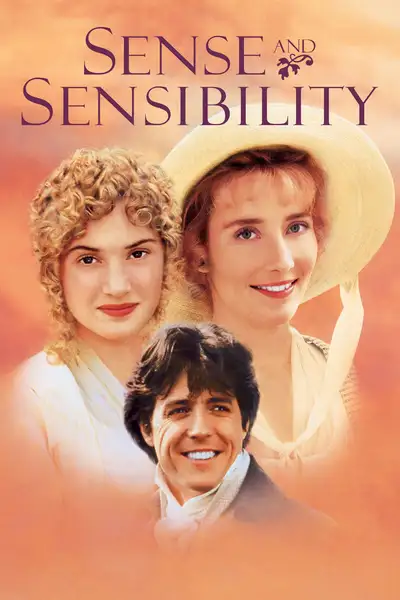
In this luminous adaptation of Jane Austen's novel, director Ang Lee and screenwriter Emma Thompson create a deeply romantic and emotionally intelligent period drama that honors its source while making it accessible to contemporary audiences. Thompson stars as Elinor Dashwood, embodying sense and restraint, while Kate Winslet brings youthful passion to her sister Marianne, representing sensibility and feeling. The film follows the sisters as they navigate reduced circumstances, romantic disappointments, and societal expectations in Regency England. Lee's direction finds the perfect balance between lavish period detail and intimate character moments, while Thompson's Oscar-winning screenplay sharpens Austen's wit without sacrificing emotional depth. The supporting cast is uniformly excellent, with Hugh Grant, Alan Rickman, and Greg Wise bringing complexity to their respective roles as the objects of the sisters' affections. Patrick Doyle's score enhances the emotional beats without overwhelming them. This remains one of the most satisfying Austen adaptations, proving that careful attention to character and theme can make centuries-old stories feel immediate and affecting.

When young Sara Crewe arrives at a strict New York boarding school as a privileged student, she captivates everyone with her imagination and kindness—but her fortune changes dramatically when her father is presumed dead, leaving her penniless. Alfonso Cuarón directs this enchanting adaptation of Frances Hodgson Burnett's novel with visual flair and emotional depth that elevates it far beyond typical family fare. Liesel Matthews is luminally luminous as Sara, maintaining dignity and wonder even as the cruel headmistress Miss Minchin (a perfectly villainous Eleanor Bron) forces her into servitude. The film's magical realism sequences, where Sara's stories come vividly to life, showcase Cuarón's gift for blending fantasy with grounded emotion. It's a genuinely moving exploration of resilience and imagination that respects young viewers' intelligence while enchanting adults equally.

This mind-bending science fiction thriller sends a prisoner from a plague-ravaged future back in time to gather information about the virus that will devastate humanity. Director Terry Gilliam creates a dizzyingly complex narrative that keeps you questioning what's real and what's madness, anchored by Bruce Willis's unusually vulnerable performance as time traveler James Cole. Brad Pitt earned an Oscar nomination for his unhinged portrayal of Jeffrey Goines, a mental patient who may hold crucial keys to the mystery. Gilliam's distinctive visual style—all distorted angles, industrial decay, and apocalyptic imagery—perfectly matches the story's themes of memory, sanity, and predestination. The film builds its puzzle carefully, revealing information in fragments that gradually form a devastating picture. Adapted from Chris Marker's short film "La Jetée," this is smart, challenging sci-fi that rewards close attention and repeat viewings while delivering genuine emotional impact beneath its conceptual complexity.

On the chaotic set of a low-budget independent film, director Nick Reve faces an escalating series of disasters that threaten to derail his already troubled production. Writer-director Tom DiCillo crafts a hilarious and painfully accurate portrait of indie filmmaking, with Steve Buscemi perfectly cast as the frazzled director trying to maintain his artistic vision while everything collapses around him. The film's nested structure—showing the same scene from different crew perspectives—reveals how each department experiences its own parallel crisis. Catherine Keener, Dermot Mulroney, and James Le Gros round out the ensemble, each getting moments to shine as egos clash and technical problems multiply. DiCillo clearly draws from personal experience, and the insider details give the comedy both bite and authenticity. What could have been merely an industry in-joke becomes something more universal about the gap between creative ambitions and practical reality, making this essential viewing for anyone who's ever worked on a collaborative project.

This devastating romantic drama follows two lost souls who forge an unexpected connection in their darkest hours. Director Mike Figgis crafts an unflinching portrait of addiction and despair as Nicolas Cage's suicidal alcoholic screenwriter travels to Las Vegas to drink himself to death, where he meets Elisabeth Shue's compassionate prostitute. Cage won an Oscar for his raw, committed performance that never sentimentalizes or glamorizes his character's self-destruction, while Shue matches him with equal vulnerability and strength. Figgis shoots with an intimate, almost documentary style that puts us uncomfortably close to the characters' pain while finding genuine tenderness in their relationship. The film refuses to offer easy redemption or false hope, instead presenting a moving meditation on acceptance, dignity, and the human need for connection even at the end. It's difficult viewing but emotionally honest and beautifully acted.

Three interconnected stories of lonely urban souls cross paths in Wong Kar-wai's intoxicating nocturnal portrait of Hong Kong's criminal underworld. Following up his masterpiece Chungking Express, Wong delivers another fragmented tale of missed connections and aching solitude, featuring a hitman seeking one last job, his resourceful partner, and a mute ex-convict obsessed with a woman who works at a food stall. Christopher Doyle's kinetic cinematography—all handheld cameras, extreme close-ups, and neon-streaked nightscapes—creates a feverish visual experience that perfectly captures the characters' disorientation. Leon Lai, Michelle Reis, Takeshi Kaneshiro, and Charlie Yeung inhabit their roles with the kind of cool detachment that has become Wong's signature, yet profound emotion lurks beneath every frame. The film plays like a jazz improvisation, with Wong's distinctive style—the step-printed motion, the oblique narration, the pop music soundtrack—reaching perhaps its most purely aesthetic expression. Fallen Angels is hypnotic, melancholic, and visually ravishing throughout.

When an oxygen tank explodes aboard Apollo 13, three astronauts and the entire NASA team face a race against time to bring them home alive from space. Ron Howard directs this thrilling true story with documentary-like precision, making the outcome feel uncertain despite being historical fact. Tom Hanks leads as mission commander Jim Lovell, projecting calm competence even as disaster unfolds, while Kevin Bacon and Bill Paxton round out the imperiled crew. The film's real strength lies in showing the collective effort required for survival: Ed Harris commands Mission Control with determined focus, while Gary Sinise's grounded pilot and Kathleen Quinlan's worried wife represent those watching helplessly from Earth. Howard captures both the technical ingenuity and human drama, never sacrificing one for the other. The result is an inspiring story about problem-solving, teamwork, and the remarkable things people can accomplish under impossible pressure.

This bold Shakespearean adaptation reimagines the classic play as a 1930s fascist alternate history, and the gambit pays off brilliantly. Director Richard Loncraine and star Ian McKellen (who also co-wrote the screenplay) transform the War of the Roses into a diesel-punk nightmare where Richard's rise to power mirrors the ascent of real-world dictators. McKellen is absolutely magnetic as the scheming Richard, delivering the famous soliloquies with both theatrical flair and chilling intimacy. The production design is stunning, creating a fully realized fascist Britain that never feels gimmicky. Annette Bening, Kristin Scott Thomas, and Maggie Smith provide strong support, while the film's willingness to embrace dark humor alongside genuine menace keeps it engaging throughout its runtime. Loncraine's direction is confident and visually striking, making this one of the most successful Shakespeare films of the 1990s.

Mel Gibson embodies William Wallace, the 13th-century Scottish warrior who becomes an unlikely revolutionary leader in Braveheart. Directed by Gibson himself, this epic historical drama traces Wallace's transformation from a simple farmer seeking a peaceful life into a symbol of Scottish independence after personal tragedy strikes. The film doesn't shy away from brutal medieval combat, but balances the violence with a sweeping romance and stirring speeches about freedom that have become iconic. James Horner's soaring score accompanies breathtaking cinematography of the Scottish Highlands, while the supporting cast including Sophie Marceau and Patrick McGoohan adds depth to this tale of resistance against English tyranny. It's a long journey at three hours, but the emotional investment pays off for those drawn to historical epics with heart.