Best Movies of 1984
1984 stands as one of cinema's most remarkable years, delivering an extraordinary lineup of films that forever changed the landscape of moviemaking and continue to influence filmmakers today. From groundbreaking science fiction that launched iconic franchises to intimate character studies that pushed the boundaries of storytelling, the best movies of 1984 showcased an incredible range of artistic vision and technical achievement. This collection of 21 essential films spans genre-defining blockbusters, Oscar-winning masterpieces, revolutionary documentaries, and daring independent productions that captivated both critics and audiences worldwide. Whether you're searching for pulse-pounding action thrillers, thought-provoking dramas, innovative animation, or unforgettable concert films, 1984 delivered cinematic experiences that have earned their place among the greatest movies ever made. These standout releases featured career-defining performances from Hollywood's finest actors, visionary direction from masters of the craft, and stories that resonated deeply with viewers across generations. Explore this definitive ranking of 1984's most influential and entertaining films that continue to inspire, challenge, and thrill movie lovers decades after their original release.

In 1983, the Talking Heads performed three nights at Hollywood's Pantages Theatre, and director Jonathan Demme was there to capture what would become the gold standard for concert films. David Byrne opens the show alone with an acoustic guitar and "Psycho Killer," then gradually the band members join him as the stage itself expands and evolves. What follows is pure exhilaration—a masterclass in performance art that treats the concert film as a legitimate cinematic form. Byrne's iconic oversized suit, Tina Weymouth's steady bass, Jerry Harrison's keyboards, and Chris Frantz's drums combine with brilliant lighting design to create something that transcends documentation. Demme's camera captures the band's precision and joy without gimmicks or unnecessary cuts. Every song builds on the last, creating a momentum that feels genuinely ecstatic. This isn't just a great concert film—it's one of the best films ever made about music's power to transform space and audience alike.

At its core, this is a profound meditation on genius, jealousy, and the unbearable weight of mediocrity in the presence of true greatness. Director Miloš Forman transforms the story of Mozart and his rival Salieri into an absolutely captivating exploration of artistic ambition and divine injustice. F. Murray Abraham is phenomenal as Salieri, the court composer tormented by his recognition of Mozart's supernatural gift, while Tom Hulce brings unexpected depth to Mozart, portraying him as both childish and transcendent. The period recreation is immersive and authentic, with Prague standing in gorgeously for 18th-century Vienna. What elevates this beyond typical biopic territory is its philosophical weight—it asks profound questions about talent, recognition, and whether God plays favorites. The classical music sequences are staged with operatic grandeur that makes them accessible and thrilling even for newcomers. It's a masterpiece that deserves every accolade it received.

In Sheffield, England, an ordinary day transforms into nuclear apocalypse, and director Mick Jackson's unflinching docudrama follows the catastrophic aftermath through the eyes of working-class families. This BBC production abandons any Hollywood sentimentality to deliver a brutal, scientifically grounded depiction of nuclear war's immediate and long-term effects on British society. Karen Meagher delivers a devastating performance as Ruth, whose pregnancy becomes a focal point for exploring how civilization collapses across generations. Jackson employs a documentary aesthetic complete with title cards explaining blast effects, radiation sickness, and societal breakdown, making every moment feel horrifyingly plausible. The film's willingness to follow its premise to the darkest possible conclusions makes it one of the most powerful anti-war statements ever committed to film—essential viewing that's as important today as it was during the Cold War.

After years of wandering the desert, a man emerges and gradually reconnects with his brother, his young son, and eventually confronts the past he's been fleeing. Wim Wenders' masterpiece, written by Sam Shepard, is a meditation on memory, identity, and the American landscape that unfolds with patient, hypnotic beauty. Harry Dean Stanton gives perhaps his greatest performance as Travis, a broken man slowly rebuilding his capacity for human connection, while Nastassja Kinski delivers heartbreaking work in the film's devastating final act. Robby Müller's cinematography transforms the Southwest into a canvas of loneliness and longing, capturing both its harsh beauty and emotional desolation. Ry Cooder's spare, haunting score perfectly complements the film's contemplative rhythm. Wenders allows scenes to breathe, trusting his actors and audience to find meaning in silences and small gestures. The extended sequence in the peep show booth ranks among the most emotionally wrenching in cinema, as years of pain and regret come pouring out through a one-way mirror.

Hayao Miyazaki's environmentalist epic remains one of animation's towering achievements, a film that launched Studio Ghibli and announced a singular vision to the world. Set in a post-apocalyptic future where toxic jungles threaten humanity's remnants, the story follows Princess Nausicaä, who seeks understanding rather than domination of the transformed world. What could have been heavy-handed moralizing becomes nuanced storytelling—the Ohmu insects are neither monsters nor simple victims, and the human factions all have comprehensible motivations. The animation, created before Ghibli's founding, still astonishes with its scope and imagination, from the glider sequences to the haunting designs of the toxic forest's ecosystem. Joe Hisaishi's score elevates every moment with its emotional depth. Decades later, the film's message about coexistence and the consequences of environmental destruction feels more urgent than ever, yet never overshadows the compelling narrative and unforgettable protagonist.

Christopher Guest, Michael McKean, and Harry Shearer star as the monumentally dim members of Britain's loudest band in this revolutionary mockumentary that essentially invented the form as we know it. Director Rob Reiner's genius was treating the fictional Spinal Tap with the same seriousness as an actual rock documentary, complete with talking heads, archival footage, and backstage access to their disastrous American tour. The improvisational brilliance of the core trio creates endlessly quotable moments—amplifiers that go to eleven, Stonehenge descending at the wrong scale, the fine line between clever and stupid. What makes the film transcendent is how accurately it skewers rock excess while genuinely celebrating the music; the songs are legitimate pastiches that work as both parody and actual entertainment. Guest, McKean, and Shearer fully inhabit these deluded rockers with such commitment that musicians regularly cite the film as uncomfortably accurate. It's a lightning-in-a-bottle achievement that remains the gold standard for comedy mockumentaries.

The tension between loyalty and betrayal drives this absolutely epic gangster saga spanning decades in the lives of Jewish mobsters in New York. Sergio Leone's final masterpiece is a sprawling meditation on friendship, memory, and regret that demands patience but rewards it magnificently. Robert De Niro and James Woods are extraordinary as childhood friends whose bond fractures under the weight of crime and ambition, and the film's structure—jumping between time periods—creates a haunting portrait of lives shaped by violence and poor choices. Ennio Morricone's achingly beautiful score elevates every scene, and Leone's visual compositions are consistently stunning, finding poetry in brutality. At nearly four hours in its complete version, this is an immersive experience that captures the mythology of American crime with artistic ambition rarely attempted. It's a genuine masterpiece that cements Leone's status as one of cinema's visionaries.

A cyborg assassin travels back in time from a post-apocalyptic 2029 to 1984 Los Angeles with one mission: kill Sarah Connor, the woman destined to birth humanity's future savior. James Cameron's sci-fi thriller is a relentless masterclass in tension and world-building, establishing a dystopian mythology that would define an entire franchise. Arnold Schwarzenegger is absolutely iconic as the unstoppable T-800, delivering chilling one-liners with robotic precision, while Linda Hamilton brings vulnerability and growing strength to Sarah's transformation from ordinary waitress to hunted survivor. Michael Biehn matches her intensity as Kyle Reese, the soldier sent to protect her. The film's low budget actually works in its favor, creating a gritty, street-level atmosphere that makes the terror feel immediate and personal. Cameron's innovative use of stop-motion and practical effects still impresses, and the pacing never lets up for a second. This is pure, adrenaline-fueled filmmaking at its finest.

A young Hungarian woman arrives in New York to visit her American cousin, disrupting his aimless routine in this deadpan masterpiece of minimalist storytelling. Director Jim Jarmusch's breakthrough feature follows three misfits—Willie (John Lurie), his friend Eddie (Richard Edson), and cousin Eva (Eszter Balint)—as they drift from New York to Cleveland to Florida with no particular purpose or destination in mind. Shot in stark black-and-white with long takes separated by fade-outs, the film's formal restraint mirrors its characters' emotional guardedness and the mundane poetry of everyday disconnection. Jarmusch finds unexpected humor in silence, repetition, and the gaps between what people say and feel. The performances are beautifully understated, especially Balint's Eva, whose wry observation of American emptiness provides the film's emotional core. It's a landmark of American independent cinema that proved personal vision and distinctive style could thrive outside Hollywood.
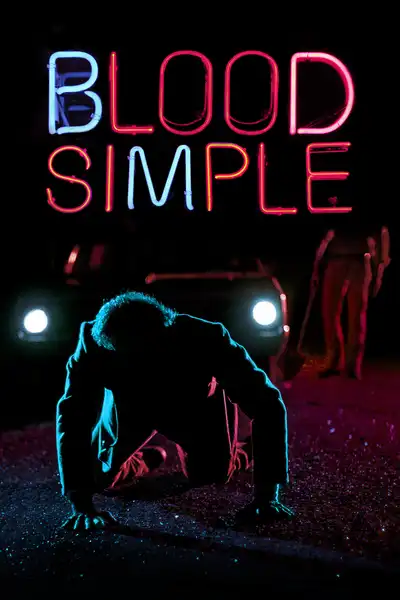
Frances McDormand makes an unforgettable debut as Abby, a woman whose affair with a bartender sets off a chain of violence, misunderstanding, and murder in the sweltering Texas heat. The Coen Brothers' first feature announces their singular vision with remarkable confidence, crafting a neo-noir that's both darkly comic and genuinely suspenseful. John Getz and Dan Hedaya round out the central triangle, while M. Emmet Walsh delivers career-best work as a sleazy private investigator. The script is a masterclass in how small decisions cascade into catastrophe, with each character operating on incomplete information that leads to increasingly desperate acts. Barry Sonnenfeld's cinematography captures the dusty, claustrophobic atmosphere perfectly. Despite its modest budget, "Blood Simple" feels assured and fully realized, establishing themes of miscommunication and moral compromise that would define the Coens' career while functioning brilliantly as its own self-contained thriller.

The Cambodian genocide of the 1970s provides the harrowing backdrop for this story of friendship tested by unimaginable horror, as journalist Sydney Schanberg (Sam Waterston) and his Cambodian colleague Dith Pran (Haing S. Ngor) navigate the fall of Phnom Penh to the Khmer Rouge. Director Roland Joffé's film refuses to soften the brutality that follows, particularly once Pran is trapped in Cambodia and subjected to the regime's "re-education" camps while Schanberg campaigns desperately for his friend's escape from America. Ngor, himself a genocide survivor with no prior acting experience, brings devastating authenticity to Pran's suffering and survival. Chris Menges' cinematography captures both the beauty of Cambodia and the nightmare it becomes, while Mike Oldfield's score (featuring the haunting "Puccini" theme) underscores the emotional devastation. The film serves as both historical document and powerful human drama, never losing sight of individual experience amid the broader atrocity. This remains essential viewing—difficult but necessary cinema about friendship, guilt, and survival.

Following homeless and runaway teenagers surviving on Seattle's streets, this groundbreaking documentary provides unflinching access to young lives marked by prostitution, addiction, and daily survival, all presented without judgment or exploitation. Director Martin Bell, alongside photographer Mary Ellen Mark and journalist Cheryl McCall, spent months building trust with their subjects, resulting in extraordinary intimacy as teenagers like Tiny, Rat, and DeWayne share their stories with startling candor. The film never sensationalizes their circumstances or offers false hope, instead presenting the brutal reality of how these kids hustle for money, seek fleeting moments of joy, and articulate dreams that seem impossibly distant given their situations. What makes the documentary so powerful is its refusal to provide easy answers or redemptive arcs—these are simply young people trying to survive systems that have failed them, captured with dignity and heartbreaking clarity. Mary Ellen Mark's accompanying photographic work adds another dimension to the project's impact. Decades later, it remains one of the most honest depictions of youth homelessness ever made, a document that treats its subjects as fully realized humans rather than cautionary tales or statistics.

This crime documentary directed by René Féret revisits a sensational French murder case two decades after the fact, examining how justice, memory, and media coverage intersect in complex ways. Féret's approach combines archival materials with new interviews, constructing a layered portrait of both the crime itself and how society processed the shocking events. What distinguishes this from typical true crime fare is its refusal to sensationalize or offer simple answers, instead exploring the ambiguities and contradictions that persist even after legal resolution. The film raises thoughtful questions about criminal responsibility, the reliability of memory, and whether closure is truly achievable in cases that capture public imagination. Féret's direction is measured and respectful, allowing subjects to speak at length while maintaining narrative momentum through thoughtful editing. The documentary also serves as a time capsule of early 1980s France, capturing social attitudes and legal procedures that have since evolved. It's a sobering, intelligent work that treats a dark subject with the seriousness and nuance it deserves, rewarding patient viewers with genuine insight.

Woody Allen stars as the titular Danny Rose, a hapless theatrical agent representing the dregs of show business—one-legged tap dancers, balloon folders, and has-been lounge singers. When his client Lou Canova gets a shot at the big time, Danny agrees to escort Lou's mistress Tina (Mia Farrow) to the show, only to find himself mistaken for her lover and targeted by vengeful mobsters. Allen directs this affectionate valentine to the Borscht Belt era, filming in elegant black-and-white that evokes the New York comedy world of the 1950s. The framing device of Broadway comics swapping stories about Danny adds warmth and authenticity, while Allen's performance perfectly captures the sweet-natured schlemiel who remains loyal to his clients despite their constant betrayals. It's a charming gem that finds both humor and humanity in the world of small-time show business.

A paranoid Belgrade man becomes convinced his new neighbor is a foreign spy, and the resulting comedy brilliantly skewers life under Cold War-era communism in Yugoslavia. Director Dušan Kovačević (adapting his own play) follows the increasingly absurd lengths to which Ilija Čvorović goes to prove his suspicions, even as the evidence contradicts his conspiracy theories. What makes Balkan Spy exceptional is how it uses farce to expose the psychological damage inflicted by living in a surveillance state—Ilija's paranoia isn't just personal neurosis but a logical response to a society built on distrust. Danilo Stojković delivers a phenomenal performance, making Ilija both ridiculous and tragic, a product of his environment who can't distinguish genuine threats from imagined ones. The film balances sharp political satire with genuine humanity, never mocking its characters even as it exposes their delusions. It's hilarious, insightful, and ultimately moving—a masterpiece of Balkan cinema that deserves far wider recognition beyond its region.

Rob Epstein's landmark documentary chronicles the life and assassination of Harvey Milk, America's first openly gay elected official, with passion and political clarity. Blending archival footage with interviews from Milk's friends, colleagues, and allies, the film captures both the personal warmth of its subject and the hostile political climate he navigated in 1970s San Francisco. Milk emerges as a charismatic, strategic activist whose humor and humanity made him an effective bridge between the gay community and mainstream politics. The film doesn't simply memorialize—it contextualizes Milk's achievements within the broader gay rights movement and the backlash it provoked. The Twinkie defense trial footage remains infuriating decades later, a reminder of how recently such prejudice was institutionally sanctioned. Epstein's editing creates narrative momentum that makes the inevitable tragedy no less devastating. The Academy Award for Best Documentary was thoroughly deserved for this essential historical document that remains urgently relevant. It's a masterclass in biographical filmmaking and a testament to one man's courage.

Heather Langenkamp stars as Nancy Thompson, a resourceful teenager who discovers that her nightmares are terrifyingly real when a disfigured killer named Freddy Krueger begins stalking her and her friends through their dreams. Wes Craven's influential horror film introduced one of cinema's most iconic villains in Robert Englund's razor-gloved Freddy, blending supernatural terror with genuine psychological dread. The film's ingenious premise—that falling asleep means certain death—creates relentless tension, while Craven's inventive practical effects still impress decades later. Langenkamp delivers a grounded, determined performance that established the template for the "final girl" archetype. What sets this apart from typical slasher fare is its creative kills, dark humor, and the way it taps into the universal vulnerability we all feel when we close our eyes at night.

This supernatural comedy perfected the blockbuster blend of scares and laughs, following three eccentric parapsychologists who start a ghost-catching business in New York City after losing their university funding. Bill Murray, Dan Aykroyd, and Harold Ramis have effortless chemistry as the entrepreneurial spirit-wranglers, with Murray's deadpan Peter Venkman stealing nearly every scene he's in. Ivan Reitman directs with a light touch that lets the absurd premise play out with surprising believability, aided by groundbreaking special effects that still hold up decades later. When ancient Sumerian gods threaten Manhattan, the team—joined by Ernie Hudson's Winston Zeddemore and Sigourney Weaver's possessed Dana Barrett—must save the city armed with unlicensed nuclear accelerators and questionable expertise. The script crackles with quotable dialogue, the theme song became a cultural phenomenon, and the whole enterprise manages to be genuinely funny without undercutting the spectacle.

In Reagan-era Los Angeles, punk rock slacker Otto (Emilio Estevez) stumbles into the bizarre world of automobile repossession, where veteran repo man Bud (Harry Dean Stanton) introduces him to a subculture of philosophical outcasts chasing cars and cold beers. Writer-director Alex Cox's cult classic defies easy categorization, blending deadpan comedy, punk attitude, science fiction elements, and social satire into something wonderfully strange and entirely its own. Estevez perfectly captures youthful disaffection finding unexpected purpose, while Stanton delivers his trademark weathered cool as the unlikely mentor. The film captures a specific moment in underground culture while building toward increasingly surreal territory involving government conspiracies and a mysteriously dangerous Chevy Malibu. Cox shoots Los Angeles as a sun-bleached wasteland of strip malls and empty lots, with a brilliant punk and new wave soundtrack amplifying the anarchic energy. It's weird, quotable, and authentically counterculture—a genuine original that rewards its cult following.

Avtandil Makharadze delivers an unforgettable performance as Varlam Aravidze, a deceased Soviet-era mayor whose corpse refuses to stay buried in Tengiz Abuladze's extraordinary allegorical masterpiece. Each time Varlam is interred, his body reappears in his family's garden, prompting a trial that unravels the horrific crimes committed during his reign of terror. Abuladze employs surrealism, dark comedy, and searing drama to create a scathing indictment of Stalinist totalitarianism without ever mentioning Stalin by name. Made in Soviet Georgia and initially banned, the film became a sensation during glasnost for its bold confrontation with historical crimes that the Soviet system had long suppressed. The symbolism is dense—Varlam combines attributes of Stalin, Hitler, and Mussolini—yet the emotional truth of the victims' testimony hits hard. The film asks essential questions about collective guilt, historical memory, and whether a society can move forward without acknowledging its past. Visually striking and thematically fearless, it stands as both a powerful political statement and a deeply human exploration of justice and reconciliation.

David Lean brings his trademark visual grandeur to E.M. Forster's novel about cultural collision and injustice in British-ruled India during the 1920s. The story centers on Adela Quested, played with delicate precision by Judy Davis, whose accusation of assault against an Indian doctor during a visit to the mysterious Marabar Caves ignites a firestorm of racial tension and colonial prejudice. Lean's final film showcases his undiminished ability to craft sweeping period drama while maintaining focus on complex character dynamics, supported by exceptional performances from Victor Banerjee, Peggy Ashcroft, and Alec Guinness. The cinematography captures both the beauty and oppressive heat of India, serving the story's themes about the impossibility of true understanding across cultural divides. While some may find its pacing deliberate, the film rewards patience with its intelligent examination of colonialism, friendship, and the limitations of good intentions.