Best Movies of 1960
The year 1960 stands as one of cinema's most revolutionary periods, delivering an extraordinary collection of films that forever changed the landscape of moviemaking and continue to influence filmmakers today. Our carefully curated selection of the 21 best movies of 1960 showcases the artistic brilliance and daring innovation that defined this pivotal year, featuring masterworks from legendary directors who pushed boundaries and challenged conventions. From Alfred Hitchcock's game-changing psychological thrillers to Federico Fellini's provocative European art cinema, these award-winning films represent the perfect intersection of commercial success and artistic achievement. You'll discover groundbreaking dramas that tackled controversial social issues, epic historical spectacles that redefined blockbuster entertainment, and haunting horror films that introduced new levels of sophistication to the genre. Whether you're a classic cinema enthusiast seeking to revisit these timeless masterpieces or a curious viewer wanting to explore the movies that shaped modern filmmaking, these essential 1960 releases offer unforgettable performances, innovative storytelling techniques, and cinematic moments that remain as powerful and relevant today as they were over six decades ago.

Anthony Perkins as Norman Bates delivers one of cinema's most unforgettable performances in Alfred Hitchcock's masterpiece of suspense. When Marion Crane checks into the isolated Bates Motel after stealing money from her employer, she encounters the shy, awkward motel manager and his domineering mother. What follows is a brilliantly crafted psychological thriller that revolutionized the horror genre and changed audience expectations forever. Hitchcock's direction is impeccable, with Bernard Herrmann's iconic score amplifying every moment of dread. Janet Leigh's role, though brief, leaves an indelible mark, while Perkins creates a character study that remains chilling decades later. The film's bold narrative structure and shocking twists still feel daring today, proving that true mastery transcends time.

Magnificent. Billy Wilder's The Apartment stands as one of cinema's finest achievements, a perfectly calibrated blend of comedy and pathos that grows richer with each viewing. Jack Lemmon stars as C.C. "Bud" Baxter, an insurance clerk who loans his apartment to company executives for their extramarital affairs, hoping to climb the corporate ladder. When he falls for elevator operator Fran Kubelik (Shirley MacLaine in a luminous performance), who's involved with his married boss (Fred MacMurray playing brilliantly against type), the film's darker undercurrents come into focus. Wilder and I.A.L. Diamond's Oscar-winning screenplay finds humor in its premise while never shying from the loneliness and compromise it represents. The Christmas Eve sequences hit with unexpected emotional force, as two damaged people find connection in their shared disappointments. The Apartment won Best Picture, Director, and Screenplay, and sixty-plus years later, it remains utterly essential—a masterpiece about decency surviving in an indecent world.

In Federico Fellini's Rome of the late 1950s, gossip journalist Marcello Rubini drifts through seven days and nights of decadent parties, failed relationships, and spiritual emptiness. Marcello Mastroianni is mesmerizing as the handsome reporter who witnesses everything but truly experiences nothing, searching desperately for meaning in a world of beautiful surfaces. Fellini's vision is both intoxicating and melancholic, capturing a society drunk on post-war prosperity while spiritually bankrupt. The famous Trevi Fountain scene with Anita Ekberg has become iconic for good reason, but every frame of this sprawling masterpiece contains moments of visual poetry. The film's episodic structure mirrors Marcello's fragmented existence, building toward a devastating final image on a beach that haunts long after viewing. This is cinema as complete artistic statement.

This epic family drama from Luchino Visconti stands as one of Italian cinema's towering achievements, charting the fortunes and tragedies of a Southern Italian family seeking their future in industrial Milan. Alain Delon, Renato Salvatori, and Annie Girardot anchor an exceptional ensemble cast across nearly three hours of operatic storytelling that never loses sight of intimate human detail. Visconti examines how poverty, ambition, and loyalty collide as each brother pursues different paths—honest labor, boxing, crime—while their family bonds strain under the weight of harsh urban realities. The film's neorealist roots combine with Visconti's eye for visual grandeur, creating sequences of breathtaking beauty that serve the emotional truth rather than overshadowing it. This is essential cinema, a profound exploration of class, masculinity, and the painful price of survival that rewards every minute of its substantial runtime.

A surgeon's obsessive quest to restore his daughter's disfigured face drives him to kidnap young women and attempt horrifying transplant experiments in this haunting French horror film. Georges Franju directs with an artist's eye, creating images of disturbing beauty that influenced everyone from John Carpenter to Pedro Almodóvar. The film follows Dr. Génessier as his crimes spiral while his daughter Christiane wanders their mansion in an eerie white mask, a living ghost haunted by her father's love and madness. Edith Scob's performance is extraordinary despite—or because of—spending most of the film behind that unforgettable mask, conveying profound sadness through pure physicality. Franju balances Grand Guignol horror with genuine pathos, making this both a chilling thriller and a meditation on identity and monstrosity. The surgical sequences remain shocking even by today's standards, yet the film's real horror lies in its emotional devastation. It's a genuine masterwork that transcends exploitation to achieve something approaching tragic poetry.

Kirk Douglas commands the screen as Spartacus, the Thracian gladiator who dares to dream of freedom in Stanley Kubrick's magnificent historical epic. This sprawling tale of rebellion against the Roman Empire remains an absolute triumph of classical Hollywood cinema, combining intimate character drama with spectacular battle sequences that still impress decades later. Douglas leads an extraordinary cast including Laurence Olivier, Jean Simmons, Charles Laughton, and Tony Curtis through a story that's both deeply personal and politically resonant. The screenplay by Dalton Trumbo (famously credited after being blacklisted) gives weight to themes of human dignity and resistance that feel timeless. Every frame radiates craftsmanship, from the sweeping cinematography to Alex North's stirring score. It's an essential piece of cinema history that earns every minute of its runtime.

Five inmates in a French prison meticulously plan their escape through the floor of their cell in Jacques Becker's riveting 1960 masterpiece, a film that strips the prison break genre to its essence and emerges with something approaching perfection. Based on a true story and featuring an actual participant in the real escape, the film unfolds with documentary-like precision as we watch the men chip away at concrete, fashion tools from everyday objects, and navigate the labyrinthine passages beneath their cell. Becker's camera observes their work with patient fascination, transforming manual labor into utterly gripping cinema. The tension builds not through manufactured plot twists but through our investment in the camaraderie between these men and their painstaking craftsmanship. It's a testament to pure filmmaking skill—no score, minimal dialogue, just the mesmerizing rhythm of human ingenuity and determination.
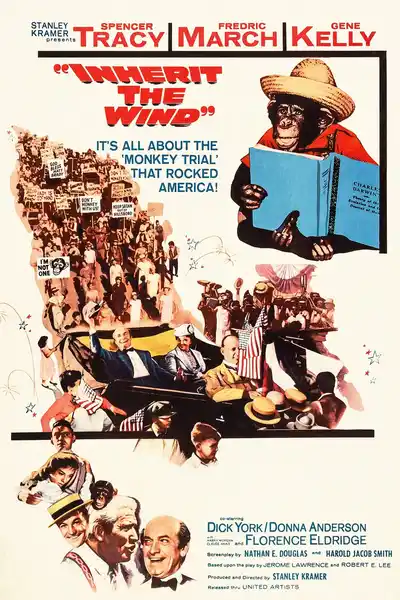
When a high school teacher is arrested for teaching evolution in a small Tennessee town, two legendary lawyers descend on the community for a courtroom battle that will capture the nation's attention. Stanley Kramer's dramatization of the Scopes Trial features Spencer Tracy as the defense attorney fighting for scientific truth and Fredric March as the prosecuting attorney defending religious tradition. The film transforms what could have been dry courtroom drama into riveting entertainment, with both leads delivering powerhouse performances that give weight to each side's arguments. Gene Kelly appears in a rare dramatic role as a cynical journalist observing the proceedings. While the film clearly takes a position, it treats its subject matter with intelligence and allows the fundamental questions about faith, reason, and freedom to resonate powerfully across the decades.

Propulsive and morally complex, this French crime thriller from director Claude Sautet stands among the finest examples of the genre. Jean-Paul Belmondo delivers a magnetically cool performance as a recently released convict who gets pulled into an elaborate jewel heist despite his intentions to go straight. Sautet brings a documentary-like attention to the mechanics of the crime, showing the meticulous planning and execution with procedural detail that never bores. What elevates the film beyond standard heist fare is its attention to character—these aren't cartoonish criminals but believable people making calculated risks, and Sautet takes time to explore the relationships and tensions within the crew. The cinematography by Ghislain Cloquet captures both the glamour of the French Riviera and the gritty reality of the criminal underworld. Lino Ventura provides excellent support as Belmondo's accomplice, and the chemistry between the leads drives the film's considerable tension. The climax delivers genuine suspense without relying on action movie pyrotechnics, trusting instead in character and consequence.

In this quintessential Western, seven gunslingers are hired to protect a Mexican village from a ruthless bandit and his army of raiders. Director John Sturges crafts an impeccably paced adventure that balances thrilling action with genuine character development, adapting Akira Kurosawa's Seven Samurai into an American frontier setting. Yul Brynner leads the magnificent ensemble as Chris, the thoughtful gunslinger who assembles the team, while Steve McQueen, Charles Bronson, James Coburn, Robert Vaughn, Brad Dexter, and Horst Buchholz round out the group, each bringing distinct personality to their roles. Eli Wallach provides memorable menace as the bandit Calvera, creating a villain who's more than just a cardboard cutout. Elmer Bernstein's iconic score has become inseparable from the Western genre itself. What elevates the film beyond simple shoot-'em-up entertainment is its exploration of what it means to be a professional warrior, men skilled only in violence trying to find purpose. The action sequences still thrill, but it's the camaraderie and moral complexity that make this endure.

Stark, spiritually devastating, and ultimately transcendent, Ingmar Bergman's medieval tale follows a family's journey through the Swedish countryside that ends in unthinkable violence. Max von Sydow delivers a powerful performance as Töre, a devout Christian farmer whose daughter Karin (Birgitta Pettersson) is brutally murdered by herdsmen. What follows is Bergman's unflinching examination of faith, revenge, and divine silence, shot in luminous black-and-white by Sven Nykvist. The Virgin Spring doesn't offer easy answers about suffering or justice; instead, Bergman presents a world where cruelty and grace exist in tension, where vengeance brings no peace, and where miracles emerge from horror. The film's conclusion—a literal spring flowing from barren ground—resonates precisely because Bergman has earned its symbolic weight through brutal honesty. This is essential art-house cinema that challenges as much as it mesmerizes.

In this film, Mikio Naruse crafts an intimate portrait of Keiko, a bar hostess in Tokyo's Ginza district navigating the precarious balance between financial necessity and personal dignity. Hideko Takamine gives a phenomenally nuanced performance in the lead role, capturing the exhaustion, resilience, and quiet desperation of a woman approaching thirty in a profession that prizes youth. Naruse's direction is characteristically restrained, observing Keiko's nightly ascent of the staircase to the bar where she works as both literal routine and metaphorical burden. The film explores the economics of femininity and companionship without judgment, presenting a complex social ecosystem where everyone is trapped by circumstance and expectation. The black-and-white cinematography by Masao Tamai uses light and shadow to extraordinary effect, creating visual metaphors that never feel heavy-handed. This stands among Naruse's finest achievements, offering a compassionate yet unflinching examination of a woman's limited choices in postwar Japanese society.

Nobuko Otowa and Taiji Tonoyama play a married couple enduring backbreaking labor on a barren island where they must ferry water from a neighboring island to irrigate their meager crops. Director Kaneto Shindo created this nearly dialogue-free film that observes their daily rituals with documentary-like precision, transforming mundane tasks into something approaching the mythic. The camera watches as they carry water up steep slopes again and again, their bodies becoming instruments of pure survival. Shindo's high-contrast black-and-white cinematography emphasizes the harsh sunlight and the textures of stone, water, and weathered skin. Hikaru Hayashi's percussion-heavy score punctuates the rhythm of their labor. What emerges is a profound meditation on human resilience and the relationship between people and unforgiving land. The film's formal rigor never becomes cold; instead, it reveals the dignity in repetitive labor and the quiet bonds that sustain us through hardship. This is cinematic poetry of the highest order.

In 1960s Japan, Akira Kurosawa delivers one of his most searing examinations of corporate corruption and moral decay in this masterful noir thriller. The film centers on a young executive who infiltrates a powerful company to expose the villains responsible for his father's death, wedding himself into the system to destroy it from within. Toshiro Mifune brings his characteristic intensity to the complex protagonist, navigating a labyrinth of business intrigue and ethical compromises. Kurosawa's direction is simply extraordinary, using shadows and architectural framing to create a claustrophobic world where corruption seeps into every corner. The narrative builds with the precision of a Swiss watch, each revelation deepening the web of complicity. This is essential viewing for anyone interested in how cinema can dissect institutional evil with both artistic brilliance and moral clarity.

This domestic drama represents Yasujiro Ozu at his most refined, observing a widow and her married daughter as they gently conspire to find a husband for the daughter's younger sister. Setsuko Hara delivers another luminous performance as the mother, Akiko, while Yoko Tsukasa plays the youngest daughter, Ayako, who resists the matchmaking with polite but firm reluctance. Director Ozu structures the film around the rituals of daily life and the careful conversations where deeper feelings emerge through indirection. His signature low camera placement and perfectly composed frames create a visual rhythm that mirrors the characters' measured emotional expression. The film explores how love, duty, and individual desire intersect within traditional family structures without passing simplistic judgment. Ozu finds profound beauty in ordinary moments—shared meals, quiet evenings, the changing seasons. The autumnal title reflects both the time of year and the characters' life stages, and the film's acceptance of change and loss feels both melancholic and affirming.

This genre-defining science fiction thriller remains one of the most effectively chilling alien invasion stories ever committed to film. When every person in a small English village falls unconscious for several hours, the mystery deepens months later when all the women of childbearing age simultaneously give birth to eerily identical, platinum-haired children. George Sanders leads the cast as Professor Gordon Zellaby, who attempts to understand and educate these emotionless children as they develop uncanny telepathic abilities and a frightening collective consciousness. Director Wolf Rilla builds an atmosphere of escalating dread through the children's blank stares and the creeping realization that humanity may be powerless against them. The film's black-and-white cinematography enhances the cold, clinical horror of watching something fundamentally inhuman wear the faces of children, while the script raises provocative questions about parenthood, evolution, and survival that resonate beyond its science fiction premise.

This art-house landmark essentially created a new cinematic language for expressing alienation and existential uncertainty. Director Michelangelo Antonioni follows a group of wealthy Italians on a Mediterranean island as they search for a woman who mysteriously disappeared, only to gradually forget her as their own romantic entanglements take precedence. Monica Vitti gives a remarkable performance as Claudia, who begins searching for her friend but becomes involved with the missing woman's lover, played by Gabriele Ferzetti. Antonioni uses stark landscapes and architectural frames to create visual compositions that emphasize emotional distance and the characters' inability to truly connect. The film famously frustrated its Cannes premiere audience but has since been recognized as revolutionary in its rejection of conventional narrative resolution. It demands patience and rewards contemplation, using long takes and deliberate pacing to create a mood of profound unease. The film doesn't answer its mysteries but instead questions why we need answers at all.

Bert Stern and Aram Avakian capture the 1958 Newport Jazz Festival in all its sun-drenched glory, creating a concert film that remains one of the genre's most joyful achievements. The filmmakers assembled an astonishing lineup—Thelonious Monk, Dinah Washington, Louis Armstrong, Chuck Berry (playing rock and roll that scandalized jazz purists), and many others—and filmed them in gorgeous color that emphasizes both the music's vitality and the relaxed summer atmosphere. The editing has a rhythmic intelligence that matches the music, cutting between performers and audience members in ways that capture the communal experience of festival-going. Stern's fashion photography background shows in the attention to visual composition, framing musicians against the sky and water in images of casual perfection. The sound quality is remarkable for its era, letting the music breathe and swing. This isn't just a document of performances; it's a snapshot of a cultural moment when jazz was America's popular music, capturing both the art form at its peak and a more innocent moment in American life.

In the remote Siberian wilderness of the late 1950s, a team of geologists searches for diamonds in Mikhail Kalatozov's visually stunning survival drama. The film follows four scientists whose expedition turns catastrophic when they become trapped by raging forest fires with dwindling supplies and no means of communication. Kalatozov, who previously directed "The Cranes Are Flying," brings his signature poetic cinematography to this harsh landscape, with cinematographer Sergey Urusevsky creating images of breathtaking beauty even amid devastation. The cast, including Tatiana Samoilova and Innokenty Smoktunovsky, delivers powerful performances that convey both human resilience and fragility. What elevates this beyond a standard survival story is its philosophical depth, exploring themes of duty, sacrifice, and the value of scientific pursuit against overwhelming odds. The result is a haunting meditation on mortality wrapped in an adventure framework.

This gripping character study explores identity, ambition, and moral decay as charming drifter Tom Ripley, played with mesmerizing intensity by Alain Delon, insinuates himself into the luxurious Mediterranean lifestyle of wealthy playboy Philippe Greenleaf before deciding he'd rather be him than merely be near him. Director René Clément crafts a sun-drenched thriller that's as seductive as its sociopathic protagonist, with the gorgeous Italian coastline providing ironic contrast to the increasingly dark acts Ripley commits to maintain his stolen life. Delon has never been more effective, his gorgeous exterior masking the calculating emptiness within, while Maurice Ronet brings tragic dimension to the doomed Philippe. The film moves with patient confidence, allowing tension to build naturally as Ripley's web of lies grows more elaborate and fragile. It's a masterful psychological thriller that explores how easily charm can disguise monstrosity, and how desperately some will cling to beauty and status.

A young filmmaker murders women while filming their final moments with a camera rigged with a sharpened tripod leg, capturing their terror as they see their own reflections in a mirror mounted on the apparatus. Michael Powell's controversial masterpiece follows Carl Boehm as Mark Lewis, a focus puller at a British film studio whose childhood trauma at the hands of his scientist father has twisted him into a serial killer obsessed with documenting fear. The film was so reviled upon release that it destroyed Powell's career, yet time has revealed it as a profound meditation on voyeurism, complicity, and the disturbing relationship between viewer and subject. Anna Massey delivers a touching performance as Mark's neighbor who glimpses his humanity, while Powell's direction is remarkably empathetic toward his disturbed protagonist. Decades ahead of its time, this remains one of cinema's most unsettling examinations of the act of watching itself.