Best Movies of 1954
1954 stands as one of cinema's most remarkable years, delivering an extraordinary collection of masterpieces that forever changed the art of filmmaking and continue to influence directors today. From Alfred Hitchcock's innovative suspense thrillers to Akira Kurosawa's epic samurai adventures, this golden year produced films that pushed creative boundaries and set new standards for cinematic excellence. The best movies of 1954 showcase award-winning performances from Hollywood's brightest stars, groundbreaking directorial techniques, and powerful storytelling that resonated across international borders. Whether you're drawn to intense psychological dramas, sweeping romantic tales, stylish film noir, or revolutionary foreign cinema, this curated selection of 21 essential films captures the diverse artistry that made 1954 unforgettable. These timeless classics earned critical acclaim and major accolades, including multiple Academy Awards, while captivating audiences worldwide with their emotional depth and technical innovation. Discover the must-watch films that defined a pivotal moment in movie history, featuring legendary performances, visionary directors, and narratives that remain as compelling and relevant today as they were seven decades ago.

At its core, this is an exploration of duty, honor, and what it means to protect those who cannot protect themselves—themes that director Akira Kurosawa examines with unmatched mastery in his 1954 epic. The story follows desperate farmers who hire seven masterless samurai to defend their village from bandits, and what unfolds is not just action but a profound meditation on class, sacrifice, and the warrior code. Toshiro Mifune electrifies the screen as the wild Kikuchiyo, while Takashi Shimura anchors the ensemble as the wise leader Kambei. Kurosawa's technical brilliance—from his dynamic compositions to innovative battle sequences filmed in torrential rain—revolutionized action cinema and influenced countless filmmakers. Every frame demonstrates why this remains one of cinema's greatest achievements, a perfect synthesis of entertainment and artistry that has lost none of its power.

Alfred Hitchcock constructs perhaps the perfect thriller with this masterclass in suspense, confined almost entirely to a single apartment where a wheelchair-bound photographer becomes convinced he's witnessed a murder. James Stewart gives one of his finest performances as L.B. Jefferies, whose broken leg and rear-window view transform him into a voyeur observing his neighbors' private lives—until one wife's disappearance turns his hobby into dangerous detective work. Grace Kelly is luminous as his socialite girlfriend Lisa, who risks everything to prove his theory, while Thelma Ritter provides comic relief as the skeptical nurse. What makes this extraordinary is how Hitchcock uses the confined setting to explore themes of spectatorship, privacy, and obsession, making us complicit in Jeff's voyeurism while crafting moment after moment of unbearable tension. Every neighbor's window tells a story, creating a cross-section of human experience that's both entertaining and unsettling. The film's technical precision and psychological depth make it endlessly rewatchable.

When a provincial governor's family is torn apart by political intrigue in medieval Japan, two children are sold into slavery and spend years searching for their mother while trying to maintain their humanity in brutal circumstances. Director Kenji Mizoguchi creates an overwhelming masterpiece about suffering, dignity, and the corrupting nature of power that ranks among cinema's greatest achievements. The film's formal beauty—those trademark long takes and elegant camera movements—creates a contemplative rhythm that allows the story's themes to resonate deeply. Kinuyo Tanaka's performance as the mother is devastating in its grace and sorrow, while the film's examination of systemic cruelty feels disturbingly timeless. Mizoguchi finds moments of transcendent beauty amidst the darkness, suggesting that compassion and mercy can survive even in the most inhumane conditions. This is essential viewing that demonstrates cinema's capacity to explore moral questions with visual poetry and emotional truth.
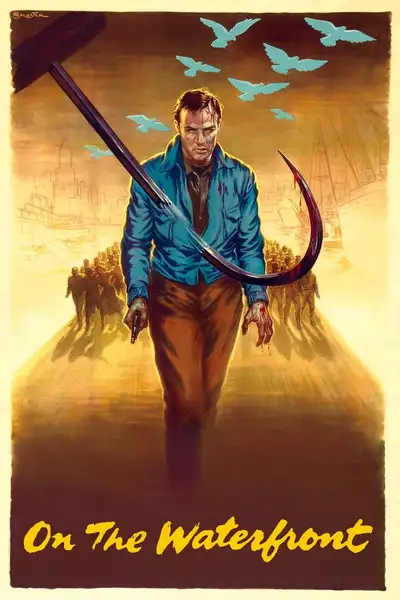
When a decent man must choose between loyalty to his corrupt union brothers and doing what's right, the result is one of American cinema's most powerful moral dramas, directed with raw intensity by Elia Kazan. Marlon Brando gives what many consider his greatest performance as Terry Malloy, a washed-up boxer turned longshoreman who witnessed a murder orchestrated by the mob-connected union bosses who control the waterfront. Brando brings an extraordinary combination of physical grace and emotional vulnerability to the role, making Terry's journey from complicit bystander to courageous witness utterly compelling. Eva Marie Saint is luminous as the woman who inspires his transformation, while Lee J. Cobb is terrifying as the union boss. Budd Schulberg's screenplay crackles with authenticity, drawn from real waterfront corruption, and Kazan's documentary-influenced direction gives the film an urgent, lived-in quality. Leonard Bernstein's score perfectly underscores the drama. This is essential cinema, a film that remains as morally complex and emotionally devastating today as when it first appeared.

Devastating in its emotional precision, Roberto Rossellini's masterpiece follows an English couple (Ingrid Bergman and George Sanders) whose crumbling marriage reaches its crisis point during a trip to Naples. What appears to be a simple premise becomes a profound meditation on loneliness, connection, and how two people can become strangers while sharing a life. Bergman and Sanders deliver extraordinarily vulnerable performances, their discomfort with each other palpable in every scene. Rossellini uses the ancient Italian landscape—Pompeii's ruins, the Phlegraean Fields, Naples' chaotic streets—as both mirror and commentary on the relationship's archaeology. The film's loose, observational style influenced countless directors, yet it never feels like an exercise; the emotional truth cuts deep. How Rossellini resolves the tension remains debated, but the journey there is absolutely mesmerizing. This is essential viewing for anyone interested in how cinema captures the ineffable qualities of human relationships.

This masterclass in suspense cinema finds Alfred Hitchcock working at the peak of his powers with a deceptively simple premise and flawless execution. Ray Milland is chillingly urbane as Tony Wendice, a former tennis pro who plots the perfect murder of his unfaithful wife Margot, played with vulnerable grace by Grace Kelly. What follows is a intricate cat-and-mouse game as the murder plan goes awry and Tony must improvise to avoid detection. Originally shot in 3D, the film makes brilliant use of confined space—nearly the entire story unfolds in a single London apartment, yet Hitchcock never lets the tension flag. Robert Cummings and John Williams round out the cast as Margot's lover and the investigating detective respectively. The screenplay, adapted from Frederick Knott's stage play, is a marvel of clockwork plotting where every detail matters and every conversation crackles with subtext.

At its core, this is a film about power, sexuality, and the myths of the American West, with director Nicholas Ray subverting genre expectations at every turn. Joan Crawford commands the screen as Vienna, a saloon owner facing down a lynch mob led by her romantic rival, played with unhinged intensity by Mercedes McCambridge. Sterling Hayden arrives as the titular gunslinger, but this is Crawford's film—she wears pants, commands men, and refuses victimhood in ways that were radical for 1954. Ray shoots in garish Trucolor, using expressionistic lighting and bold primary colors that announce this as psychological melodrama dressed in Western clothing. The sexual tension crackles not between Crawford and Hayden but between Crawford and McCambridge, their rivalry charged with an energy that feels almost forbidden. Philip Yordan's script layers in McCarthy-era paranoia, turning the Western's traditional moral clarity into something more ambiguous and unsettling. It's a fever dream of a film that grows more fascinating with each viewing.

In the golden age of Hollywood itself, George Cukor crafts the definitive version of this tragic showbiz tale about a rising star and the fading actor who discovers her. Judy Garland delivers a staggering performance as Esther Blodgett, showcasing her full range as both singer and dramatic actress in what should have earned her the Oscar. James Mason matches her as Norman Maine, the alcoholic star whose decline accelerates as his wife's career ascends, creating heartbreak without ever begging for sympathy. The musical numbers are spectacular, particularly the extended "Born in a Trunk" sequence, while the backstage scenes reveal the machinery of fame with knowing detail. Cukor balances the romance with unflinching looks at addiction and industry cruelty. Despite studios cutting nearly an hour after its premiere, the restored version reveals this as an ambitious, emotionally devastating portrait of love struggling against Hollywood's machinery. It's essential cinema that uses its runtime to earn every emotional moment.

Elegantly crafted and deceptively low-key, Jacques Becker's crime drama follows aging gangster Max (Jean Gabin) as he attempts one final job while protecting his beloved gold stash. Becker strips away the usual genre theatrics, focusing instead on rituals, relationships, and the melancholy of men past their prime trying to maintain dignity in a changing underworld. Gabin is magnificent—world-weary but commanding, conveying decades of criminal life in his weathered face and deliberate movements. The film's pacing is unhurried, taking time with meals, conversations, and the small gestures that define these characters' bonds. René Dary and Lino Ventura provide excellent support as Max's associates, while Jeanne Moreau appears in an early role. Becker's direction finds poetry in procedural details and profound emotion in understated moments, creating a genre film that transcends its conventions through sheer craft and humanity.

This landmark monster movie transcends its genre trappings to serve as haunting allegory for nuclear devastation, arriving less than a decade after Hiroshima and Nagasaki with the wounds still raw in Japanese consciousness. Director Ishirō Honda and special effects master Eiji Tsuburaya created an unforgettable icon in Godzilla, whose destructive rampage through Tokyo carries weight beyond typical creature-feature thrills. The film's black-and-white cinematography emphasizes the documentary-like horror of the monster's attacks, while the human drama surrounding scientist Takashi Shimura's terrible choice grounds the spectacle in genuine moral complexity. Unlike the lighter sequels that followed, this original treats its subject with somber respect, understanding that Godzilla represents something profoundly traumatic rather than entertaining. The suitmation effects, while primitive by modern standards, convey a sense of scale and devastation that many CGI spectacles lack. This is essential viewing for understanding how genre films can process collective trauma through metaphor.

Federico Fellini crafts an achingly beautiful neorealist fable about Gelsomina, a simple-minded young woman sold to Zampanò, a brutish traveling strongman who treats her as little more than property. Giulietta Masina delivers one of cinema's most unforgettable performances as Gelsomina, finding grace and humanity in a character who might have been merely pitiable, her clown-like expressions conveying depths of emotion without sentimentality. Anthony Quinn's Zampanò is all masculine violence and emotional constipation, a man who doesn't recognize love until it's irrevocably lost. Fellini's camera follows these traveling performers through postwar Italy with a documentarian's eye and a poet's soul, finding both cruelty and unexpected kindness in the margins of society. The film's final moments are devastating precisely because Fellini has earned them, building to an emotional reckoning that feels both inevitable and shocking. Nino Rota's score, featuring Gelsomina's simple trumpet melody, becomes the film's heartbeat. This is neorealism transforming into something more mythic, a story about human connection and the terrible cost of recognizing too late what we've destroyed through our own callousness.

Audrey Hepburn stars as the titular Sabrina Fairchild, the chauffeur's daughter who returns from Paris transformed into a sophisticated young woman, catching the attention of the two wealthy brothers she's grown up watching from afar. Director Billy Wilder balances romantic comedy with subtle class commentary, as Sabrina navigates between workaholic Humphrey Bogart and playboy William Holden. Hepburn's luminous performance earned her an Oscar nomination and cemented her status as a Hollywood icon—her Parisian wardrobe by Givenchy became instantly legendary. The film works both as frothy entertainment and as something more substantive, questioning whether love can truly cross class boundaries or if fairy tales require compromises. The chemistry among the three leads keeps everything engaging even when the age differences feel uncomfortable by modern standards. It's witty, elegant, and thoroughly entertaining Golden Age Hollywood, with Wilder's trademark sharp dialogue elevating the material.

In the mysterious depths of the 1860s ocean, a series of unexplained maritime disasters leads to one of cinema's greatest adventures. Disney's adaptation of Jules Verne's classic novel remains a triumph of practical effects and storytelling, with director Richard Fleischer orchestrating elaborate underwater sequences that still impress decades later. James Mason commands the screen as the enigmatic Captain Nemo, a brilliant but tormented genius whose technological marvel, the Nautilus submarine, becomes both sanctuary and prison. Kirk Douglas brings charismatic energy as the harpooner Ned Land, providing the human spark that contrasts beautifully with Nemo's cold intellectualism. The film balances spectacular action—including an unforgettable giant squid battle—with thoughtful exploration of themes like isolation, revenge, and humanity's relationship with nature. It's Technicolor family entertainment that never talks down to its audience.

Kenji Mizoguchi crafts an exquisite tragedy of forbidden love in feudal Japan, demonstrating his mastery of visual composition and emotional restraint. Based on a Chikamatsu Monzaemon play, the film follows a scroll maker's wife and her husband's apprentice who fall into an affair that can only end in death under the rigid social codes of their era. Kazuo Hasegawa and Kyōko Kagawa bring remarkable subtlety to roles that could easily become melodramatic, instead finding the quiet desperation of people trapped by circumstance and duty. Mizoguchi's long takes and carefully composed frames emphasize both the beauty and the prison-like constraints of their world. The director's empathy for women suffering under patriarchal systems infuses every scene, making this more than a period romance—it's a critique of social structures that destroy individual happiness. The film's final section, as the doomed lovers flee, achieves a poetic intensity that ranks among Mizoguchi's finest work.

A zinc mining community in New Mexico launches a strike for safer working conditions and equality with Anglo workers, only to face injunctions and legal obstacles that threaten their efforts. Directed by Herbert J. Biberman and based on an actual 1951 strike, this independent production features a cast mixing professional actors with real miners and their families, including Rosaura Revueltas as Esperanza Quintero and Juan Chacón as her husband Ramón. When the men are legally barred from picketing, the miners' wives take over the line, transforming the labor struggle into an examination of gender roles within the community itself. The film's production history is nearly as dramatic as its content—blacklisted filmmakers made it under intense pressure, and it faced distribution suppression upon release. While some performances show their non-professional origins, the film's commitment to depicting working-class Mexican-American life with dignity and its progressive politics remain powerful.

Keisuke Kinoshita's masterful adaptation of Sakae Tsuboi's novel follows a young teacher assigned to a small island school in 1928, tracing her relationships with twelve students over two decades of war, militarization, and social transformation in Japan. Through the teacher's perspective—embodied with gentle strength by Hideko Takamine—the film becomes both an intimate character study and a sweeping historical chronicle, showing how national tragedy impacts individual lives. Kinoshita employs an episodic structure that returns to these students at various points as they grow up, go to war, and navigate an increasingly militaristic society, with the teacher serving as the constant moral center. The "twenty-four eyes" of the title refer to the students whose lives she shapes and who shape her in return, creating a community bound by affection and shared experience even as circumstances pull them apart. The film's anti-war message emerges organically from accumulated loss rather than didactic speeches. Shot with clarity and emotional precision, with Kinoshita finding profound feeling in simple moments of connection, it stands among the great humanist films of postwar Japanese cinema. It's both culturally specific and universally moving, a testament to teaching's transformative power and war's devastating waste.

Sumptuous and emotionally overwhelming, Douglas Sirk's melodrama transforms Lloyd C. Douglas's novel into a Technicolor fever dream of redemption and romance. Rock Hudson delivers one of his finest performances as Bob Merrick, a playboy who indirectly causes the death of a beloved doctor and then, wracked with guilt, falls in love with the doctor's widow, Helen, played by Jane Wyman with remarkable restraint and dignity. Sirk uses the conventions of 1950s melodrama not to reinforce them but to critique the society that created such rigid emotional and moral codes. The film's plot—involving secret identity, blindness, and ultimate sacrifice—could easily collapse into camp, but Sirk's precise visual style and his actors' commitment create something genuinely moving. The director's use of color, mirrors, and frames within frames adds layers of meaning to every scene, suggesting the ways characters imprison themselves in guilt and social expectation. This is Hollywood studio craftsmanship at its peak, where glossy surfaces and emotional depth aren't contradictory but complementary, creating a film that works both as satisfying romantic drama and as subtle social commentary.

When a backwoodsman travels to town seeking a wife and returns with his new bride to a remote Oregon homestead—where his six rowdy brothers await—culture clash and romantic chaos naturally ensue in this exuberant MGM musical. Director Stanley Donen orchestrates spectacular dance sequences choreographed by Michael Kidd, most notably the breathtaking barn-raising scene that remains one of cinema's great musical numbers. Howard Keel brings robust charm as Adam Pontipee, while Jane Powell holds her own as Milly, the civilizing force who refuses to accept the brothers' backward ways. The premise—inspired by the Roman legend of the Sabine women—involves some deeply problematic gender dynamics that the film both acknowledges and reproduces, yet the sheer craft on display and the performers' athletic abilities create undeniable entertainment. The musical numbers overflow with energy and invention, utilizing the CinemaScope frame to showcase choreography that's genuinely athletic and thrilling to watch.

Humphrey Bogart stars as Captain Queeg in this gripping naval courtroom drama that remains one of the finest examinations of military authority ever put to film. Directed by Edward Dmytryk and based on Herman Wouk's Pulitzer Prize-winning novel, the story follows the USS Caine's officers who relieve their increasingly erratic captain of command during a typhoon, only to face a court-martial for mutiny. Bogart delivers a career-defining performance, particularly in the legendary "strawberries" scene that reveals Queeg's psychological unraveling. José Ferrer excels as the defense attorney who must navigate the murky ethics of the case, while the supporting cast including Fred MacMurray and Van Johnson provide excellent work. The film's strength lies in its refusal to offer easy answers about duty, sanity, and when insubordination becomes necessary.

When atomic tests in the New Mexico desert create a colony of giant mutant ants that begin attacking humans, a team of scientists and military personnel must track the creatures to their nest before they can spread and multiply beyond control. Director Gordon Douglas turns this B-movie premise into genuinely gripping science fiction, playing the material with straight-faced seriousness that makes the threat feel credible despite the limitations of 1950s special effects. James Whitmore, Edmund Gwenn, and James Arness lead the capable cast, while the film smartly builds tension through investigation and discovery before unleashing its creature mayhem. The giant ants remain effectively creepy, their mandible clicks and shrieks creating an atmosphere of primal dread, and the film's Cold War anxieties about atomic power run throughout without overwhelming the entertainment. It's the template that countless creature features would follow, and it remains one of the best.

David Lean directs this wonderfully spirited adaptation of Harold Brighouse's play, set in 1880s Salford where a tyrannical bootmaker learns that his "plain" daughter has more backbone than he ever imagined. Charles Laughton delivers a memorable performance as Henry Hobson, the bullying widower who underestimates his eldest daughter Maggie, played with fierce determination by Brenda de Banzie. When Hobson refuses to provide dowries and dismisses Maggie's marriage prospects, she takes matters into her own hands, choosing the shop's talented but timid bootmaker Willie Mossop (John Mills) as her husband and business partner. Lean's direction finds both humor and heart in this story of female self-determination, while the chemistry between de Banzie and Mills makes their unlikely partnership utterly convincing. It's a thoroughly satisfying comedy that celebrates intelligence, hard work, and the courage to defy social expectations.