Best Movies of 1952
1952 stands as one of cinema's most extraordinary years, delivering a remarkable collection of films that revolutionized storytelling and continue to captivate audiences more than seven decades later. From lavish Hollywood musicals that redefined the genre to profound international dramas exploring the human condition, the best movies of 1952 showcased an unprecedented diversity of cinematic vision. This golden age of filmmaking produced westerns that challenged convention, intimate character studies that pushed emotional boundaries, and technical innovations that transformed how stories could be told on screen. Whether you're searching for critically acclaimed masterpieces that swept major awards, groundbreaking works from legendary directors at the peak of their powers, or essential classics that influenced generations of filmmakers, 1952 delivered unforgettable performances and narratives that remain as powerful today as they were upon release. These 21 films represent the year's most significant contributions to cinema history, spanning everything from epic romantic dramas and tense psychological thrillers to poignant social commentaries and dazzling entertainment spectacles that defined what movies could achieve as an art form.

In this film, Hollywood's transition from silent pictures to "talkies" provides the backdrop for one of cinema's most joyful celebrations of entertainment itself, featuring some of the most iconic song-and-dance numbers ever committed to film. Gene Kelly, Debbie Reynolds, and Donald O'Connor are absolutely sensational together, with Kelly's athletic grace, Reynolds's charm, and O'Connor's show-stopping "Make 'Em Laugh" sequence creating pure movie magic. Directors Stanley Donen and Kelly craft a whip-smart satire of the film industry that's simultaneously a love letter to the art form, with musical numbers that burst off the screen with infectious energy and technical brilliance. The titular sequence of Kelly dancing in the rain with nothing but an umbrella and an ear-to-ear grin is justifiably legendary—a perfect expression of unbridled joy that captures everything wonderful about musicals. Every element works in harmony: the witty script, the incredible choreography, the vibrant Technicolor cinematography, and performances that radiate genuine delight. This is Hollywood entertainment at its absolute pinnacle.

In this towering achievement of humanist cinema, Akira Kurosawa follows a mid-level bureaucrat who discovers he has terminal stomach cancer and desperately seeks to find meaning in his final months. Takashi Shimura delivers one of the most profound performances in film history as Kanji Watanabe, transforming from a paper-pushing automaton into someone urgently, beautifully alive. The first half tracks Watanabe's awakening as he realizes thirty years of stamping documents have amounted to nothing, while the second examines his legacy through colleagues at his wake. Kurosawa's genius lies in how he makes bureaucratic persistence heroic—Watanabe's quest to build a playground in a slum becomes genuinely thrilling despite (or because of) the mundane obstacles. The scene of Shimura singing "Gondola no Uta" on a playground swing remains one of cinema's most moving moments. This film asks fundamental questions about what makes a life worthwhile and answers them with clarity, compassion, and devastating emotional power. Truly essential viewing.

Heartbreaking yet profoundly humanistic, Vittorio De Sica's neorealist masterpiece follows an elderly pensioner and his devoted dog through postwar Rome with such tenderness and dignity that it becomes almost unbearably moving. Carlo Battisti, a non-professional actor and linguistics professor, delivers a performance of remarkable subtlety as Umberto Domenico Ferrari, a proud man facing destitution who maintains his dignity even as society discards him. De Sica and screenwriter Cesare Zavattini find poetry in the smallest gestures—Umberto teaching his terrier Flike a trick, his painful attempts to beg without begging, a maid's morning routine rendered with documentary intimacy. The film's genius lies in its refusal of sentimentality despite its devastating subject matter; instead, De Sica observes with clear-eyed compassion, trusting audiences to feel the full weight of Umberto's situation. This is essential cinema, a towering achievement that demonstrates film's capacity for empathy and social consciousness while telling one man's story with extraordinary grace.
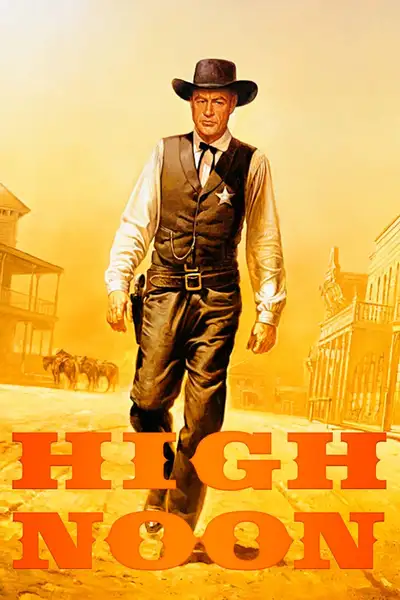
This Western masterpiece strips the genre to its existential core, delivering a real-time thriller about courage, duty, and the loneliness of moral conviction. Fred Zinnemann directs Gary Cooper in an iconic performance as Marshal Will Kane, who prepares to face four vengeful outlaws arriving on the noon train while the entire town—including his new Quaker bride, played by Grace Kelly—abandons him to his fate. The film unfolds in approximately real time, with clocks appearing throughout to heighten the tension as Kane desperately seeks help and finds only cowardice and excuses. Cooper's weathered face becomes a map of mounting fear and grim determination, and the film's refusal to glorify violence or heroism feels remarkably modern. Dimitri Tiomkin's score, featuring the haunting "Do Not Forsake Me, Oh My Darlin'," amplifies the mounting dread. Often read as an allegory for McCarthyism and Hollywood blacklisting, the film transcends its political context to become a timeless examination of integrity and the terrible cost of standing alone.

Poignant, beautiful, and deeply personal, Charlie Chaplin's meditation on aging, art, and mortality ranks among cinema's most moving achievements. Chaplin stars as Calvero, a once-famous music hall clown who has fallen into alcoholism and obscurity, who saves a young suicidal ballet dancer (Claire Bloom) and helps restore her will to live and perform. The film becomes a profound reflection on an artist's relationship with their audience and the fear of being forgotten, themes that clearly resonated with Chaplin as his own career entered its twilight. The music hall performances Chaplin creates for Calvero are sublime, mixing comedy with melancholy in ways only he could achieve, and his final stage reunion with Buster Keaton is nothing short of magical. While the Victorian London setting feels deliberately old-fashioned, that's entirely the point—this is Chaplin's love letter to the theatrical world that birthed him and his graceful acceptance of its passing.

Kirk Douglas commands the screen as Jonathan Shields, a ruthless Hollywood producer whose genius is matched only by his capacity for betrayal, in this sharp examination of ambition and exploitation in the film industry. Director Vincente Minnelli crafted a backstage drama that's both glamorous and surprisingly cynical, told through flashbacks from three people Shields destroyed on his climb to the top. Lana Turner, Dick Powell, and Barry Sullivan each get their moment to shine as the writer, director, and star whose careers became collateral damage in Shields' quest for greatness. The script crackles with insider knowledge of Hollywood's machinery, while Minnelli's direction finds visual poetry in the movie-making process itself. Douglas is magnetic in a role that could easily have been one-note, finding unexpected layers in a character who represents both the industry's creative drive and its moral bankruptcy. This remains one of cinema's most honest looks at its own dark heart.

In 1920s Ireland, American boxer Sean Thornton (John Wayne) returns to his birthplace seeking peace after a tragic incident in the ring, only to find his heart claimed by the fiery Mary Kate Danaher (Maureen O'Hara). John Ford's romantic comedy is a glorious Technicolor celebration of Irish culture and landscape, filmed with breathtaking beauty across County Mayo and Galway. Wayne and O'Hara have electric chemistry, their courtship a delightful dance of stubbornness and passion, while the film balances humor and tradition with genuine warmth. The infamous cottage-dragging scene showcases O'Hara's fierce independence and remains iconic. Ford weaves together romance, comedy, and respectful cultural observation into something truly enchanting. Victor McLaglen provides memorable support as Mary Kate's blustering brother, and the film's affection for its setting and characters proves utterly infectious.

Kenji Mizoguchi's devastating masterpiece traces the downward trajectory of a courtesan's life in 17th-century Japan, creating an unflinching portrait of a society that systematically destroys women through rigid class hierarchies and gender oppression. Kinuyo Tanaka gives one of cinema's great performances as Oharu, a woman whose single romantic transgression sets in motion decades of exploitation, degradation, and suffering. Mizoguchi's distinctive visual style—long takes, carefully choreographed camera movements, and compositions that often position Oharu at the margins of the frame—emphasizes both her dignity and her powerlessness within a merciless social structure. The film's episodic structure follows Oharu through various stations of progressive degradation, each revealing new dimensions of institutional cruelty while never reducing her to mere victim. Mizoguchi, working at the absolute peak of his considerable powers, creates a work of art that is simultaneously a deeply moving human story and a fierce indictment of patriarchal oppression. The film's final images achieve something approaching transcendence, suggesting spiritual liberation even as material circumstances remain dire. This is essential cinema—formally brilliant, emotionally devastating, and as relevant today as when it was made, a timeless examination of how societies discard those they deem expendable.

René Clément delivers an absolutely devastating masterpiece with this French war drama that examines innocence, loss, and the incomprehensibility of adult violence through children's eyes. Set during the Nazi occupation of France, the film follows young Paulette (Brigitte Fossey), who loses her parents in a strafing attack and is taken in by a peasant family where she befriends their son Michel (Georges Poujouly). The two children create their own private world by building an elaborate animal cemetery, a coping mechanism that becomes both touching and disturbing as they steal crosses from around the village to decorate their graves. Clément's direction is remarkably restrained, allowing the children's performances to carry the emotional weight without sentimentality. The film's power lies in its contrast between the children's innocent rituals and the adult world's genuine horrors happening just beyond their understanding. Naruse Mikio's cinematography captures both rural beauty and wartime devastation with equal skill. This is essential cinema that hasn't lost an ounce of its impact.

Yasujirō Ozu crafts one of his most quietly profound domestic dramas in this portrait of a middle-aged marriage showing signs of strain. The story follows Taeko and Mokichi, whose comfortable routine reveals deeper incompatibilities—she finds him dull and traditional, while he remains oblivious to her dissatisfaction. Ozu's characteristic low camera angles and minimalist compositions capture the spaces these characters inhabit, finding meaning in everyday moments: meals shared, tea prepared, conversations that circle around what cannot be said. Shin Saburi and Michiyo Kogure deliver beautifully restrained performances that convey years of unspoken feelings through small gestures and carefully chosen words. The film resists melodrama, instead observing how people navigate disappointment and ultimately find unexpected grace in acceptance. This is Ozu at his most perceptive, transforming the seemingly mundane into something achingly human and deeply moving.

George Cukor directs this delightful sports comedy that reunites the iconic pairing of Spencer Tracy and Katharine Hepburn for their seventh on-screen collaboration. Tracy plays Mike Conovan, a shrewd sports promoter who recognizes untapped potential in Pat Pemberton (Hepburn), a fiercely independent multi-sport athlete. The film showcases Hepburn's athleticism as she convincingly performs tennis, golf, and other sporting activities while maintaining her character's intelligence and determination. The chemistry between the leads remains as sharp as ever, with their rapid-fire banter elevating what could have been a standard romantic comedy into something more sophisticated. Cukor's direction allows both actors to shine without overwhelming their natural dynamic. The film subtly addresses gender dynamics in sports and relationships without becoming preachy, maintaining an entertaining lightness throughout. For fans of classic Hollywood or the Tracy-Hepburn partnership, this remains an engaging and thoroughly enjoyable entry in their collaborative filmography.

In this elegant Max Ophüls adaptation of three Guy de Maupassant stories, the director explores various facets of pleasure and its consequences through beautifully crafted vignettes. The three tales—"Le Masque," "La Maison Tellier," and "Le Modèle"—are linked thematically rather than narratively, each examining how desire, happiness, and human connection intersect with social constraints. Ophüls' signature fluid camera movements and sophisticated visual storytelling are on full display, transforming literary material into purely cinematic experiences. The second story, following a group of sex workers attending a country communion, is particularly memorable for its warmth and subtle social observation. The ensemble cast handles the shifting tones with skill, navigating between comedy, pathos, and tragedy. What makes the film endure is Ophüls' humane perspective—he observes his characters' follies and longings with compassion rather than judgment. The craftsmanship is impeccable throughout, demonstrating why Ophüls remains one of cinema's most celebrated visual stylists. This is filmmaking of remarkable maturity and artistry.

A couple already raising three children decides to open their home and hearts to foster kids in need, leading to predictable but heartwarming chaos. Cary Grant and Betsy Drake star as the Roses, whose good intentions are tested by the challenges of integrating troubled children into their bustling household. Director Norman Taurog handles the material with appropriate lightness, emphasizing the comedy while never losing sight of the genuine emotional stakes for the children involved. Grant demonstrates his reliable charm in a more domestic setting than usual, while Drake—his real-life wife at the time—brings warmth and determination to her role. The film's treatment of adoption and foster care feels progressive for its era, even if the resolution comes too easily and some of the humor feels dated. Based on a true story, the movie avoids becoming overly saccharine through the strength of its leads and some genuinely funny moments of domestic disorder. It's comfort-food cinema that advocates for kindness and family flexibility without pretending these values don't come with real challenges.

A tough Los Angeles detective must transport a mob witness from Chicago to Los Angeles by train, knowing that hired killers are aboard and determined to prevent her testimony. Director Richard Fleischer delivers a lean, efficient noir thriller that maximizes tension from its confined setting and minimal running time. Charles McGraw is perfectly cast as the hard-bitten cop Walter Brown, bringing weathered authority to a role that requires both physical toughness and moral complexity. Marie Windsor plays the witness with the right mix of cynicism and vulnerability, and their verbal sparring provides character depth between the suspense sequences. Fleischer uses the train's narrow corridors brilliantly, creating claustrophobic cat-and-mouse scenarios that keep the tension ratcheted high. Shot on a modest budget with mostly practical locations, the film proves that intelligent plotting and sharp execution matter more than expensive production values in crafting compelling cinema.

When a carpenter falls for a beautiful woman nicknamed "Casque d'Or" (Golden Helmet) in Belle Époque Paris, their romance ignites a violent rivalry between criminal gangs that threatens to destroy them both. Jacques Becker directs this luminous French classic with remarkable restraint and visual poetry, while Simone Signoret delivers a career-defining performance as Marie, the woman whose beauty becomes both blessing and curse. Serge Reggiani matches her intensity as the carpenter willing to risk everything for love. What could have been a simple gangster melodrama becomes something far more poignant in Becker's hands—a meditation on love, honor, and the impossibility of escaping one's circumstances. The film's sun-dappled outdoor sequences contrast beautifully with the shadows of the criminal underworld, creating a bittersweet atmosphere that lingers long after the final frame.

After a wealthy American woman's young son dies, she undergoes a profound spiritual crisis that leads her to abandon her privileged life and dedicate herself to helping the poor and desperate in postwar Rome. Roberto Rossellini directs with the documentary-influenced style he pioneered in neorealism, though here applied to questions of faith and moral responsibility rather than pure social observation. Ingrid Bergman delivers a brave, stripped-down performance as Irene Girard, a woman whose awakening to suffering isolates her from her own class and eventually leads to tragic misunderstanding. The film asks difficult questions about charity, sanity, and societal judgment without offering comfortable answers. Rossellini's camera observes Irene's transformation with clinical distance, refusing to validate or condemn her choices. The supporting cast, mixing professionals and non-actors, grounds the story in textured reality. This provocative, uncompromising work challenges viewers to consider whether compassion and madness are truly distinguishable to those who prefer not to see.

When an aging rodeo cowboy returns to the circuit after an injury, he becomes entangled with a young couple whose ambitions threaten to destroy their marriage. Nicholas Ray directs this nuanced exploration of masculine identity and the American myth of reinvention, featuring Robert Mitchum in a career-best performance as a man confronting obsolescence. Susan Hayward and Arthur Kennedy complete the triangle, each excellent as the couple whose dreams pull them in opposite directions. Ray's psychological acuity transforms what could have been a standard Western into something more complex and melancholic—a meditation on aging, exploitation, and the cost of chasing glory. The rodeo sequences are viscerally staged, capturing both the spectacle and the toll of the sport. The film's sexual tension and emotional honesty push against the constraints of 1952 production codes, suggesting darker undercurrents beneath the surface. It's a mature, beautifully crafted film that deserves wider recognition.

An ambitious valet working in the British Embassy in neutral Turkey during World War II decides to sell secrets to the Nazis in this taut espionage thriller. Directed by Joseph L. Mankiewicz and based on true events, the film stars James Mason as the real-life spy Elyesa Bazna, who operated under the codename "Cicero" and photographed classified documents for German intelligence. Mason delivers a controlled performance as a man motivated by greed and resentment rather than ideology, making him a fascinatingly amoral protagonist. The film maintains tension despite the unusual structure of following the spy rather than those trying to catch him, as we watch Bazna's increasingly elaborate schemes and narrow escapes. Mankiewicz brings intelligence to the material, exploring how class resentment and colonial dynamics motivated betrayal. The ironic twist—which history provided—adds a darkly comic note to this absorbing story of espionage, showing that even successful spies don't always get what they expect.
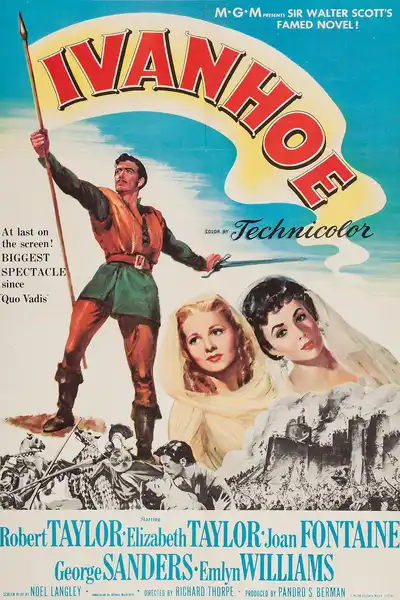
This lavish MGM costume adventure brings Sir Walter Scott's classic medieval romance to vivid Technicolor life with impressive production values and rousing action sequences. Richard Thorpe directs Robert Taylor as the titular Saxon knight who returns from the Crusades to find England under the corrupt rule of Prince John while King Richard languishes in captivity. Taylor brings stalwart heroism to the role, while Elizabeth Taylor (no relation) radiates as the Jewish maiden Rebecca, whose scenes with the knight crackle with chemistry that threatens to overshadow the nominal romantic pairing. The film delivers exactly what audiences expect from the swashbuckling genre: castle sieges, jousting tournaments, daring rescues, and a satisfying triumph of justice over tyranny. The supporting cast includes strong turns from Joan Fontaine and George Sanders, making this a handsomely mounted entertainment that captures the spirit of old Hollywood spectacle.

George Sidney directs this spirited adaptation of Rafael Sabatini's swashbuckling novel, with Stewart Granger in fine form as André Moreau, a French aristocrat who hides among a theatrical troupe after his best friend is killed in a duel during the turbulent years before the Revolution. The film delivers everything you want from Technicolor adventure cinema—witty dialogue, elaborate sword fights, romance with the beautiful Eleanor Parker, and a revenge plot that propels Moreau into revolutionary politics. Mel Ferrer makes an appropriately hissable villain as the Marquis de Maynes, the skilled duelist Moreau must eventually face, and their climactic fight reportedly required eight weeks to choreograph and remains one of the longest sword battles ever filmed. Sidney keeps the pace brisk across two hours, balancing action with just enough character development and political context to give the derring-do some weight. It's classical Hollywood entertainment executed with style and conviction, a reminder that genre filmmaking can be both crowd-pleasing and crafted with genuine artistry.

When two Victorian gentlemen discover they've both been living double lives under false pretenses, romantic complications and social comedy ensue in this delightful adaptation of Oscar Wilde's classic play. Director Anthony Asquith brings Wilde's witty dialogue to vivid life, with Michael Redgrave and Michael Denison playing the two bachelors who've each invented fictional personas to escape their responsibilities. The film captures the verbal sparkle and absurdist humor of Wilde's original work, with Joan Greenwood and Dorothy Tutin as the women who complicate their schemes. Edith Evans nearly steals the show as the formidable Lady Bracknell, delivering her lines with impeccable comic timing. While stagey by modern standards, the film remains an entertaining showcase for some of English literature's most quotable dialogue and a charming reminder of mid-century British cinema's theatrical roots.