Best Movies of 1944
The year 1944 stands as one of Hollywood's golden ages, producing an extraordinary collection of films that would shape cinema for generations to come. During the height of World War II, studios delivered sophisticated film noir masterpieces, heartwarming musicals, psychological thrillers, and compelling dramas that offered both escapism and profound storytelling to audiences worldwide. The best movies of 1944 showcase legendary directors at the peak of their creative powers, iconic performances that defined careers, and innovative cinematography that pushed the boundaries of the medium. From shadowy tales of crime and betrayal to uplifting stories of hope and romance, this remarkable year demonstrated Hollywood's unparalleled ability to craft unforgettable cinematic experiences during one of history's most challenging periods. Our curated selection of 21 films captures the essential viewing from 1944, featuring Oscar-winning performances, groundbreaking narrative techniques, and timeless classics that continue to influence filmmakers today. Whether you're a classic cinema enthusiast or discovering these influential films for the first time, these movies represent the artistic excellence and cultural significance that made 1944 an unforgettable year in motion picture history.

Dark, cynical, and dripping with fatalistic doom, Billy Wilder's adaptation of James M. Cain's novel stands as film noir's most perfect expression. Fred MacMurray plays brilliantly against type as Walter Neff, an insurance salesman who narrates his own downfall after succumbing to the seductive schemes of Barbara Stanwyck's Phyllis Dietrichson. Their plot to murder her husband and collect the double indemnity clause becomes a masterclass in moral corruption, with Wilder and co-writer Raymond Chandler crafting dialogue so sharp it cuts. Stanwyck is mesmerizing as the femme fatale, her ankle bracelet and blonde wig becoming iconic noir imagery, while Edward G. Robinson delivers a powerhouse performance as the claims investigator who smells something rotten. John Seitz's cinematography paints Los Angeles in shadows and venetian blind slats, every frame composed like a beautiful death trap. This is American cinema at its most mordant and essential—a portrait of ordinary people making catastrophic choices with their eyes wide open.

In this electric adaptation of Hemingway's novel, director Howard Hawks crafts one of Hollywood's most romantic and effortlessly cool wartime thrillers. Humphrey Bogart plays Harry Morgan, an American boat captain in Martinique who gets reluctantly pulled into the French Resistance, while Lauren Bacall, in her stunning film debut at just nineteen, plays the wandering Marie with a knowing confidence that ignites the screen. Their chemistry is legendary—the "you know how to whistle" scene remains iconic—and Hawks wisely gives their relationship room to breathe amid the intrigue. The Warner Bros. atmosphere is thick with shadow and cigarette smoke, while the supporting cast, including Walter Brennan's memorable Eddie, enriches the proceedings. It's classical Hollywood filmmaking at its finest: sophisticated, entertaining, and sexy without trying too hard. An absolute treasure.

At its core, Vincente Minnelli's beloved musical celebrates the beauty of everyday life and the bittersweet passage of time through the eyes of the Smith family in 1903 St. Louis. Judy Garland shines as Esther Smith, the second-oldest daughter navigating romance and family upheaval as the World's Fair approaches their city. Minnelli's Technicolor palette has never been more ravishing, turning each season into a distinct visual feast while Margaret O'Brien nearly steals the film as precocious youngest sister Tootie. The musical numbers feel organically woven into the narrative rather than interrupting it, from Garland's immortal "Have Yourself a Merry Little Christmas" to the exuberant "The Trolley Song." What elevates this beyond nostalgic confection is its genuine emotional undercurrent—the family's potential move to New York creates real anxiety and sadness beneath the Technicolor beauty. The film understands that progress means leaving things behind, making its ultimately hopeful resolution feel earned rather than facile. It's a masterclass in Hollywood musical craftsmanship.

This psychological thriller is a masterwork of sustained dread, as director George Cukor orchestrates a claustrophobic tale of manipulation and madness. Ingrid Bergman gives an Oscar-winning performance as Paula, a woman whose husband, played with oily charm by Charles Boyer, systematically convinces her she's losing her mind in order to cover his criminal secrets. Cukor creates an oppressive atmosphere within the couple's Victorian London townhouse, using shadows, creaking floorboards, and the titular flickering gaslights to externalize Paula's crumbling sense of reality. The film gave birth to the term "gaslighting" for good reason—watching Boyer's Gregory undermine Paula's perception is both compelling and genuinely disturbing, while Bergman's portrayal of her character's unraveling is heartbreaking. Joseph Cotten provides crucial support as the detective who begins to suspect the truth, but this is Bergman's showcase, and she commands every scene.

A diverse group of survivors from a torpedoed passenger ship finds themselves trapped together in a small lifeboat in the Atlantic during World War II. Alfred Hitchcock directs this chamber piece entirely on one confined set, transforming limitation into creative opportunity. Tallulah Bankhead commands the screen as a wealthy journalist, while the ensemble—including William Bendix, Hume Cronyn, and Canada Lee—represents a cross-section of society forced into cooperation. The tension escalates when they rescue a German U-boat captain, raising thorny questions about humanity, survival, and enemy compassion. Hitchcock uses the lifeboat as a microcosm for wartime democracy, exploring how civilized people respond when resources dwindle and authority breaks down. The psychological complexity never overwhelms the thriller mechanics, and the film maintains claustrophobic intensity throughout. It's Hitchcock working in a more overtly political register than usual, and the result is gripping from start to finish.

Heartwarming and beautifully crafted, this classic from director Clarence Brown tells the story of Velvet Brown, a young English girl who dreams of entering her beloved horse in the Grand National steeplechase. Elizabeth Taylor, in her breakthrough role at just twelve years old, is luminous as Velvet, capturing both the character's determination and her genuine love for her horse, The Pie. Mickey Rooney provides excellent support as Mi Taylor, a cynical jockey who helps train both horse and rider. The film balances family drama with sporting tension, building to a race sequence that remains thrilling despite the decades. Anne Revere won an Oscar for her supporting role as Velvet's understanding mother. Beyond the competition storyline, the film captures something essential about childhood ambition and the adults who choose to nurture rather than dismiss young people's dreams, making it resonant across generations.

Leo McCarey directs this warmhearted tale of Father Chuck O'Malley (Bing Crosby), a young, unconventional priest who arrives at a struggling New York parish and must win over both the aging pastor (Barry Fitzgerald) and the community through charm, music, and genuine compassion. Crosby's relaxed, naturalistic performance creates a refreshingly modern man of faith—one who connects with people through shared humanity rather than stern moralizing. The film balances gentle comedy with genuine emotional moments, particularly in the relationship between the two priests, whose initial conflicts give way to mutual respect and affection. McCarey's direction emphasizes warmth and sincerity without tipping into excessive sentimentality, while the musical numbers feel organic to the story rather than shoehorned interruptions. Fitzgerald nearly steals the show as Father Fitzgibbon, bringing depth and dignity to a character that could have been a mere comic foil. The film's optimistic view of faith and community resonated deeply with wartime audiences and continues to offer comforting, well-crafted entertainment that doesn't condescend to viewers.

Haunting, stylish, and utterly captivating, this noir masterpiece from director Otto Preminger remains one of the genre's finest achievements. Gene Tierney stars as the title character, a sophisticated advertising executive whose apparent murder sets the plot in motion—but her presence permeates every frame even before a shocking revelation changes everything. Dana Andrews excels as the detective who becomes obsessed with Laura through investigating her life, while Clifton Webb earned an Oscar nomination for his acid-tongued performance as Laura's possessive mentor Waldo Lydecker. The film's dreamy atmosphere and psychological complexity elevate it beyond standard mystery fare. David Raksin's iconic theme is one of cinema's most memorable musical pieces, melancholic and romantic. The dialogue crackles with wit, and the Manhattan settings drip with sophisticated glamour. Preminger's direction is assured and elegant, letting ambiguity and desire simmer beneath the surface. This is essential viewing for noir fans and anyone who appreciates filmmaking that trusts its audience.

In this deliriously entertaining screwball classic, Cary Grant plays Mortimer Brewster, a theater critic who discovers his sweet elderly aunts have been poisoning lonely old men and burying them in the cellar. Director Frank Capra brings his characteristic warmth to this pitch-black comedy, somehow making mass murder seem almost wholesome when committed by two well-meaning spinsters played with delightful obliviousness by Josephine Hull and Jean Adair. Grant delivers a masterclass in comic panic as Mortimer tries to manage the bodies, his homicidal brother (Raymond Massey), and his own impending marriage while maintaining his sanity. The film moves at a breakneck pace, with Capra orchestrating the chaos like a conductor leading a symphony of insanity. Peter Lorre adds to the mayhem as Massey's accomplice, while the rest of the supporting cast commits fully to the material's absurdity. Based on Joseph Kesselring's stage play, the film opens up the action without losing the farcical energy that makes the premise work. It's dark, hilarious, and utterly timeless.

Monumental in scope and visual ambition, Sergei Eisenstein's historical epic chronicles the rise of Russia's first Tsar with operatic grandeur and striking cinematography that defined cinematic artistry. Nikolai Cherkasov delivers a commanding performance as Ivan IV, portraying the ruler's transformation from idealistic young leader to paranoid autocrat with psychological complexity that transcends simple villainy. Eisenstein's compositions are painterly and bold, using extreme shadows, architectural framing, and choreographed movement to create images of stunning power. The film explores the brutal political necessities of unifying Russia while examining the personal cost of absolute power, finding tragedy in Ivan's isolation and the violence required to maintain his vision. Every frame demonstrates meticulous craftsmanship, from the elaborate costumes to the dramatic lighting that gives scenes an almost expressionist intensity. Prokofiev's magnificent score enhances the operatic atmosphere, complementing Eisenstein's visual rhythms perfectly. Though clearly serving Soviet propaganda purposes, the film's artistic achievement transcends its political context, offering a masterclass in cinematic composition and historical storytelling that remains influential decades later.

Spencer Tracy leads this wartime drama as Lt. Col. Jimmy Doolittle, commanding the first American bombing raid on Tokyo following Pearl Harbor. Directed by Mervyn LeRoy, the film follows Van Johnson's Ted Lawson and his crew as they prepare for and execute the dangerous mission, knowing their fuel reserves won't guarantee a safe return. The production balances technical authenticity with personal drama, showing both the camaraderie among servicemen and the sacrifices their families endure. While the pacing occasionally drags during the training sequences, the actual raid delivers genuine tension, and the aftermath provides emotional weight. Tracy brings his characteristic gravitas to Doolittle, while Johnson proves a likable everyman hero. The film serves as both a competent war thriller and a time capsule of 1940s patriotic cinema that respects its real-life subjects.
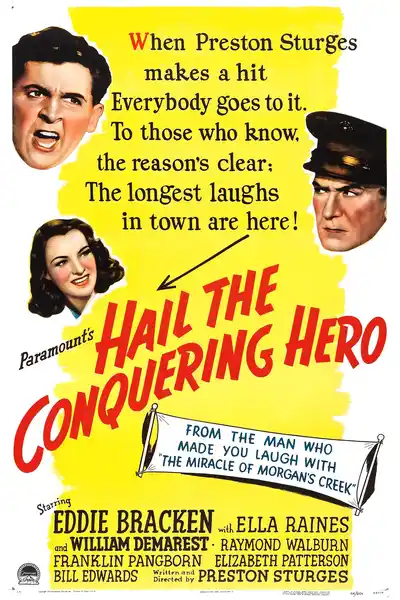
Eddie Bracken stars as Woodrow Lafayette Pershing Truffsmith, a small-town man who was discharged from the Marines before seeing combat due to chronic hay fever, in Preston Sturges' brilliantly crafted wartime comedy. When Woodrow returns home, a series of misunderstandings leads everyone to believe he's a decorated war hero, and he finds himself trapped in an elaborate lie that spirals wonderfully out of control. Sturges delivers one of his sharpest satires here, skewering hero worship and small-town politics with rapid-fire dialogue and perfectly timed physical comedy. Bracken's performance captures both the anxiety of living a lie and the genuine warmth of a decent man caught in impossible circumstances. The supporting cast, including William Demarest as a tough-talking Marine sergeant, adds layers of humor and heart to this essential wartime classic that remains surprisingly relevant.

In this film noir masterpiece, director Fritz Lang presents Edward G. Robinson as Richard Wanley, a mild-mannered psychology professor whose chance encounter with a mysterious woman (Joan Bennett) leads him into a nightmare of murder and blackmail. Lang, working with cinematographer Milton R. Krasner, creates a wonderfully oppressive atmosphere where shadows seem to trap our protagonist as thoroughly as his own poor decisions. Robinson delivers an excellent performance as an ordinary man watching his comfortable life unravel, while Bennett is perfectly cast as the femme fatale whose portrait literally draws him into danger. The script by Nunnally Johnson keeps the tension mounting as Wanley attempts to cover up his crime while his friend, a district attorney played by Raymond Massey, unknowingly discusses the investigation with him. Lang's direction maintains a creeping sense of doom throughout, using noir's visual language to externalize Wanley's guilt and paranoia. The film's ending remains controversial among critics, but it doesn't diminish the power of what comes before—this is essential viewing for noir enthusiasts.

William Powell returns as the sophisticated detective Nick Charles in this fifth installment of the beloved mystery series, this time bringing his wife Nora (Myrna Loy) home to his small hometown where murder inevitably follows. Director Richard Thorpe shifts the action from cosmopolitan settings to rural New York, giving the familiar formula a slightly different flavor. When a local businessman is murdered, Nick finds himself investigating despite his intentions to simply visit family and relax. Powell and Loy maintain their effortless chemistry, though the sparkle has dimmed slightly from the series' earlier heights. The small-town setting provides new comic opportunities as Nick's sophisticated persona clashes with hometown expectations, while the mystery itself proves adequately engaging if not particularly challenging. It's comfort viewing for fans of the series, offering the charm and wit we've come to expect even if the formula has grown somewhat familiar by this fifth outing.
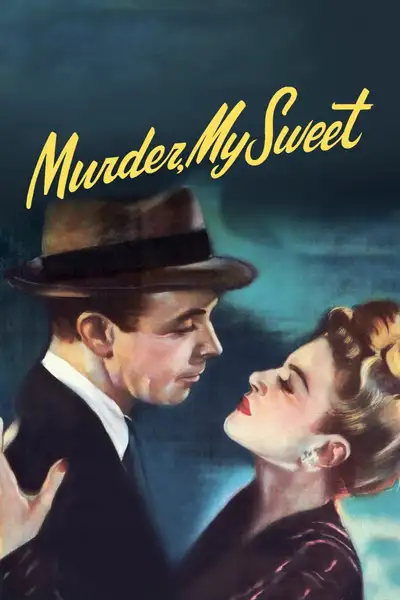
Edward Dmytryk directs this exemplary film noir adaptation of Raymond Chandler's "Farewell, My Lovely," with Dick Powell delivering a career-redefining performance as private detective Philip Marlowe. Powell, previously known for musical roles, brings a world-weary toughness and sardonic wit to Chandler's iconic detective as he investigates a case involving a missing woman that spirals into murder and deception. The film's visual style is quintessentially noir, with cinematographer Harry J. Wild creating atmospheric shadows and off-kilter compositions that mirror Marlowe's disorientation as he gets drugged, beaten, and manipulated. Claire Trevor is excellent as the femme fatale, while Mike Mazurki makes an impression as the hulking ex-con whose search for his lost love sets the plot in motion. The script retains Chandler's sharp dialogue and convoluted plotting, which Dmytryk navigates with confidence. "Murder, My Sweet" remains one of the most effective Chandler adaptations, capturing both the mystery mechanics and the moral ambiguity that defines the best noir.

Traveling from Latin America through various animated sequences, this Disney package film follows Donald Duck as he receives presents from friends across the continent and embarks on colorful adventures. The film blends animation styles and live-action footage as Donald encounters the urbane Brazilian parrot José Carioca and the Mexican rooster Panchito, forming the titular trio. Musical numbers range from the samba rhythms of "Baía" to the romantic fantasy of the "Three Caballeros" finale, showcasing Disney's animators experimenting with surreal visual effects and cultural imagery. While some sequences feel like travelogue filler, the energy picks up considerably whenever the three birds share the screen. The film's vibrant colors and willingness to push animation boundaries make it an interesting curio from Disney's wartime era, even if it lacks the narrative cohesion of the studio's best work.

Robert Newton and Celia Johnson star as Frank and Ethel Gibbons, an ordinary British couple whose family life unfolds across two decades in director David Lean's intimate domestic drama. Based on Noël Coward's play, the film chronicles the Gibbons family from 1919 through the outbreak of World War II, observing births, deaths, marriages, and the small triumphs and disappointments that constitute everyday existence. Lean's direction finds genuine poetry in the mundane, treating working-class London life with respect and affection while Coward's script balances humor with pathos. The episodic structure allows the film to accumulate emotional weight gradually as characters age and circumstances change. Newton delivers a particularly warm performance as the family patriarch, grounding the historical sweep in specific, lived-in details. The Technicolor cinematography captures the period atmosphere beautifully, and the film serves as both a time capsule of British social history and a timeless meditation on family bonds.

This home-front drama follows the Hilton family as they navigate life in their midwestern town while husband and father Tim serves overseas during World War II. Producer David O. Selznick's lengthy, earnest portrait of wartime America stars Claudette Colbert as Anne Hilton, the matriarch holding everything together while managing rationing, war bonds, and her daughters' romantic lives. Director John Cromwell guides the episodic narrative through two years of small victories and anxieties, with Jennifer Jones and Shirley Temple as the Hilton daughters, and Monty Woolley as the crusty boarder who becomes part of the family. At nearly three hours, the film's length occasionally works against it, but the commitment to depicting the everyday sacrifices and uncertainties of the war years gives it documentary-like texture. It's unabashedly sentimental and propagandistic in the way of wartime productions, yet the performances and attention to domestic detail create a genuine emotional portrait of a nation waiting.

Director Vincent Sherman helms this emotionally rich drama that gives Bette Davis one of her most complex roles as Fanny Skeffington, a beautiful but vain woman whose life spans several decades of change, loss, and hard-won self-awareness. Claude Rains co-stars as her devoted husband Job, a Jewish banker who loves her unconditionally despite her casual cruelty and barely concealed anti-Semitism. The film follows their marriage from the 1910s through World War II, chronicling how Fanny's obsession with youth and beauty blinds her to genuine affection until tragedy forces a reckoning. Davis fearlessly portrays Fanny's selfishness without softening her edges, creating a character study that remains fascinating in its honesty about vanity and self-deception. Rains brings dignity and quiet strength to Job, making his patience feel like character rather than doormat passivity. Sherman's direction allows the story room to breathe across its substantial runtime, while the screenplay by Julius and Philip Epstein balances sharp social observation with genuine emotion. It's a film about what we lose when we love only surfaces, including our own.

Ella Raines stars as Kansas, a secretary desperately racing against time to clear her boss of a murder charge after he's convicted of killing his wife. Director Robert Siodmak crafts a compelling noir thriller built around Kansas's determined investigation, as she tracks down witnesses who can corroborate her employer's alibi about spending the evening with a mysterious woman in a distinctive hat. The film's expressionistic cinematography creates a nocturnal New York filled with menacing shadows and psychological unease. Franchot Tone delivers an unsettling performance in a key supporting role, while Raines holds the center with understated determination that feels refreshingly modern for 1944. The plot mechanics occasionally strain credibility, but Siodmak's atmospheric direction and several standout set pieces—including a jazz club sequence crackling with dangerous energy—maintain tension throughout. The film exemplifies the creative vitality of 1940s noir, demonstrating how B-movie efficiency could produce genuinely artful cinema.

In this 1944 wartime thriller directed by Fred Zinnemann, Spencer Tracy delivers a tense performance as one of seven concentration camp prisoners who escape Nazi Germany, with the regime vowing to execute all seven on crosses as a warning. As his fellow escapees are captured one by one, Tracy's character races across the country seeking help from old friends and acquaintances, many of whom are too frightened to assist. Zinnemann builds suspense through Tracy's desperate journey while depicting the moral choices ordinary Germans faced under totalitarian rule. The film benefits from strong supporting work by Signe Hasso as a woman who risks everything to help, and Hume Cronyn as a conflicted former friend. Though the Hollywood production can't fully capture the reality of Nazi terror, Zinnemann's direction maintains tension throughout, and the film's themes about courage and complicity remain powerful.