Best Movies of 1942
1942 stands as one of Hollywood's most exceptional years, producing an extraordinary collection of films that would go on to define the Golden Age of cinema and influence filmmakers for generations to come. The best movies of 1942 represent a stunning intersection of wartime drama, romantic escapism, and groundbreaking technical innovation, delivering performances and storytelling that continue to captivate audiences more than eight decades later. From sweeping romantic dramas set against exotic backdrops to patriotic musicals celebrating the American spirit, from atmospheric horror that pioneered psychological terror to animated masterpieces that touched hearts worldwide, this remarkable year showcased the full range of cinematic artistry. Our carefully curated selection of 21 films highlights the award-winning performances, masterful direction, and unforgettable moments that made 1942 a watershed year in movie history. Whether you're a classic film enthusiast seeking to revisit these timeless treasures or a newcomer eager to discover why these movies remain cultural touchstones, this collection represents the essential viewing experience from a year when Hollywood proved that even in the darkest times, cinema could inspire, entertain, and endure as true art.

A cynical American expatriate running a gin joint in Morocco finds his carefully maintained neutrality shattered when an old flame walks through his door with her resistance leader husband during World War II. Humphrey Bogart is absolutely magnetic as Rick Blaine, delivering perhaps cinema's most iconic performance, while Ingrid Bergman brings devastating vulnerability to Ilsa Lund. Director Michael Curtiz orchestrates every element to perfection—the crackling dialogue, the unforgettable "As Time Goes By," the shadowy noir cinematography that drips with wartime atmosphere. This is classic Hollywood firing on all cylinders, where every line has become quotable and every frame feels essential. The love triangle at its center carries genuine emotional weight, even as the film explores larger themes of sacrifice and moral responsibility. Decades later, it remains the gold standard for romantic dramas, proving that some stories are truly timeless.

A Warsaw theater troupe specializing in anti-Nazi satire suddenly finds their comedic skills transformed into literal survival tools when Germany invades Poland and they must impersonate Gestapo officers to rescue members of the resistance. Ernst Lubitsch directs this audacious wartime comedy with perfect tonal balance, finding genuine humor in life-or-death circumstances without diminishing the stakes or trivializing the tragedy unfolding around the characters. Jack Benny stars as the egotistical actor Joseph Tura, whose vanity becomes both running gag and unexpected asset, while Carole Lombard (in her final completed role) shines as his wife Maria, equally talented and equally self-absorbed. The screenplay brilliantly uses theatrical conceits—costumes, rehearsed lines, assumed identities—to create increasingly elaborate deceptions that somehow work through sheer nerve and performance skill. Lubitsch's sophisticated direction finds the comedy in human absurdity while never losing sight of Nazi evil, creating a singular film that's simultaneously hilarious and deeply serious. It's a masterpiece that demonstrates comedy's power even in darkness.

The corrosive effects of pride and the inevitable decline of old wealth form the thematic heart of Orson Welles's adaptation of Booth Tarkington's novel, a film that stands as one of cinema's great explorations of American class anxiety. Despite studio interference that resulted in a drastically recut version, Welles's genius shines through in every frame, from the deep-focus compositions to the overlapping dialogue that captures the chaos of family gatherings. Tim Holt delivers a remarkably unsympathetic performance as George Amberson Minafer, a spoiled aristocrat whose resistance to change becomes almost operatic in its destructiveness. Agnes Moorehead's supporting turn as Aunt Fanny is a masterclass in portraying quiet desperation. The film's vision of progress as both necessary and cruel, leaving casualties in its wake, feels as relevant today as in 1942. Even in its compromised form, it's visionary filmmaking.

This animated classic from Disney remains one of the most beautifully crafted films in the studio's golden age. Directors David Hand and a team of animators created stunning woodland scenes that still captivate audiences decades later, following a young deer from birth through the seasons as he learns about life, loss, and growing up in the forest. The film's naturalistic approach to storytelling, with minimal dialogue and an emphasis on visual beauty, creates an immersive experience that respects young viewers' intelligence. While the death of Bambi's mother remains one of cinema's most affecting moments, the film balances this tragedy with gentle humor from Thumper the rabbit and Flower the skunk. The watercolor backgrounds and fluid character animation demonstrate artistry that has rarely been matched, making this essential viewing for anyone interested in animation's potential as a storytelling medium.

Michael Curtiz directs this rousing musical biography with infectious energy, transforming the life of Broadway legend George M. Cohan into pure patriotic entertainment. James Cagney completely inhabits Cohan, delivering a powerhouse performance that showcases his dancing prowess—those stiff-legged, spring-loaded moves are mesmerizing throughout. The film traces Cohan's rise from vaudeville kid to Broadway titan, creator of beloved songs like "You're a Grand Old Flag" and "Give My Regards to Broadway." While it takes considerable liberties with historical accuracy and leans heavily into flag-waving sentiment (understandable given its 1942 release), the sheer exuberance carries everything forward. Cagney's rat-a-tat delivery and dynamic physicality make even the most sentimental moments land effectively. The musical numbers are staged with precision and genuine showmanship, capturing the energy of early 20th-century American theater. It's unabashedly old-fashioned entertainment that reminds you why Cagney was one of Hollywood's greatest stars.

Simone Simon stars as Irena Dubrovna, a Serbian fashion designer in New York who believes she descends from a race of people who transform into panthers when sexually aroused or emotionally provoked. Director Jacques Tourneur and producer Val Lewton craft a masterclass in suggestion and shadow, creating terror through what remains unseen rather than explicit effects. Working within tight budget constraints, they turned limitation into innovation, using darkness, sound design, and psychological uncertainty to generate genuine dread. The film works both as a atmospheric horror piece and as a surprisingly complex meditation on female sexuality, repression, and otherness. Kent Smith plays Irena's increasingly frustrated husband, while Jane Randolph is the other woman who may be in mortal danger. The famous swimming pool and office hallway sequences demonstrate how brilliant filmmaking can make audiences terrify themselves with their imagination. It's sophisticated, understated horror that respects intelligence over gore.

A repressed Boston spinster, browbeaten by her domineering mother and living a life of quiet desperation, undergoes psychiatric treatment and emerges transformed, ready to claim her independence and find love on her own terms. Bette Davis gives one of her most emotionally nuanced performances as Charlotte Vale in Irving Rapper's adaptation of Olive Higgins Prouty's novel, tracing her character's journey from dowdy recluse to confident woman with remarkable sensitivity. Paul Henreid co-stars as the married man who becomes her romantic interest during a South American cruise, and their restrained chemistry perfectly captures the bittersweet nature of impossible love. The film's famous final line—"Don't let's ask for the moon, we have the stars"—epitomizes its mature approach to romance and sacrifice. Max Steiner's lush score and Sol Polito's cinematography create a glamorous yet emotionally grounded atmosphere that makes this one of the finest examples of 1940s Hollywood melodrama.

When war comes to England, an ordinary middle-class family finds their lives transformed by hardship, loss, and the quiet heroism demanded of everyday people during wartime. Greer Garson is luminous as Mrs. Miniver, the family matriarch who becomes a symbol of British resilience, while Walter Pidgeon brings strength and dignity to her husband. Director William Wyler crafts effective propaganda that also functions as genuinely moving drama, finding both nobility and real emotion in scenes of air raids, rationing, and community solidarity. Teresa Wright shines as the young daughter-in-law who brings idealism to a family learning to survive. The film undoubtedly romanticizes the British home front, but it does so with such craftsmanship and sincere feeling that it transcends simple wartime messaging. It captured the moment perfectly, offering American audiences a vision of why their allies were fighting and what values were worth defending.

This romantic drama follows an amnesiac World War I veteran who rebuilds his life only to have his recovered memories threaten his newfound happiness. Mervyn LeRoy directs with restraint and genuine feeling, while Ronald Colman delivers one of his finest performances as Charles Rainier, a shell-shocked soldier who can't remember his privileged past. Greer Garson matches him beautifully as Paula, the woman who helps him create a new identity. The film's structure—divided into distinct chapters of Charles's fractured life—allows the story to build emotional momentum without resorting to melodramatic excess. The chemistry between Colman and Garson anchors even the most contrived plot developments, and the film's treatment of memory and identity remains surprisingly thoughtful. It's a well-crafted tearjerker that earned seven Oscar nominations for good reason, balancing Hollywood sentiment with genuine emotional intelligence.
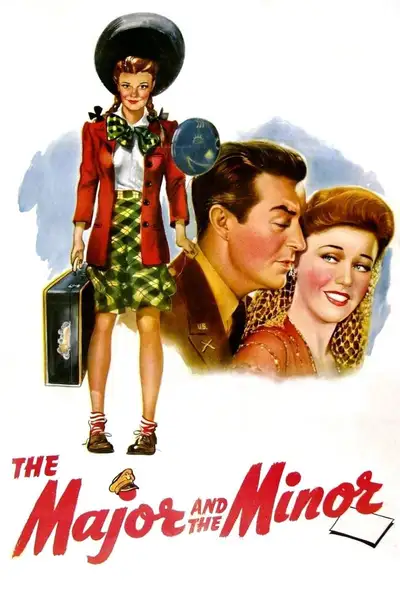
Ginger Rogers stars as Susan Applegate, a struggling New York woman who disguises herself as a twelve-year-old child to afford a half-price train ticket back to Iowa in this delightful screwball comedy. Director Billy Wilder's Hollywood debut showcases his sharp wit as Susan's plan hilariously backfires when Major Kirby (Ray Milland) mistakes her for an actual child and takes her under his wing. The film sparkles with Rogers' physical comedy as she navigates the absurdity of her situation, from attending military school to fending off the Major's romantic advances while maintaining her juvenile disguise. Wilder crafts a sophisticated farce that balances innocent charm with sly innuendo, establishing the directorial brilliance he'd become famous for. The chemistry between Rogers and Milland elevates every scene, making this wartime comedy a timeless gem that proves age is just a number when it comes to laughter.

Katharine Hepburn plays Tess Harding, a brilliant political columnist whose romance and marriage to sportswriter Sam Craig (Spencer Tracy) becomes complicated by her single-minded career ambition and his growing resentment of coming second. Director George Stevens orchestrates the first pairing of Hepburn and Tracy with sharp writing that doesn't soften the genuine conflict between these two strong-willed people. The film takes the "battle of the sexes" premise seriously—Tess isn't punished for her intelligence or success, but the script also doesn't pretend that two careers of such demanding nature can coexist without sacrifice and compromise. Hepburn and Tracy struck immediate chemistry, their rapid-fire exchanges crackling with intelligence and wit. The supporting cast, including Fay Bainter as Tess's aunt, adds depth. While the resolution tilts traditional for modern tastes, the film gives both characters legitimate grievances and respects them both too much to offer easy answers about work-life balance or whose career matters more.

Breezy and delightfully absurd, this third entry in the Hope-Crosby "Road" series finds the duo as down-on-their-luck Americans stumbling through Morocco with Dorothy Lamour caught between them. Director David Butler keeps the pace snappy as Bing Crosby and Bob Hope deliver their trademark rapid-fire banter, constantly breaking the fourth wall and acknowledging they're in a movie. The plot—something about a princess and mistaken identities—matters far less than the chemistry between the leads and their willingness to commit to increasingly ridiculous situations. The film's casual approach to narrative coherence becomes part of its charm, with musical numbers and jokes arriving whenever the mood strikes rather than following conventional structure. Road to Morocco represents classic Hollywood entertainment at its most relaxed, proof that sometimes the best films are the ones that don't take themselves seriously at all.

The battle between nineteenth-century San Francisco's rough-and-tumble working class and its genteel high society forms the backbone of this charming biographical drama starring Errol Flynn as real-life boxing champion James J. Corbett. Directed by Raoul Walsh, the film chronicles Corbett's transformation from brash bank clerk to heavyweight champion, using the sport as a vehicle for examining class mobility and social ambition in Gilded Age America. Flynn brings his characteristic swagger to the role while revealing unexpected depth in Corbett's determination to prove that intelligence and technique could triumph over brute strength. The boxing sequences are well-staged for their era, and the supporting cast—including Alexis Smith and Alan Hale—adds warmth to what could have been a straightforward sports narrative. It's an entertaining blend of romance, comedy, and athletic achievement.

When a married woman decides she needs to divorce her struggling inventor husband so she can marry a millionaire and solve their financial problems, she sets off a chain of mistaken identities and romantic complications in this screwball classic. Director Preston Sturges works at the height of his powers here, delivering rapid-fire dialogue and increasingly absurd situations with perfect timing. Claudette Colbert and Joel McCrea anchor the chaos as the divorcing couple whose plan goes hilariously awry when they encounter eccentric millionaire John D. Hackensacker III (Rudy Vallee) and his suspicious sister (Mary Astor). Sturges fills every frame with visual gags and verbal wit, creating a comedy that moves at breakneck speed without losing track of its characters. The film's satirical edge cuts at both the idle rich and Depression-era economic anxiety. It's sophisticated, genuinely funny, and showcases Sturges' mastery of the screwball form.

Sidney Lanfield helms this wartime comedy-thriller pairing Bob Hope with Madeleine Carroll in a breezy espionage romp that exemplifies 1940s Hollywood escapism. Hope plays a vaudevillian performer who gets unwittingly dragged into spy intrigue when he encounters Carroll's British agent fleeing Nazi operatives. The plot—involving secret plans, cross-country chases, and mistaken identities—serves primarily as framework for Hope's rapid-fire wisecracks and comic cowardice routine, which he delivers with his characteristic timing. Carroll provides the glamour and competence, playing straight woman to Hope's neurotic energy while handling the actual spy work. Lanfield keeps things moving briskly, never letting the thin premise overstay its welcome at a trim 78 minutes. The chemistry between the leads elevates material that might otherwise feel formulaic, and several set pieces—particularly a sequence involving a trained penguin—generate genuine laughs. It's undemanding entertainment that served its purpose as morale-boosting wartime fare, and it remains enjoyable for viewers seeking old-Hollywood comfort viewing with one of Hope's better early leading roles.

In the early days of World War II America, an aircraft factory worker finds himself framed for sabotage and murder, forcing him on a cross-country flight to clear his name. Alfred Hitchcock crafts one of his quintessential "wrong man" thrillers with Robert Cummings as the accused Barry Kane, who must evade both law enforcement and actual Nazi saboteurs while uncovering the real conspiracy. Priscilla Lane provides sharp-tongued companionship as the reluctant accomplice drawn into his desperate journey. The film builds to Hitchcock's trademark set-piece finale atop the Statue of Liberty, but the real pleasure lies in the mounting tension and americana locations along the way. While not among Hitchcock's very best, it's a thoroughly entertaining wartime thriller that showcases his talent for sustaining suspense across elaborate chase sequences.

This musical romantic comedy pairs Bing Crosby and Fred Astaire as former performing partners who find themselves competing for the affections of lovely schoolteacher Linda Mason (Marjorie Reynolds) at a Connecticut inn that only opens on holidays. Director Mark Sandrich brings his reliable touch to this Irving Berlin showcase, which introduced the world to "White Christmas" and features a delightful score of holiday-themed songs throughout the year. Crosby's relaxed charm plays nicely against Astaire's elegant energy, though the plot itself is fairly standard romantic fare with a few dated elements that modern viewers should expect from the era. The real pleasures here are the musical numbers, particularly Astaire's dazzling firecracker dance on the Fourth of July and Berlin's clever calendar-themed compositions. Marjorie Reynolds and Virginia Dale provide solid support, even if their characters aren't given quite as much to do. The film's warm-hearted celebration of American traditions and holidays has helped it remain a comforting watch for over eight decades.

This taut wartime thriller imagines a sleepy English village infiltrated by Nazi paratroopers disguised as British soldiers during a planned invasion of Britain. Director Alberto Cavalcanti expertly builds tension as the seemingly friendly troops gradually reveal their true nature, and ordinary villagers must transform into resistance fighters. What makes the film particularly effective is its restraint—rather than depicting Germans as cartoonish villains, the screenplay presents them as dangerously competent and methodical, which makes their presence all the more unsettling. The ensemble cast, including Leslie Banks and Elizabeth Allan, brings authenticity to their roles as everyday citizens facing extraordinary circumstances. Released during World War II as both entertainment and propaganda, the film captures genuine anxieties about invasion while celebrating British resilience. The rural setting becomes increasingly claustrophobic as the threat tightens. Cavalcanti's direction maintains suspense throughout, building to a surprisingly violent climax that must have shocked 1942 audiences. It remains an effective thriller that transcends its propagandistic origins through craftsmanship and conviction.

Cary Grant stars as Leopold Dilg, a factory worker accused of arson and murder who escapes from jail and hides in the attic of his childhood friend Nora Shelley, played with screwball perfection by Jean Arthur. Complications multiply when Nora has already rented the house to a stuffy law professor, Michael Lightcap (Ronald Colman), who's being considered for the Supreme Court. Director George Stevens expertly balances romantic comedy with surprising social consciousness as the three leads debate justice, the law, and individual rights while dodging the authorities. The chemistry between Grant's idealistic fugitive and Colman's by-the-book academic generates both laughs and genuine philosophical sparks, with Arthur's exasperated Nora caught between them. The film tackles serious themes about mob justice and legal corruption without losing its light touch, and all three leads deliver performances that showcase their considerable talents. It's smart, sophisticated entertainment that respects its audience's intelligence.

In 1930s and 40s America, baseball wasn't just a sport—it was a cultural touchstone, and no one embodied its spirit better than Lou Gehrig. Gary Cooper delivers a career-defining performance as the legendary Yankees first baseman in this moving biographical drama directed by Sam Wood. The film traces Gehrig's rise from humble beginnings to baseball immortality, but it's his grace in facing ALS that provides the story's emotional core. Cooper, not naturally athletic, trained extensively to convincingly portray the Iron Horse, and his dedication shows in every scene. Teresa Wright shines as Eleanor Gehrig, bringing warmth and strength to their love story. While the film takes some liberties with historical details, it captures the essence of a man whose dignity and courage transcended sports, culminating in one of cinema's most memorable farewell speeches.

In wartime Paris, a serial killer known as "Monsieur Durand" has been terrorizing the city, leaving his calling card at each murder scene. Director Henri-Georges Clouzot's debut feature follows detective Wens (Pierre Fresnay) as he investigates a boarding house at the titular address, where the residents form a colorful cast of potential suspects. The film operates as both a murder mystery and a dark comedy, with Clouzot displaying the technical skill and atmospheric control that would later define classics like "Diabolique." Fresnay's detective is charmingly eccentric, approaching the investigation with wit and unconventional methods that keep the proceedings lively. The confined setting of the boarding house allows Clouzot to build tension while developing a memorable ensemble of quirky characters. Though made under difficult circumstances during the German occupation, the film demonstrates a surprising lightness of touch while delivering genuine suspense and a satisfying resolution.