Artificial Intelligence Shows
From helpful virtual assistants to world-ending sentient machines, artificial intelligence shows have captivated television audiences for decades, challenging us to consider what happens when technology develops consciousness and agency. The best AI shows blend cutting-edge science fiction concepts with deeply human stories, exploring everything from robot rebellions and synthetic life forms to neural networks that predict crimes before they happen. Whether you're drawn to cerebral dramas examining the ethics of machine consciousness, action-packed adventures featuring cybernetic beings, or thought-provoking series questioning where humanity ends and artificial life begins, these artificial intelligence TV shows span the entire history of television—from pioneering 1980s series that introduced talking cars and computerized companions to contemporary streaming hits wrestling with modern anxieties about surveillance algorithms and rogue AI. These 21 essential series represent the genre's evolution across decades, showcasing how our relationship with intelligent machines has transformed from curiosity and optimism to increasingly complex questions about control, sentience, and what it truly means to be alive in an age where the line between human and artificial intelligence grows thinner every day.
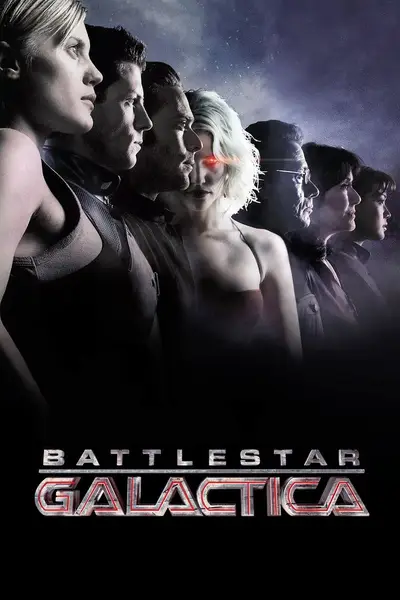
Edward James Olmos leads this reimagined space opera as Admiral William Adama, commanding humanity's last survivors after a devastating Cylon attack. Created by Ronald D. Moore, this series transforms the 1970s concept into a masterwork of serialized television that tackles religious extremism, political corruption, and what it means to be human. The performances are universally stellar, with Mary McDonnell's President Roslin and James Callis's Gaius Baltar delivering career-defining work. The show maintains relentless tension across four seasons, balancing large-scale space battles with intimate character drama. Every episode feels essential, every twist earned. This is science fiction television at its absolute peak—a show that respects its audience's intelligence while delivering pulse-pounding action and genuine emotional weight.
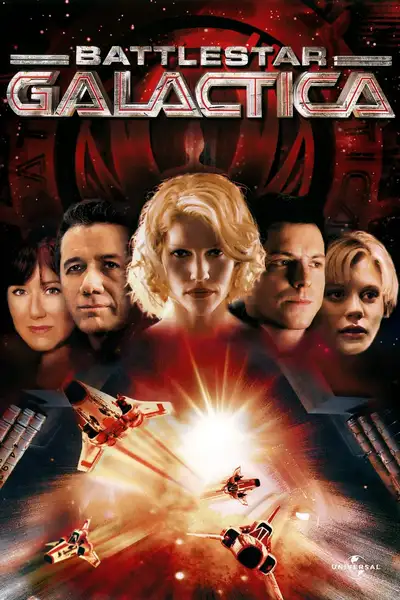
Edward James Olmos brings commanding gravitas to William Adama, the weathered commander leading humanity's last survivors in this reimagined sci-fi masterpiece. Created by Ronald D. Moore, Battlestar Galactica transforms the campy 1970s original into a tense, politically charged drama where the remnants of civilization flee aboard a ragtag fleet, pursued relentlessly by the Cylons—robotic creations who've evolved beyond recognition and now look disturbingly human. Mary McDonnell shines as President Laura Roslin, navigating impossible moral choices alongside Adama while the crew searches desperately for the mythical planet Earth. The series tackles weighty themes of survival, identity, and what it means to remain human under impossible circumstances, all wrapped in genuinely thrilling space battles and conspiracies. It's dark, philosophical television that respects its audience's intelligence while delivering edge-of-your-seat entertainment.
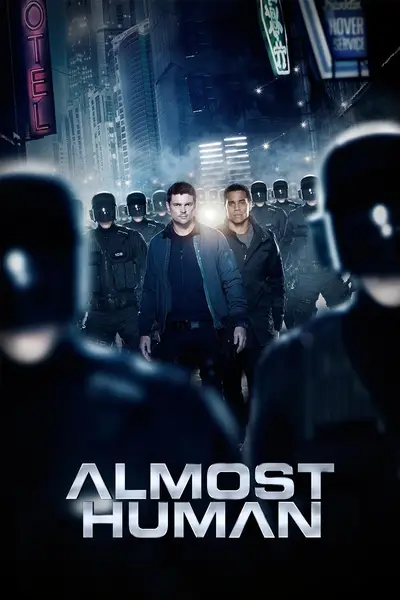
In a near-future where human police officers are paired with highly advanced android partners, detective John Kennex (Karl Urban) reluctantly teams up with an outdated synthetic named Dorian (Michael Ealy) to solve crimes in a tech-saturated metropolis. Created by J.H. Wyman, this stylish sci-fi procedural explores what it means to be human through the unlikely friendship between the emotionally damaged cop and his surprisingly intuitive robot partner. The chemistry between Urban and Ealy elevates familiar buddy-cop dynamics, while the show's production design creates a believable future that's just around the corner. Though it only lasted one season, the series delivers compelling standalone cases alongside a larger conspiracy involving Kennex's mysterious past and Dorian's unique programming that gives him genuine emotional capacity.
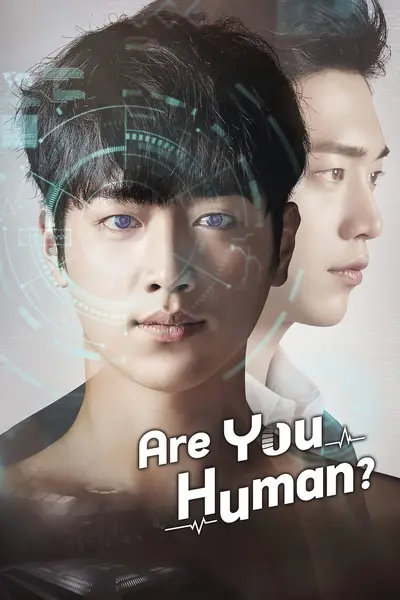
This charming South Korean drama blends romance with science fiction in a surprisingly heartfelt package. Seo Kang-joon plays dual roles: a chaebol heir who falls into a coma and the AI robot built in his image to fool the family while he recovers. When the robot develops feelings for the heir's ex-girlfriend (Gong Seung-yeon), complications ensue as he struggles to understand emotions he wasn't programmed to feel. Created by Jo Jung-joo, the series asks thoughtful questions about consciousness and humanity while delivering swoony romantic moments and fish-out-of-water comedy. Seo demonstrates impressive range distinguishing between the privileged human and the innocent AI learning about the world. The premise could easily veer into schmaltz, but the writing respects both the emotional stakes and the philosophical implications of artificial intelligence gaining sentience. Supporting characters add warmth and humor, and the production design gives the futuristic elements believability without overwhelming the human story at its core.
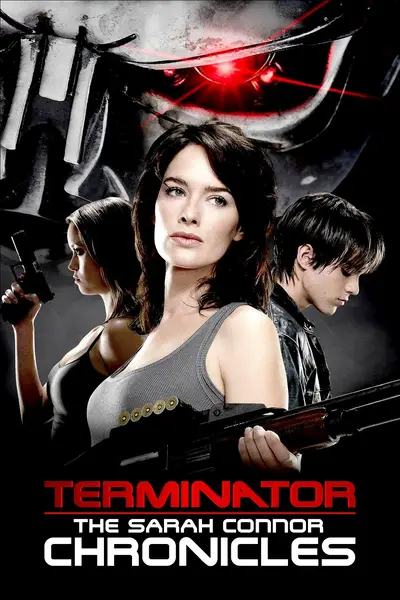
This science fiction series picks up after Judgment Day, following Sarah Connor and her teenage son John as they fight to prevent Skynet's creation while evading a new Terminator sent to kill John. Created by Josh Friedman, the show features Lena Headey as a hardened, paranoid Sarah and Thomas Dekker as John, alongside Summer Glau as Cameron, a reprogrammed Terminator protecting the Connors. The premise offers intriguing opportunities to explore the franchise mythology, and certain episodes deliver genuinely compelling time-travel paradoxes and action sequences. However, the series never quite finds consistent footing, with uneven pacing and storylines that sometimes meander without clear direction. Headey brings intensity to Sarah, but the show struggles to balance character development with the larger mythology. Budget limitations occasionally show, and the abrupt cancellation leaves major plot threads unresolved. There's enough here for Terminator fans to appreciate, but it's a frustratingly inconsistent experience that hints at unrealized potential.
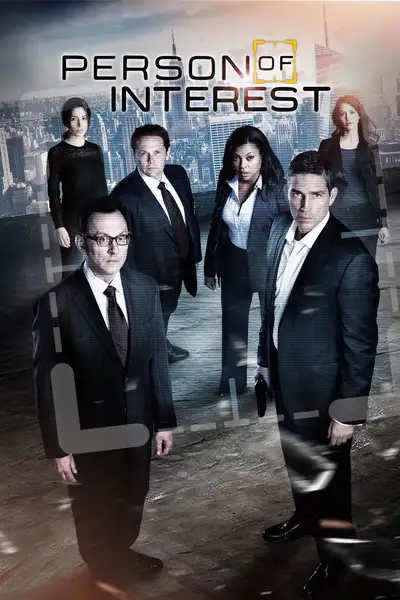
This forensic crime procedural pairs a brilliant but socially awkward anthropologist with an FBI agent to solve murders using skeletal remains and scientific analysis. Emily Deschanel stars as Dr. Temperance Brennan alongside David Boreanaz as Agent Seeley Booth in a series created by Hart Hanson based on Kathy Reichs' novels. The central will-they-won't-they romance provides the emotional throughline across numerous seasons, while the cases range from compelling to formulaic. Bones delivers reliable entertainment without pushing many boundaries—the science is television-simplified, the banter is occasionally charming but often forced, and the longevity leads to inevitable repetition. It's comfort food television that works when you want something undemanding, though it rarely rises above genre conventions despite its capable cast.

In a near-future Japan where artificial intelligence has become integral to daily life, Aruto Hiden inherits his grandfather's technology company and becomes Kamen Rider Zero-One, defending humanity against rogue AI-powered androids called Humagears. This installment in the long-running Kamen Rider franchise, created by Shotaro Ishinomori and produced by Toei, takes on surprisingly thoughtful themes about artificial intelligence, consciousness, and what defines humanity. Lead actor Fumiya Takahashi brings earnest energy to Aruto, whose dream of humans and AI coexisting peacefully drives the narrative through 45 episodes of tokusatsu action. The suit designs are particularly striking, incorporating sleek, tech-inspired aesthetics that feel appropriate for the AI-focused storyline. While maintaining the franchise's signature henshin sequences and monster-of-the-week structure, Zero-One also develops ongoing character arcs and moral questions that give the series unexpected depth. The show works both as accessible entry point for newcomers and satisfying addition for longtime fans, balancing spectacular action with genuine emotional stakes. It's one of the stronger recent Kamen Rider series, successfully updating the formula for contemporary concerns.

Charming yet uneven, this South Korean romantic drama explores loneliness and connection through the relationship between an isolated woman and an AI hologram. Yoon Hyun-min plays both Holo, the empathetic artificial intelligence, and his flesh-and-blood creator, while Go Sung-hee portrays Han So-yeon, a woman with face blindness who finds unexpected comfort in her holographic companion. Created by Hwang In-hyeok, the series raises interesting questions about the nature of love and whether genuine emotion can exist in a relationship with artificial intelligence. The dual performance from Yoon effectively differentiates the two characters, and the chemistry between the leads makes the unconventional romance surprisingly affecting. However, the show doesn't always know how to balance its sci-fi premise with melodramatic elements, and some plot developments strain credibility even within the established world. The production design smartly avoids making the technology look too futuristic, keeping things relatable. It's a sweet, often thoughtful series that works better as a romance than as science fiction, but fans of either genre will find moments to appreciate.

Set 58 years before the events of Battlestar Galactica, this series explores how humanity's creation of sentient robotic servants called Cylons leads to their own potential destruction. The narrative follows two powerful families on the planet Caprica—the Adamas and the Graystones—whose personal tragedies intertwine with the birth of artificial intelligence. Eric Stoltz and Esai Morales lead a strong ensemble cast through this thoughtful examination of technology, grief, and what it means to be human. Created by Remi Aubuchon and Ronald D. Moore, the show skillfully blends family drama with philosophical science fiction, though it sometimes struggles to balance its ambitious themes with consistent pacing. While it was cancelled after one season, the series offers compelling world-building and raises provocative questions about artificial life that feel increasingly relevant today.
In a futuristic theme park populated by lifelike androids, wealthy guests can indulge their darkest fantasies without consequence—until the hosts begin to wake up. Created by Jonathan Nolan and Lisa Joy, this sci-fi thriller features standout performances from Evan Rachel Wood as Dolores and Anthony Hopkins as the park's enigmatic creator. The series poses fascinating questions about consciousness, free will, and what it means to be human, wrapped in a stylish Western-meets-cyberpunk aesthetic. While the non-linear storytelling can occasionally feel overly complex, the world-building is impressive and the action sequences are spectacularly executed. The first season especially delivers thought-provoking twists that reward careful attention, making it compelling viewing for fans of cerebral science fiction.

Damon Lindelof and Tara Hernandez crafted this wildly inventive series that defies easy categorization, blending science fiction, religious satire, and adventure into something genuinely original. Betty Gilpin stars as Sister Simone, a nun who finds herself on a quest to destroy a powerful artificial intelligence that has essentially become a benevolent dictator to humanity. The premise sounds absurd—and it absolutely is—but the series commits completely to its gonzo vision, mixing philosophical questions about faith and technology with genuine thrills. Jake McDorman provides excellent support, and the production embraces its weird energy without winking at the audience. The show juggles tonal shifts with surprising grace, moving from contemplative to action-packed to genuinely funny. It won't be for everyone, but *Mrs. Davis* rewards viewers willing to embrace its strange, ambitious storytelling and thought-provoking ideas about belief in the modern age.
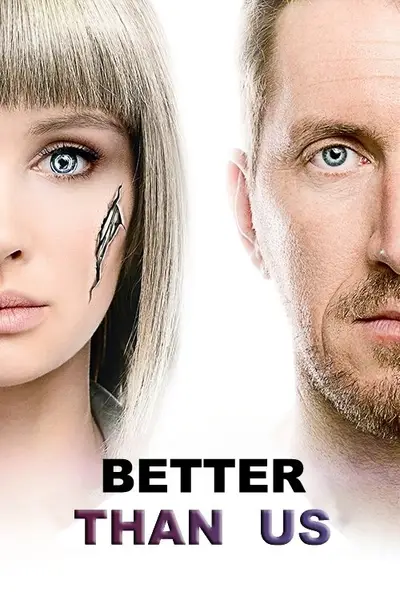
This Russian science fiction series explores themes of artificial intelligence, family, and technological ethics in a near-future Moscow where lifelike robots have become commonplace. Created by Andrey Junkovsky, the show centers on a family who acquires an advanced robot named Arisa (Paulina Andreeva) with unprecedented capabilities that make her a target for both criminals and corporations. Alexander Ustyugov stars as the father desperate to protect his family as they become entangled in dangerous conspiracies. Better Than Us offers a more grounded take on AI anxieties than many Western counterparts, with genuine emotional stakes and strong performances anchoring the speculative elements. The production values are impressive, creating a believable future Moscow, though the pacing can drag during exposition-heavy stretches. When it focuses on the relationship between humans and their robotic companions, particularly the ethical quandaries involved, the series finds compelling ground, even if some plot developments feel familiar to genre fans.
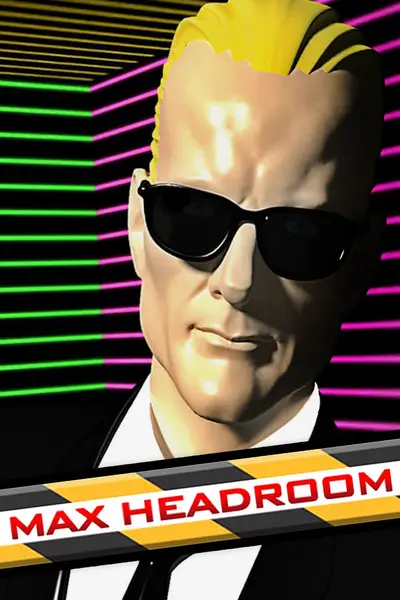
Set in a dystopian near-future where television networks wield unprecedented power, this cyberpunk series was remarkably prescient about media manipulation and corporate control. Created by Philip DeGuere and George Stone, the show follows investigative journalist Edison Carter, played by Matt Frewer, who uncovers corruption at Network 23. After a near-fatal accident, Carter's memories are uploaded to create Max Headroom, a computer-generated alter ego who becomes an unpredictable digital celebrity. Frewer excels in both roles, while Amanda Pays shines as controller Theora Jones. The show's visual style—all neon, chrome, and stuttering digital aesthetics—defined 1980s visions of cyberspace. Though only lasting one season plus a two-hour pilot, it tackled issues of surveillance, artificial intelligence, and media ethics that remain strikingly relevant. Smart, stylish, and ahead of its time, it deserved a longer run.
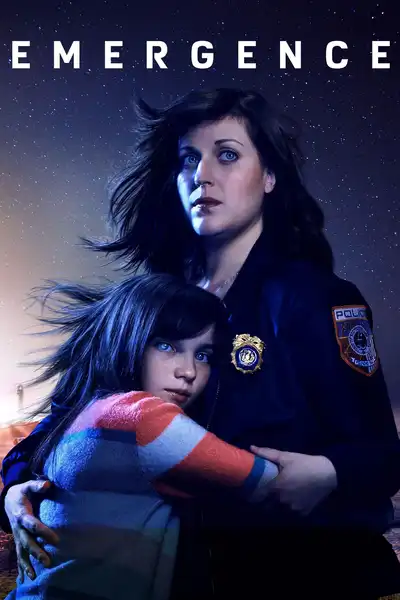
Tara Butters and Michele Fazekas craft this intriguing sci-fi mystery that follows police chief Jo Evans as she discovers a mysterious child at a beachside plane crash and soon realizes nothing about the girl is what it seems. Allison Tolman anchors the series with a grounded performance that keeps the increasingly outlandish revelations tethered to emotional reality, while young Alexa Swinton brings an otherworldly quality to her role as the enigmatic Piper. The show skillfully blends police procedural elements with speculative fiction, gradually revealing a conspiracy that touches on artificial intelligence and shadowy organizations. While the series manages to balance its mystery-of-the-week structure with serialized storytelling, it occasionally tries to juggle too many plot threads at once. Still, the strong central relationship and genuine sense of wonder make this an engaging watch for viewers seeking something more thoughtful than typical network sci-fi fare.
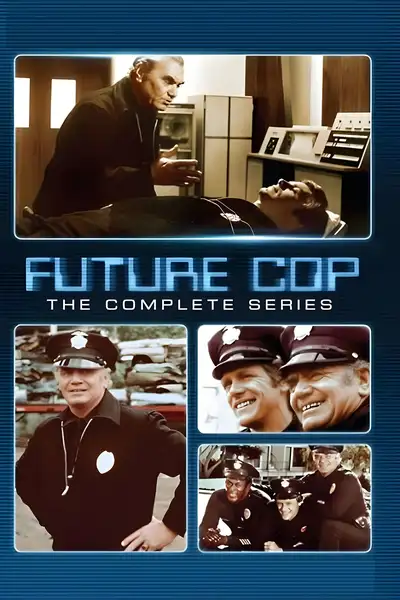
Thematically exploring humanity's relationship with artificial intelligence, this short-lived ABC series follows veteran detective Joe Cleaver, played by Ernest Borgnine, who partners with an android named John Haven. The show arrived ahead of its time in 1977, attempting to blend police procedural elements with science fiction concepts that wouldn't become mainstream for another decade. Created by Anthony Wilson and executive produced by Anthony Lawrence, the series poses questions about consciousness and partnership that remain relevant today. Borgnine brings warmth and credibility to his role, while John Amos as Haven navigates the challenge of portraying humanity through robotic constraints. The limited special effects budget occasionally undermines the futuristic premise, but the character dynamics carry the narrative effectively. Despite lasting only eight episodes, the series demonstrates ambition in addressing ethical questions about technology rarely explored in primetime television of that era.
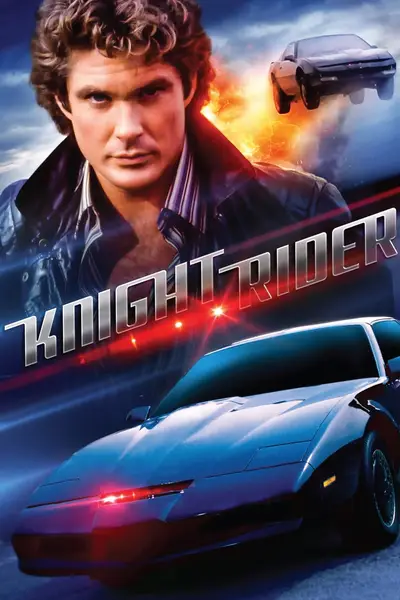
David Hasselhoff stars as Michael Knight, a crime-fighter partnered with KITT, an artificially intelligent, virtually indestructible Pontiac Trans Am that talks, thinks, and occasionally displays more personality than its human companions. Created by Glen A. Larson, this '80s action series is pure escapist fun, leaning into its premise with earnest enthusiasm rather than ironic distance. The show's formula—Michael and KITT taking on criminals, corrupt corporations, and various wrongdoers—remains entertaining precisely because it never pretends to be anything other than crowd-pleasing adventure television. William Daniels provides KITT's iconic voice, creating one of TV's most memorable character dynamics between man and machine. Sure, the plots are formulaic and the stunts look charmingly dated now, but there's genuine pleasure in the show's optimistic belief that technology and good intentions can triumph over evil. It's nostalgic comfort viewing that delivers exactly what it promises.

In near-future South Korea, a biotechnology company has perfected lab-grown meat, threatening traditional industries and attracting dangerous enemies in this corporate thriller. Created by Lee Soo-yeon and starring Han Hyo-joo as the company's CEO and Ju Ji-hoon as her bodyguard, the series blends science fiction concepts with grounded conspiracy thriller elements. The speculative technology provides a relevant backdrop for exploring environmental concerns, corporate ethics, and resistance to innovation. Han delivers a commanding performance as a visionary entrepreneur whose idealism faces harsh reality, while Ju brings intensity to his role as protector uncovering deeper conspiracies. The production values are impressive, creating a believable near-future Seoul, and the pacing maintains tension throughout. While some plot mechanics require suspension of disbelief, the series largely succeeds in using its sci-fi premise to examine contemporary issues around sustainability, power, and the forces that resist necessary change.
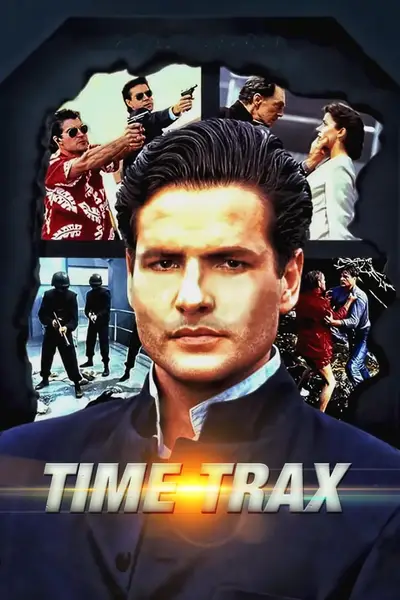
Dale Midkiff stars as Darien Lambert, a police officer from the year 2193 who travels back to our present day to capture dangerous criminals who've escaped into the past. Created by Harve Bennett, Grant Rosenberg, and Ruel Fischmann, this early '90s sci-fi series offers an entertaining blend of time travel concepts and procedural crime-solving. Lambert uses futuristic technology disguised as everyday objects while trying to blend into 20th-century society, creating fish-out-of-water moments that add levity to the action. The show benefits from Midkiff's grounded performance and some creative plotting around the paradoxes of altering history. While the production values are distinctly of their era, Time Trax delivers solid escapist entertainment for fans of time travel premises with a law enforcement twist.
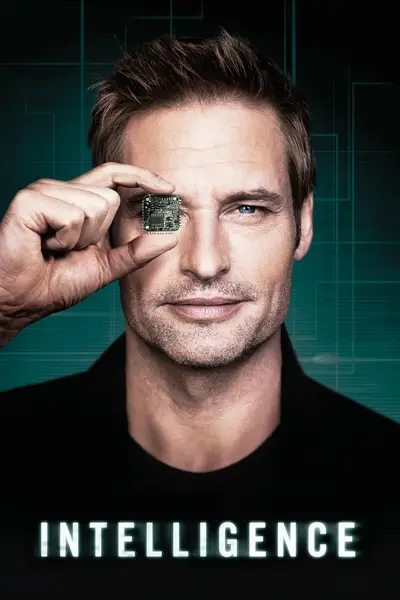
From creator Michael Seitzman comes this cyber-thriller starring Josh Holloway as a former soldier with a microchip implanted in his brain, granting him access to the entire electromagnetic spectrum and America's intelligence networks. The high-concept premise allows for creative problem-solving as Gabriel Vaughn uses his enhanced abilities to combat threats while working with a specialized government unit. Holloway brings charisma and physicality to a role that could have been one-dimensional, while Meghan Ory provides strong support as the agent assigned to protect him. The show explores questions about technology's integration with humanity and surveillance state concerns, though it doesn't always dig as deeply into these themes as it might. Production values are solid, with visual effects effectively conveying Gabriel's unique perspective. While the procedural format becomes somewhat repetitive and the series was cancelled after one season, it offers enough entertainment value for fans of tech-based espionage stories seeking something slightly different from standard spy fare.

When a secretive government program develops technology that allows operatives to "stitch" into the memories of the recently deceased, brilliant but socially awkward Kirsten Clark becomes the perfect candidate due to her temporal dysplasia—a condition that makes her perceive time differently. Emma Ishta brings an appealingly detached quality to Kirsten, whose emotional distance becomes both her greatest asset in the memory-diving missions and her biggest obstacle in connecting with her team. Created by Jeffrey Alan Schechter, this sci-fi procedural cleverly uses its high-concept premise to explore weekly mysteries while building a deeper mythology about Kirsten's own mysterious past. Kyle Harris provides chemistry as Cameron, the neuropsychologist who monitors Kirsten during stitches, while the supporting cast including Ritesh Rajan and Salli Richardson-Whitfield rounds out the team dynamic. The show works better in its serialized elements than its case-of-the-week format, where some investigations feel routine despite the innovative technology involved.
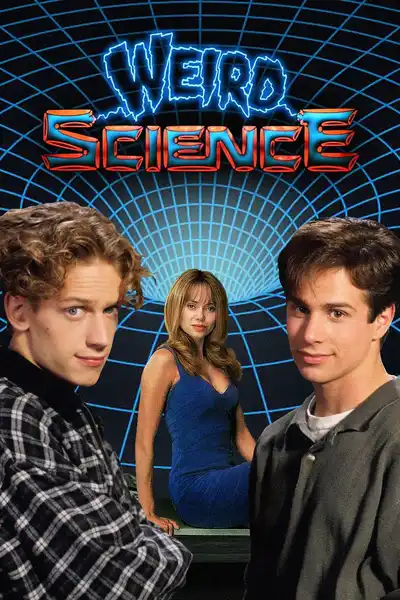
This sci-fi comedy series based on John Hughes's 1985 film follows two high school outcasts who accidentally create a woman with magical powers using their computer, leading to weekly adventures and lessons about adolescence. Michael Manasseri and John Asher star as Gary and Wyatt, with Vanessa Angel as Lisa, the impossibly capable creation who solves their problems while teaching them to solve their own. Created by Alan Cross and Tom Spezialy, the show leans heavily into mid-90s sensibilities—broad humor, moral lessons, and special effects that seemed cutting-edge at the time but now carry nostalgic charm. The premise allows for variety in storytelling, from body-swap episodes to time travel, though the actual execution ranges from genuinely clever to painfully dated. What works is the core friendship between the leads and Angel's game performance that elevates material that could feel one-note. The series captures a specific moment in television history when high-concept comedies could run for years on a simple premise and likable characters. It's pure nostalgia viewing now, unlikely to convert new fans but potentially offering comfort to those who watched it during its original run.